
What the day feels like
The first step off the scrubby goat track feels like a respectful negotiation with the coastline. Winded, you breathe in salt and rosemary; the Ionian Sea stretches a hard, honest blue to the horizon while the canyon yaws inland, a cleft of shadow and limestone that seems to have been carved by something both patient and impatient. Water still remembers the route it took here — a thin river that pushed at rock until a narrow amphitheater of cliffs and a pocket beach appeared. On a busy Albanian summer day that pocket still feels private as you pick your line across rounded boulders and press palms to sun-warmed stone.
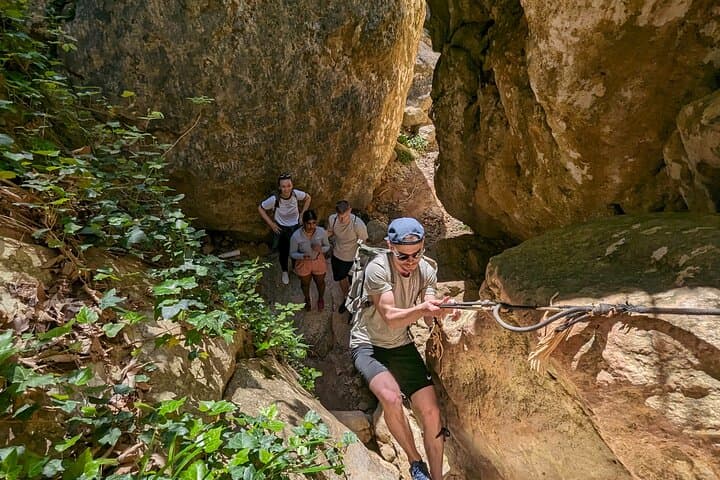
Gjipe Canyon is a short, sharp lesson in contrasts: coastal exposure one moment, shaded river-carved slot the next. Guides for this six-hour experience mix technical caution with seaside conviviality. You’ll move in small teams, alternating between low-angle rock scrambles—hands-on, non-technical—and easy coastal paddling or snorkeling where the water tempts you to cool off. The route doesn’t demand ropes for standard guests, but it insists on attention: the rock can be slick where spray settles, and the canyon’s geology changes by the hour as light slides down its face.
This is Albania on a human scale. The southern Ionian coast around Vlore and Himarë was a crossroads for Illyrian tribes, Roman traders and medieval fishermen; the abandoned stone houses and terraces in nearby cabins are mute testimony to lives tuned to the sea’s seasons. The canyon itself is a youthful incision in karst limestone — a topography that drinks rain and stores it in subterranean channels, then disgorges it where weakness in the rock meets the coast. That geography, combined with centuries of sparse human habitation, means this is a place where nature still sets the terms. The cliffs dare you to skirt the edge; the current nudges you into the swim.
Locals in Dhërmi and the small harbors of Himarë will tell you Gjipe has been a well-kept secret for decades. Until recently it was reached mostly on foot or by small fishing craft; the result is that the beach and gorge retain a raw, slightly wild character. Guides on the Viator-listed trip combine canyon navigation with a few hours of water time—kayak or snorkel—so you finish with a salty rinse and a view back at the cliff line you’ve negotiated.
Practicalities: the operator lists this as a 360-minute (six-hour) outing with an instant booking confirmation and free cancellation. Price shown at the time of listing is USD 477.82. The operator doesn’t publish a precise linear distance or cumulative elevation figure for the route, so plan for a full morning or afternoon of activity that includes hiking, short scrambles where your hands will help balance, and time on the water. Expect uneven terrain—pebbly beach, broken limestone, and narrow riverbed steps—and bring footwear that performs both on rock and in seawater.
Why go? Because the payoff is immediate. There’s tactile satisfaction in route-finding across sun-warmed rock that will scratch your palms and a peculiar calm in the canyon’s narrow throat where wind and wave sound distant. For anyone who likes a day where the body is quietly rewarded—a scramble, a paddle, a snorkel among Mediterranean fish—this is the kind of adventure that stitches a coastal village to a geological story in six tidy hours.
Timing and pacing are everything. In high season the coastal approach trail can be exposed; morning departures avoid heat and afternoon crowds, while late afternoon brings long golden light but can also increase sea swell. Guides usually schedule a mix of on-foot and in-water segments; if you’re prone to sea-sickness ask about the day’s water plan before you book. Bring plenty of fluids and a high-factor sunscreen; the Ionian sun is efficient and direct.
For planning: fly into Tirana’s international airport and expect a transfer of roughly two to three hours to the Vlore/Himarë region (private transfers or rental cars are common). Local roads are coastal and beautiful, but narrow and winding. Cell service is generally available near towns but patchy in the canyon itself; download directions and any emergency contacts beforehand. The trip is marketed out of Vlore, but many travelers base themselves in Dhërmi or Himarë for a closer, more village-paced experience.
If you go: look for low-impact operators who emphasize small groups and leave-no-trace practices. Bring a waterproof pouch for valuables during paddle and swim segments, and a light lunch if the tour doesn’t provide one—Albanian seaside tavernas are superb, but not always immediately adjacent to a secluded canyon. Afterwards, reward yourself with grilled sea bream and a local raki in a harbour-side taverna: the food is refreshingly straightforward, like the day itself.
Gjipe is not for those seeking a plush, low-effort postcard; it’s for travelers who like to be in the presence of geological patience and coastal noir, who don’t mind a bit of grit under the nails and sand in their socks. It’s a day that ends with a good silence — the sort you get after an honest effort — and a fresh awareness that along Albania’s coast, the sea still shapes the land and the land still answers back.
Trail wisdom
Small choices, better day.
Start early or late
Depart in the morning or late afternoon to avoid the hottest sun and busiest windows on the coastal approach.
Wear hybrid footwear
Water shoes or trail runners with good grip are best—protect feet on rock yet drain quickly for snorkeling or kayaking segments.
Stay hydrated and salinated
Bring at least 1–2 liters of water and an electrolyte snack; coastal heat plus activity burns more than you expect.
Secure valuables
Use a small dry bag for phone, documents and keys during paddling and swims to avoid losses.
Local knowledge
Read the place, not just the route.
Watch for native species including Mediterranean monkfish and wrasse visible while snorkeling, Kestrels and coastal passerines nesting on cliff faces.
Keep an eye out for wildlife during the transition between areas and habitats. Respect distance guidelines.
Gjipe’s fragile coastal and marine habitats benefit from low-impact visitation—stick to marked routes, pack out all trash, and use reef-safe sunscreen to protect local marine life.
Follow the guide's instructions on size limits, ethical handling, and leave-no-trace practices.
Small sea caves along the coastal approach that are visible on calm days. A shaded freshwater pool upstream in the canyon—ask your guide about a quieter stop
Locally recommended viewpoints and quiet spots known best to local operators.
The southern Albanian coast has layers of Illyrian, Greek and Venetian influence; many stone terraces and abandoned hamlets near the canyon reflect centuries of small-scale fishing and shepherding.
Maritime roots and regional tradition shape the waterways and working coasts.
Seasonal guide
Four versions of the same landscape.
Spring
Best forWildflower-lined coastal approaches · Cooler scrambling conditions
ChallengesUnpredictable weather · Colder water temperatures
Spring brings mild temperatures and blooming maquis, but the sea can still be brisk and occasional rain can make rocks slippery.
Summer
Best forWarm sea for snorkeling · Long daylight hours
ChallengesHigh sun exposure · Peak crowds
Summer is optimal for water time and sea clarity; aim for morning departures to beat heat and the busiest periods.
Fall
Best forCalmer seas · Lower crowds
ChallengesShortening daylight · Cooler evenings
Autumn retains warm water into early season and often offers stable conditions—ideal if you prefer fewer people.
Winter
Best forStorm-watching from the cliffs · Off-season solitude
ChallengesRough seas · Limited services
Winter is quiet and dramatic but not recommended for swimming or casual paddling due to swell and cooler temperatures.
Operator details
What the booking data adds.
Included
- ✓Bottled water
- ✓Snacks
- ✓Air-conditioned vehicle
- ✓Coffee and/or Tea
Not included
- —Lunch
Good to know
- ✓Service animals allowed
- ✓Public transportation options are available nearby
- ✓Specialized infant seats are available
- ✓Not recommended for travelers with spinal injuries
- ✓Not recommended for pregnant travelers
- ✓Not recommended for travelers with poor cardiovascular health
- ✓Travelers should have at least a moderate level of physical fitness
Pack with intention
What to bring.
Good to know
Common questions.
The operator lists a total duration of about six hours; the itinerary typically combines a coastal approach and canyon walk with time for brief paddling or snorkeling—confirm exact start time and any included meals with the provider.
Plan the edges
The details that make the day easier.
Gjipe is one of Albania’s few sea canyons where a freshwater stream reaches the Ionian Sea, creating a secluded pebble beach that was historically accessible only by foot or boat.
After the trip, head to Dhërmi or Himarë for fresh grilled seafood, a glass of local white wine and waterfront tavernas where fishermen display the day’s catch—try simple grilled octopus or a tomato-and-feta salad with a view.
- Closest international airport
- Tirana (TIA) ~2.5–3 hours by car; Driving distance from Vlore: ~1.5–2 hours; Cell service: intermittent in the canyon; Permits: none typically required—confirm with operator.
This coastline is ecologically sensitive—pack out all waste, avoid trampling Mediterranean scrub and use reef-safe sun protection to protect marine habitats.
Explore by topic
Follow the threads.
Keep exploring
Make the story part of the trip.
Set out from Bass Harbor for a private, customizable day on Blue Hill Bay — lighthouses, puffins, seals, and the chance to feel Acadia from the water. Small groups, local captains, unforgettable views.
In four hours you can move from shaded canyon ferns to wind-scoured coastal ridgelines, guided by someone who knows where the light—and the hidden views—live. This private half-day hike on the Monterey Peninsula or Big Sur is compact, curated, and perfect for travelers who want depth without a multiday commitment.
 Related story
Beneath a sky of shifting light, Skaftafell’s ice reads like a map of time. This three-hour guided glacier hike mixes technical instruction with geology and culture: compact, safe, and unforgettable.