
What the day feels like
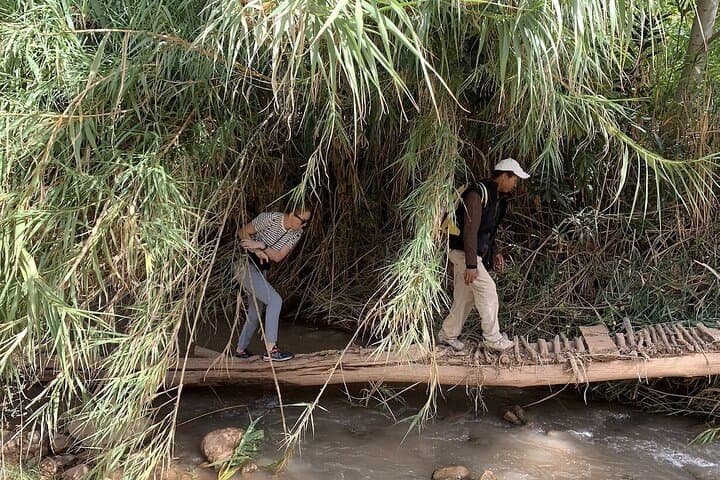
The first step into the Dades Gorges feels like passing through a throat of stone: the valley narrows, light slants, and the river — slim and stubborn here — dares you to follow. On a spring morning the air tastes faintly of almond blossom and wood smoke; palms and poplars stitch green into the ochre slopes. As you walk, the walls close and open, offering sudden ledges, honeycombed cliffs and towers that look hand-carved by an industrious earth. This is a place that moves you physically and quietly rearranges your sense of scale.
The Dades Valley is a hinge between the high peaks of the Atlas and the softer desert plains beyond. The gorge itself is the work of the Oued Dades, a river born in the High Atlas that has, over millennia, gouged deep channels through red and pink sandstone. Local history is written in mud-brick kasbahs and terraced gardens — pockets of irrigation where almonds, walnuts, palms and argan trees still sustain farming families. For travelers, the valley offers an unusual combination: day-long treks that slip into quiet villages, and hands-on rock climbing that ranges from solid trad routes to short, sharp sport climbs on sun-warmed faces.
Geology here is the storytelling: layers of sediment tilted, fractured and smoothed into gullies, fins and strangled arches. Climbers will find compact sandstone and tufa features that reward bold footwork and careful route reading; hikers will appreciate trails that alternate between shaded riverbank steps and exposed ridgelines with sweeping views back toward the High Atlas.
Culture in the Dades is immediate and hospitable. Families run auberges in the valley, offering simple tagines, mint tea and a bed after a day of exertion. The valley has long been part of trans-Saharan and local trade routes, and its kasbahs — once fortified homes — now shelter travelers and host local crafts. English is not always common; a few words of French or Arabic, and an easy smile, will go far.
Practicalities are straightforward. This experience is designed as a half-day to full-day outing (the guided itinerary runs about 4 hours and 15 minutes) and is available as a private tour with instant confirmation. The activity is priced from around $37 USD and suits hikers who want an active day without a multi-day commitment. Routes vary by group and weather: expect a steady walk through mixed terrain, occasional scrambling on ledges, and optional climbing pitches for those who want to clip in.
Timing matters. Spring is the valley’s crown season: water runs, wildflowers bloom and the heat is mild. Summer brings clear skies and intense sun — plan early starts and water caches. Fall cools quickly and sharpens the light; winter nights can be frigid and the higher approaches may see snow. For both hikers and climbers, morning and late afternoon offer the best angles of light and the most comfortable temperatures.
What to prepare for: footwear with good traction for mixed sandstone and scree; a minimum of 2 liters of water per person; sun protection; and basic layers for temperature swings. For climbers, a helmet and guide-provided rack are standard on technical pitches; novices can try scrambling and top-rope options under supervision. Most itineraries are low on technical route-finding but moderately demanding on stamina — you’ll be walking and moving for several hours on uneven ground.
The region’s conservation note is simple: the Dades is an agricultural valley with fragile water resources. Stick to trails, avoid contaminating springs, and carry out what you carry in. Local guides are not only excellent navigators but also stewards of the valley’s history and ecology — hiring them supports local livelihoods and ensures your visit has a light footprint.
Why go? The Dades offers a concentrated slice of Moroccan landscape — raw geology, approachable climbing, and intimate cultural exchanges — all within a few hours from regional hubs. You don’t need to be a hardened alpinist to appreciate the place; a curious hiker with a taste for varied terrain will find enough to test muscles and broaden perspective. The payoff is consistent: quiet viewpoints, unexpected gardens, and evenings in auberges that feel like extensions of the landscape itself.
For travelers who want logistics handled, the offering’s private-tour format simplifies transport and itinerary. For those who prefer to DIY, the valley is straightforward to explore from Boumalne Dades, but local guides unlock routes, stories, and safer access to climbable walls.
In the end, a day in the Dades is a lesson in scale and patience. The rocks keep their own counsel; the river keeps you honest. Move deliberately, ask questions of the guides, taste the tagine at a shaded table, and let the gorge work its quiet persuasion. You’ll leave with sand in your boots, photographs that still don’t quite capture the light, and a clearer sense of why this narrow corridor between mountain and desert has been a crossroads for both people and geologic time.
Trail wisdom
Small choices, better day.
Start Early
Temperatures rise quickly; begin in the morning to avoid midday heat and to enjoy softer light on the canyon walls.
Hydrate Often
Carry at least 2 liters per person and sip regularly — shade is intermittent and water sources are unreliable.
Solid Footwear
Use boots or trail shoes with good grip for sandstone, scree and occasional wet rock.
Hire a Local Guide
Guides know safe climbing lines, village etiquette and the best viewpoints, and they support local communities.
Local knowledge
Read the place, not just the route.
Watch for native species including Barbary macaque, Desert fox.
Keep an eye out for wildlife during the transition between areas and habitats. Respect distance guidelines.
Water is scarce and gardens depend on seasonal flows; stick to trails, avoid polluting springs and hire local guides to support sustainable tourism.
Follow the guide's instructions on size limits, ethical handling, and leave-no-trace practices.
Tiny auberges in side-valleys with rooftop views over the gorge. A short climb to an isolated viewpoint above a palm grove for sunset
Locally recommended viewpoints and quiet spots known best to local operators.
The Dades Valley sits along historic trans-Saharan routes; its kasbahs were once fortified family homes that managed oasis agriculture and caravan trade.
Maritime roots and regional tradition shape the waterways and working coasts.
Seasonal guide
Four versions of the same landscape.
Spring
Best forWildflower displays · Comfortable hiking temperatures · Fuller river flows
ChallengesHigher visitor numbers · Occasional rainy days
Spring is the ideal season: green terraces, flowing water and mild days make for pleasant hiking and easier scrambling.
Summer
Best forLong daylight hours · Clear skies · Sun-warmed climbing routes
ChallengesHigh daytime heat · Very limited shade mid-day
Summer offers stable weather but bring early starts, sun protection and increased water for hot, exposed sections.
Fall
Best forCrisp light for photography · Cooler temperatures · Reduced crowds
ChallengesShorter daylight · Colder evenings
Fall provides comfortable trekking temperatures and dramatic skies — pack a warm layer for evenings.
Winter
Best forQuiet trails · Dramatic snow-capped Atlas views on clear days
ChallengesCold nights · Possible snow at higher elevations
Winter is quiet and striking; bring warm clothing and prepare for chilly conditions, especially after sunset.
Operator details
What the booking data adds.
Included
- ✓Berber Tea
Good to know
- ✓Service animals allowed
- ✓Public transportation options are available nearby
- ✓Not recommended for travelers with spinal injuries
- ✓Not recommended for pregnant travelers
- ✓Not recommended for travelers with poor cardiovascular health
- ✓Travelers should have at least a moderate level of physical fitness
Pack with intention
What to bring.
Good to know
Common questions.
The guided experience is approximately 4 hours and 15 minutes (about 255 minutes), typically run as a half- to full-day activity.
Plan the edges
The details that make the day easier.
The Oued Dades carved the gorges over millions of years; the valley is also known locally as part of the Road of a Thousand Kasbahs, a route dotted with historic fortified homes.
After a day on the trail or a few pitches of climbing, head to a family-run auberge in Boumalne Dades for slow-cooked tagine and mint tea; sample almond pastries sold by roadside vendors and, if possible, listen to local storytellers talk about kasbah history at sunset.
- Closest airport
- Ouarzazate (OZZ) ~1.5–2 hours; Marrakech (RAK) ~5–6 hours. Closest trailhead: Boumalne Dades village. Driving distance from nearest town: under 30 minutes from Boumalne Dades center. Cell service: intermittent in narrow sections. Permits: none required for day trips; guided access recommended.
This valley relies on fragile irrigation systems; pack out all trash, avoid using river water for drinking without treatment, and hire local guides to ensure tourism benefits the community.
Explore by topic
Follow the threads.
Keep exploring
Make the story part of the trip.
Set out from Bass Harbor for a private, customizable day on Blue Hill Bay — lighthouses, puffins, seals, and the chance to feel Acadia from the water. Small groups, local captains, unforgettable views.
In four hours you can move from shaded canyon ferns to wind-scoured coastal ridgelines, guided by someone who knows where the light—and the hidden views—live. This private half-day hike on the Monterey Peninsula or Big Sur is compact, curated, and perfect for travelers who want depth without a multiday commitment.
 Related story
Beneath a sky of shifting light, Skaftafell’s ice reads like a map of time. This three-hour guided glacier hike mixes technical instruction with geology and culture: compact, safe, and unforgettable.