
What the day feels like
The first thing you notice about the Pacuare is its voice: a layered, urgent chorus of water that arrives before the canyon does. From the shuttle’s dust-choked hairpin turns the rainforest opens like a curtain — palms and strangler figs leaning into the gorge, orchids clinging to trunks, and a ribbon of whitewater glinting like a promise. By the time your guide gives the pre-run talk, the river has already started to stake its claim on your attention, daring you to meet it on its own terms.
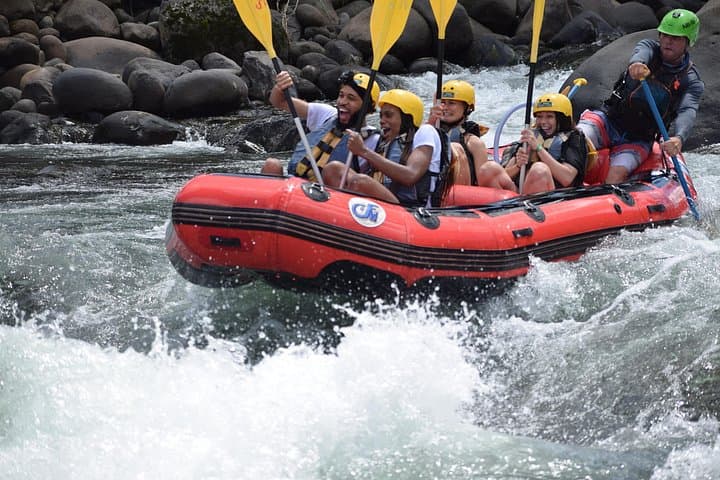
This is an eight-hour day where adrenaline and calm sit in tight alternation. The Pacuare cuts east from the foothills of the Cordillera de Talamanca to the Caribbean plains; its gradient and narrow gorges produce a succession of rapids that range from playful to teeth-gritting. Guides steer around jagged boulders with practiced authority, calling commands as the raft surges into the flumes. Class III and IV rapids come and go like punctuation — a flush of motion, then a hush where the rainforest reasserts itself and birdsong ripples through the canopy.
The stretch that makes the Pacuare famous is more than whitewater. Geologically, the river is a live incision in young volcanic and sedimentary rock — the canyon walls bear the layered scars of tectonic uplift and erosive artistry. Historically and culturally, this river is threaded with local human stories: indigenous Bribri and Cabécar communities have lived in the uplands for generations, and the valley has long been a corridor for cacao and coffee moved between interior farms and Caribbean ports.
On a full-day run with an overnight option at a riverside lodge, you get both the pulse and the pause. After a morning of intense paddling, there’s always a moment when guides pull the rafts onto a pebble bar and the group tumbles out to eat, dry off, and soak in a jungle that smells like wet earth and citrus. If your trip continues with an overnight at a small lodge, you’ll learn a quieter side of the Pacuare: lantern-lit dining, the distant rumble of the river, and the chorus of nocturnal insects. Rustic comfort and a commitment to low-impact operations tend to define these accommodations as much as the service.
Why go? For many, it’s the simple arithmetic of rush plus beauty: technical rapids braided through intact rainforest, accessible from San José yet feeling a world away. For others, it’s the chance to witness wildlife — howler monkeys booming from the treetops, toucans flashing like punctuation — and to leave the loudness of the city behind for a day that tests balance, teamwork, and a willingness to get wet.
Practical essentials are straightforward: the trip is a full-day activity (about eight hours for the scheduled itinerary) and often includes transportation from San José, professional guides, safety gear, meals on the route, and sometimes an overnight stay at a lodge. Prices for organized tours start around $125. Tours operate year-round but shift in character by season: the dry months bring lower flows and more technical scouting, while the wet months raise the stakes and the size of the waves.
Safety is a craft here — guides are trained, equipment is modern, and rafts are tough — but the river demands respect. Know your limits, listen closely to your guide, and be honest about your swimming comfort. Footing on the beach and quick scrambles out of the raft can be wet and slippery. For photographers, waterproof cases and quick access to a compact camera are lifesavers — the canyon provides dramatic frames, but you’ll have limited windows to shoot between rapids.
Beyond the run, the Pacuare offers a tight, meaningful connection to place. Guides often share stories about river stewardship, community projects that fund local schools, and the delicate balance between tourism and conservation. If you want to extend the trip, nearby small towns and coffee fincas make for a pleasant contrast — trading the immediacy of the river for conversations with farmers, tastings, and slow food.
Who should book this? Adventurous travelers who are fit enough for repeated paddling bursts and who enjoy both the technical side of whitewater and the slow, humid wonder of primary rainforest. Families with older kids, groups of friends, or solo travelers looking for a guided, social whitewater run will all find something here. Expect to come away with tired arms, muddy knees, and a clearer sense of why a river can be a measure of a country’s wild heart.
Trail wisdom
Small choices, better day.
Hydrate Before You Go
Start hydrating the day before and bring a refillable bottle—guides provide breaks but paddling is still a workout.
Wear Secure River Shoes
Closed-toe, quick-drying shoes with good soles protect toes from rocks during exits and hikes.
Protect Your Camera
Use a compact waterproof case or dry bag mounted in the center of the raft for quick access and safety.
Listen to the Guide
Paddle commands are precise—pay attention and practice the strokes during the safety briefing.
Local knowledge
Read the place, not just the route.
Watch for native species including Howler monkeys, Toucans.
Keep an eye out for wildlife during the transition between areas and habitats. Respect distance guidelines.
Local operators and lodges partner with nearby communities on conservation programs; sustainable tourism helps fund reforestation and education projects.
Follow the guide's instructions on size limits, ethical handling, and leave-no-trace practices.
Short jungle hikes to secluded waterfalls along certain stops. Pacuare Lodge’s river-view deck for dusk wildlife watching
Locally recommended viewpoints and quiet spots known best to local operators.
The Pacuare corridor has long been a route for small-scale cacao and coffee transport and is culturally tied to indigenous Bribri and Cabécar communities.
Maritime roots and regional tradition shape the waterways and working coasts.
Seasonal guide
Four versions of the same landscape.
Spring
Best forLower crowds · Stable weather · Beginner-friendly runs
ChallengesOccasional afternoon storms · Variable river levels
Late dry-season spring (March–May) offers reliable access and milder rapids, making technical scouting easier for new rafters.
Summer
Best forLush jungle photography · Higher flows · Strong wildlife activity
ChallengesMore rain and larger waves · Slippery trails
Summer’s wet months raise the river and the adrenaline; rapids become fuller and photography windows are dramatic but shorter.
Fall
Best forFewer tourists · Good mid-level flows · Comfortable temperatures
ChallengesUnpredictable showers · Transport delays from storms
Autumn balances flow and weather—rapids are lively and the jungle remains verdant without the highest wet-season extremes.
Winter
Best forBig-wave runs · Seasonal birdwatching · Lush scenery
ChallengesStrongest river flows · Trip cancellations more likely due to storms
Winter brings the highest flows—thrilling for experienced paddlers but occasionally forces itinerary adjustments for safety.
Operator details
What the booking data adds.
Included
- ✓All equipment for safe tour
- ✓Snacks
- ✓Lunch
- ✓Air-conditioned vehicle
Good to know
- ✓Service animals allowed
- ✓Public transportation options are available nearby
- ✓Travelers should have at least a moderate level of physical fitness
Pack with intention
What to bring.
Good to know
Common questions.
The organized itinerary is roughly eight hours for the full-day run; some packages include an overnight stay at a riverside lodge.
Plan the edges
The details that make the day easier.
The Pacuare River originates in the Cordillera de Talamanca and is widely recognized as one of the top whitewater rafting rivers in the world, prized for its combination of technical rapids and intact rainforest corridors.
After the run, head to Siquirres or Turrialba for a hearty casado plate and locally grown coffee; many tours include or can arrange a visit to a small cacao or coffee finca for tastings that connect the river to the region’s agricultural history.
- Closest airport
- Juan Santamaría Intl (SJO) — typical drive to put-in: 2–3 hours; cell service: patchy to none inside the canyon; permits: none required for commercial rafting but operators handle safety and river access; meeting point: usually San José pick-up or a designated hotel lobby.
Operators often support local conservation and community projects—pack out trash, avoid single-use plastics, and respect riverside vegetation to protect fragile riparian habitat.
Explore by topic
Follow the threads.
Keep exploring
Make the story part of the trip.
Set out from Bass Harbor for a private, customizable day on Blue Hill Bay — lighthouses, puffins, seals, and the chance to feel Acadia from the water. Small groups, local captains, unforgettable views.
In four hours you can move from shaded canyon ferns to wind-scoured coastal ridgelines, guided by someone who knows where the light—and the hidden views—live. This private half-day hike on the Monterey Peninsula or Big Sur is compact, curated, and perfect for travelers who want depth without a multiday commitment.
 Related story
Beneath a sky of shifting light, Skaftafell’s ice reads like a map of time. This three-hour guided glacier hike mixes technical instruction with geology and culture: compact, safe, and unforgettable.