
What the day feels like
You set out before the sun softens into full day—a private van hums away from Kandy, cinnamon hills fading into a flatter horizon where ancient reservoirs glitter like mirrors. The air changes as you cross into the Cultural Triangle: dust, coconut palms, and granite rising from the paddy plain. By the time the tour deposits you in Habarana, the landscape has already begun to assert itself—boulders brooding on the skyline, small villages breathing the slow rhythm of rice and water. It’s a day built of contrasts: the easy cadence of cycling through village lanes, the sudden muscle-burn of a rock climb, the hushed patience of a safari watching elephants negotiate sunlit grass.
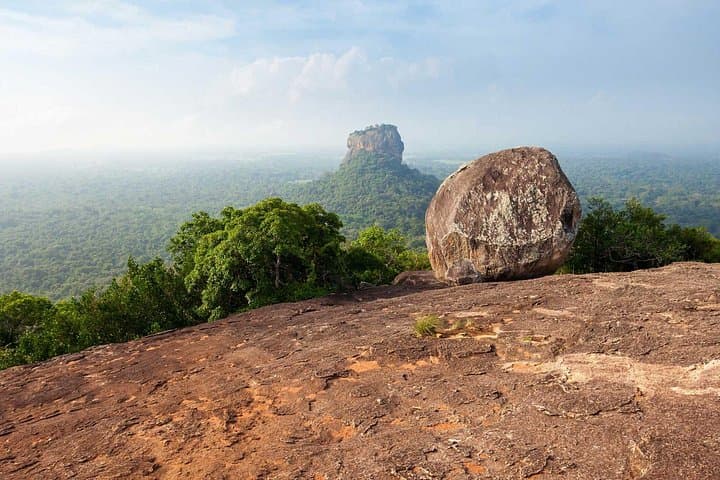
The ride out of Habarana threads between tanks—those man-made reservoirs that defined irrigation in Sri Lanka for two millennia—and fields where farmers bend to the mornings. The cycling leg is quietly revealing: children in school uniforms wave; dogs trot at the back of carts; a roadside stall serves sweet king coconut on cracked ice. The route takes you past Sigiriya’s silhouette—its flat-topped fortress a historical punctuation mark—and toward Pidurangala, a monolith that rewards a short scramble with sweeping views of the surrounding plain and the famous Sigiriya rock standing like a sentinel nearby.
Pidurangala is less polished tourist vantage point than its neighbor; climbing it is part boulder-scramble, part stone stair—short, sharp, and more physical than scenic at first. Reach the summit and the plain spreads out like a green map, reservoirs glinting, distant elephants as dark flecks in the scrub. It’s one of those moments where the land feels as if it breathes under you; the rocks are patient, watching travelers cross centuries of human history.
Lunch at Kamatha Eco Lodge brings the day back down to local pace. The lodge’s cuisine leans heavily on what’s grown nearby—curried vegetables, coconut sambols, and rice that tastes like place. The staff explain small things: which trees provide medicine, which plants feed the goats. It’s informative without being performative—a cultural note that ties the ride and the climb to the people who live and work this landscape.
Then the safari: Minneriya National Park is not a cinematic safari in the African sense, but it stages its own spectacle. During the dry months, water concentrates around the park’s tanks and what follows is the Minneriya “gathering”—dozens, sometimes hundreds, of Asian elephants converge to drink and forage. From the jeep you watch matriarchs direct calves, juvenile bulls spar with trunks raised, and solitary animals creak through the tall grasses as if the plain is theirs alone. Birds—peafowl, raptors—dot the trees. The park’s mosaic of grass and scrub gives the animals places to hide and to show themselves in equal measure. The guides know where the animals like to drift; they also understand elephant behavior and move the vehicle with respectful distance and timing.
This is a well-paced day: the physical blur of cycling and climbing, then the long quiet of watching wildlife. You return to Kandy with the kind of fatigue that feels earned—the muscles pleasantly sore, optic memory full of rock faces and elephant silhouettes. Practicalities matter here: this is a full-day private tour (6–8 hours), start times and seasonality shift what you will see and how you will experience it, and you’ll want to come prepared for both sun and dust.
A brief local primer: the Cultural Triangle—Sigiriya, Polonnaruwa, Anuradhapura—was the heartland of Sri Lanka’s early kingdoms. Pidurangala’s monastery and the nearby Sigiriya fortress connect you to eighth-century monastic life and the later ambitions of King Kashyapa. Geologically, those monoliths are steep erosional remnants—hard granite and gneiss that resisted the weathering that flattened the surrounding plain. Culturally, the villages you cycle through follow rhythms set by irrigation systems that date back to ancient kings, where tanks and canals still determine planting and harvest.
Timing matters. The Minneriya Elephant Gathering is most reliable in the dry months when water is scarce elsewhere and animals concentrate at the remaining tanks. If you want the highest odds of big herds, schedule in the dry season (roughly May–September). But green season travel carries its own benefits—fewer tourists, lush rice fields, and dramatic skies.
For the traveler: bring sturdy footwear for Pidurangala (it’s short but steep), sun protection, and a refillable water bottle. Expect dusty roads on the bike and a bumpy jeep during the safari. The tour is private with hotel pickup in Kandy, lasts roughly 6–8 hours, and usually includes lunch—confirm whether park fees and drinks are covered when you book. Price starts around USD 140 per person.
Why go? Because this is a day that stitches together Sri Lanka’s strengths into one tidy loop: active movement, a climb with a view, an eco-lodge lunch that matters, and wildlife that arrives on schedule like a scene change. It’s not about conquering a peak or ticking an icon off a list; it’s about a layered encounter where nature, geology, and human history are all visible from the same vantage point. For casual hikers and seasoned adventurers alike, it’s the kind of day that ends with you wanting more: more villages explored, more sunrises over rock, more quiet hours waiting for the next herd to walk into frame.
Trail wisdom
Small choices, better day.
Start early
Leave Kandy before sunrise to beat heat and maximize wildlife viewing during cooler hours.
Wear grippy shoes
Pidurangala’s summit involves stone steps and short scrambles—good traction prevents slips.
Respect wildlife distances
Follow guide instructions on the jeep; keep distance from elephants and avoid sudden movements.
Bring local cash
Small vendors and tips at the lodge or for guides often require Sri Lankan rupees; ATMs are limited outside towns.
Local knowledge
Read the place, not just the route.
Watch for native species including Asian elephant, Toque macaque.
Keep an eye out for wildlife during the transition between areas and habitats. Respect distance guidelines.
Minneriya supports seasonal elephant gatherings; follow guide instructions, keep distance from animals, and avoid feeding wildlife to reduce human-wildlife conflict.
Follow the guide's instructions on size limits, ethical handling, and leave-no-trace practices.
Sunrise from the far side of Pidurangala for uninterrupted Sigiriya views. Small village tea stalls near the cycling route for fresh king coconut and jackfruit snacks
Locally recommended viewpoints and quiet spots known best to local operators.
The Cultural Triangle was the political and religious heart of ancient Sri Lankan kingdoms; Sigiriya and nearby Pidurangala hosted monasteries and royal projects dating back over a thousand years.
Maritime roots and regional tradition shape the waterways and working coasts.
Seasonal guide
Four versions of the same landscape.
Spring
Best forLush rice fields · Fewer tourists
ChallengesIntermittent showers · Unpredictable safari sightings
Spring brings fresh green fields and fewer visitors; expect occasional rain that can brighten the landscape but make trails slippery.
Summer
Best forDry-season elephant gatherings · Clear safari visibility
ChallengesHigh daytime heat · Dust on cycling routes
Summer (May–September) is prime for elephant concentrations at Minneriya and clearer safari viewing, though days can be hot—plan for early starts.
Fall
Best forComfortable temperatures · Good birding opportunities
ChallengesShort rain spells possible · Variable road conditions
Fall is pleasant for cycling and birdwatching; occasional rains keep the plain green and wildlife active.
Winter
Best forQuiet villages · Cooler early mornings
ChallengesNortheast monsoon can affect northern areas · Denser tourist numbers around holidays
Winter brings cooler mornings suitable for climbs; consider booking early during holiday periods.
Operator details
What the booking data adds.
Included
- ✓English speaking guide for the entire tours
- ✓All Govt. Taxes and Surcharges
- ✓Transportation in a A/C Vehicle
- ✓Lunch
- ✓Safari jeep
- ✓Mineral Water Bottle
Not included
- —Any tours to cities not mentioned above
- —Any other services not mentioned above
Good to know
- ✓Suitable for all physical fitness levels
Pack with intention
What to bring.
Good to know
Common questions.
Expect a 6–8 hour private day trip from Kandy that includes cycling through villages, climb of Pidurangala, lunch at Kamatha Eco Lodge, and a 3-hour safari at Minneriya; confirm whether park fees and drinks are included when booking.
Plan the edges
The details that make the day easier.
Minneriya National Park is famous for the seasonal ‘Minneriya Gathering,’ where hundreds of Asian elephants congregate around park reservoirs during the dry season—one of the largest such gatherings in Asia.
After the hike and safari, head to Kamatha Eco Lodge for a simple rice-and-curry lunch; try fresh king coconut and local jackfruit, and if time permits, explore Habarana’s small pottery stalls or a roadside tea shop for strong Ceylon black tea.
- Closest airport
- Bandaranaike International Airport (CMB); Driving distance from Kandy: ~2–3 hours (private transfer included); Cell service: Good in towns, patchy in park areas; Permits
- fees
- National park entry fees usually apply—confirm inclusion at booking
This area supports sensitive elephant populations—keep noise low on safari, stay on designated tracks, and pack out waste; prefer operators who follow park guidelines and contribute to local communities.
Explore by topic
Follow the threads.
Keep exploring
Make the story part of the trip.
 Related story
Less than two hours from Nairobi, Kereita Forest pairs hands-on canopy adventure with quiet montane trails and a sobering colonial history—perfect for families, teams, and curious travelers seeking a full-day pulse of nature.
Set out from Bass Harbor for a private, customizable day on Blue Hill Bay — lighthouses, puffins, seals, and the chance to feel Acadia from the water. Small groups, local captains, unforgettable views.
In four hours you can move from shaded canyon ferns to wind-scoured coastal ridgelines, guided by someone who knows where the light—and the hidden views—live. This private half-day hike on the Monterey Peninsula or Big Sur is compact, curated, and perfect for travelers who want depth without a multiday commitment.