
What the day feels like
The bus leaves Taormina while the town is still rubbing sleep from its eyes. Vineyards blur past the window and, as the road climbs, the air thins and cools until the landscape changes from olive groves to a moonscape of black rock and pale lichen. On Mount Etna’s lower slopes you step off onto lava fields that still seem to be settling—edges sharp, surfaces that shimmer like an old photograph. The trail around the Sartorius craters is scrappy and honest: stone ridgelines, patches of hardy shrubs, and the occasional plume of sulphurous breath from a fumarole. Etna doesn’t demand reverence so much as attention; the mountain nudges you forward and reminds you that the ground beneath your feet is actively writing its own history.
The first part of the day is a 1.5-hour guided excursion through the northern craters, where the path keeps a safe distance from the most recent vents but sits close enough to feel the volcano’s presence. Guides translate raw geology into human stories—how past eruptions remade the map, how lava flowed and pooled, how soil born of fire created some of Sicily’s most fertile vineyards. On the short pushes and lookouts, you get raw panoramas: the Ionian Sea glittering to the east, terraces of vineyards clinging to black slopes, and the jagged silhouette of the summit craters. The wind has a character here; it’s impatient and curious, flicking at jackets and daring you to stand still.
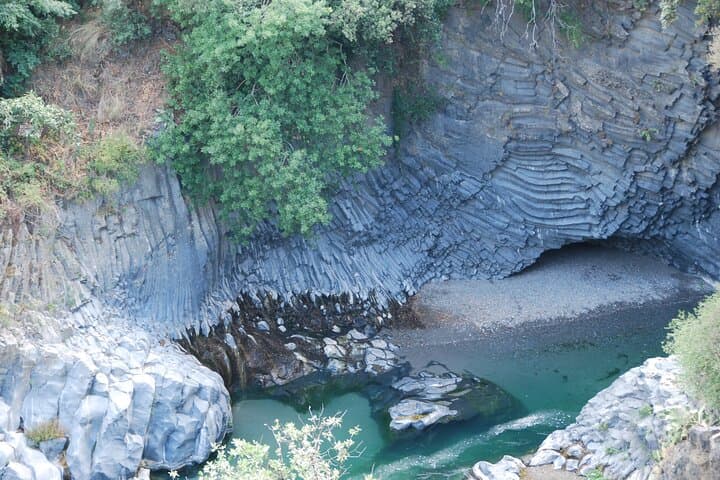
After the hike the rhythm of the day changes. A short drive takes you down through cedar and chestnut stands to the Alcantara River, where prehistoric lava flows cooled into basalt columns so regular they look like the work of a sculptor. The Alcantara Gorges are quieter, wetter—an undercut world of cliffs framing a milky-green river that threads like a ribbon. Walking into the gorge, the sound drops and the river’s voice grows. The water dares you to cool off in summer; in shoulder seasons it flows cold and bracing, urging you to move carefully across the cobbles.
Taken together, the tour feels like a lesson in extremes: basalt and scoria, heat and chill, a landscape that can both create and erase. Historically, Etna has shaped the human story on Sicily—providing ash-rich soils for vineyards and citrus orchards, but also terrifying communities with unpredictable eruptions. The Alcantara Gorges are a geological record in stone, where lava and river have negotiated their paths over millennia, creating the hexagonal columns that draw geologists and photographers alike.
Practicalities matter here. The full experience runs about six to seven hours (the tour lists 360–420 minutes), and it’s structured for travelers who want a mix of active hiking and relaxed nature. The Etna trek portion is roughly 1.5 hours of walking on uneven volcanic ground—boots with solid tread and ankle support are not optional. The river walk through Alcantara is gentler but often involves wet rock; river shoes or sturdy sandals with grip make the difference between confident steps and a clumsy scramble.
Timing is everything. Spring and fall deliver the most comfortable temperatures for hiking, while summer allows for swimming in protected spots of the Alcantara. Weather on Etna is capricious—clear blue skies one moment and a sudden veil of cloud the next—so layered clothing is practical. Bring water, sun protection, and a small dry bag for phone and camera when you head into the gorge.
The tour’s guided format is useful. Local guides not only interpret the geology but also keep you safe on potentially slick lava and in the river. For travelers based in Taormina, the logistics are straightforward: morning pickup or central meeting points are common, and the day ends back near town with time to enjoy Taormina’s narrow streets, seafood restaurants, and a late-afternoon gelato.
This isn’t a technical climb. It’s an accessible, tactile encounter with volcanic landscapes that rewards curiosity. Families with older children, hikers who want to test their legs on interesting terrain, and anyone who likes a pairing of dramatic vistas with a refreshing river walk will enjoy the contrast. If you’re an experienced mountaineer seeking altitude training or summit climbs, Etna offers more demanding ascents, but those require specialist guides and different permits.
For photographers the day is generous: wide-angle vistas on Etna’s slopes, textural close-ups of pumice and basalt, and the sculptural geometry of the Alcantara’s columns. For food lovers, the agricultural richness of Etna—citrus groves, pistachios, and small wineries producing Etna DOC wines—provides a delicious post-hike thread to follow.
Why go? Because this tour compresses two very different Sicilian ecosystems into one thoughtful day: the elemental fury and quiet fertility of Etna, and the patient erosive power of the Alcantara River. It’s part geology lesson, part active day out, and part sensory reset. Nature plays both antagonist and host, the mountain daring you to notice how small you are, the river pulling you toward cool water and reflection. For travelers who like their trips to teach as much as they thrill, this is a day that does both.
Trail wisdom
Small choices, better day.
Wear grippy footwear
Sturdy hiking boots for Etna’s sharp lava and river shoes or sandals with good tread for the Alcantara cobbles.
Bring a small dry bag
Keep your phone, wallet, and a spare layer dry during the gorge walk.
Hydrate and sun-protect
Carry 1–2 liters of water and sunscreen—Etna’s high slopes offer little shade.
Follow your guide’s route
Stay on designated paths—both for safety on volcanic terrain and to protect fragile flora.
Local knowledge
Read the place, not just the route.
Watch for native species including Sicilian rock lizard, Various migratory and raptor birds.
Keep an eye out for wildlife during the transition between areas and habitats. Respect distance guidelines.
Stick to marked trails to protect fragile volcanic soils and river habitats; local guides help minimize erosion and visitor impact.
Follow the guide's instructions on size limits, ethical handling, and leave-no-trace practices.
Small roadside agriturismos near Etna serving fresh citrus and pistachio desserts. A lesser-visited lookout on Etna’s northern rim with views of the Ionian coast (ask your guide)
Locally recommended viewpoints and quiet spots known best to local operators.
Mount Etna has shaped Sicilian agriculture and culture for millennia—its eruptions created fertile soils used for vineyards and orchards.
Maritime roots and regional tradition shape the waterways and working coasts.
Seasonal guide
Four versions of the same landscape.
Spring
Best forWildflower displays · Mild hiking temperatures · Clear views
ChallengesUnpredictable wind · Occasional rain showers
Spring offers mild weather and flowering plants on Etna; bring layers for wind and possible rain.
Summer
Best forSwimming in the Alcantara · Long daylight · Warm coastal evenings
ChallengesStrong sun on Etna · Higher visitor numbers
Summer is best for cooling off in the river—pack swimwear and river shoes and start early to avoid crowds.
Fall
Best forCrisp air and clear vistas · Harvest tastes (citrus, wine) · Fewer tourists
ChallengesShorter daylight · Cooler nights
Autumn provides comfortable hiking temperatures and local harvest events—ideal for pairing nature with food.
Winter
Best forSnow-capped summit views · Dramatic weather photography
ChallengesCold, possible snow at higher elevations · Patchy access to trails
Winter can be dramatic on Etna but may restrict access; choose guided options with winter-ready transport and gear.
Operator details
What the booking data adds.
Included
- ✓Tour guide
- ✓Taxes
- ✓Pick up at your accommodation in Taormina
- ✓Treat and bottled water
- ✓Private transportation
- ✓Discover Travel Insurance
- ✓Entrance fee to the Alcantara River Park
Not included
- —Coffee and/or Tea
- —Snacks
- —Lunch
Good to know
- ✓Infants and small children can ride in a pram or stroller
- ✓Not recommended for travelers with spinal injuries
- ✓Not recommended for pregnant travelers
- ✓Not recommended for travelers with poor cardiovascular health
- ✓Travelers should have at least a moderate level of physical fitness
Pack with intention
What to bring.
Good to know
Common questions.
The guided excursion around the Sartorius craters is about 1.5 hours of walking on uneven volcanic ground.
Plan the edges
The details that make the day easier.
Mount Etna is the highest and most active volcano in Europe and has been erupting for thousands of years, shaping Sicily’s landscape and agriculture.
After the tour head back to Taormina or Giardini Naxos for fresh seafood and a glass of Etna DOC wine. Look for local trattorie serving arancini and granita—simple flavors grounded in the island’s volcanic soils.
- Closest airport
- Catania Fontanarossa (CTA). Driving from Taormina: ~40–70 minutes depending on route and stops. Cell service: patchy on higher slopes. Permits: no special permits for this tour, but access can be limited during high volcanic activity.
These landscapes are fragile—stick to marked trails, avoid removing rocks or plants, and pack out all trash. Support local guides who minimize erosion and respect protected areas.
Explore by topic
Follow the threads.
Keep exploring
Make the story part of the trip.
Set out from Bass Harbor for a private, customizable day on Blue Hill Bay — lighthouses, puffins, seals, and the chance to feel Acadia from the water. Small groups, local captains, unforgettable views.
In four hours you can move from shaded canyon ferns to wind-scoured coastal ridgelines, guided by someone who knows where the light—and the hidden views—live. This private half-day hike on the Monterey Peninsula or Big Sur is compact, curated, and perfect for travelers who want depth without a multiday commitment.
 Related story
Beneath a sky of shifting light, Skaftafell’s ice reads like a map of time. This three-hour guided glacier hike mixes technical instruction with geology and culture: compact, safe, and unforgettable.