
What the day feels like
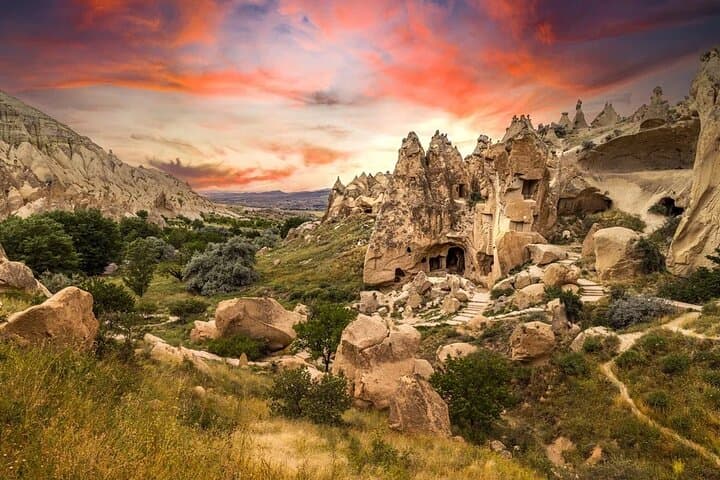
You arrive at dawn in Göreme to a sky full of balloon shadows—pale orbs ticking the horizon—and the air tastes faintly of wood smoke and simmering black tea. The first day begins with a drive across honey-colored plateaus where rock looks less like stone and more like architecture: towers, cones, and rolling waves carved in tuff. On the road you pass fields of soft volcanic ash and villages where carved-house doorways still wear iron rings used for tethering donkeys. The landscape feels engineered to surprise you at every turn; gullies reveal themselves like chapters, each with its own mood and myth.
This is the rhythm of the 2 Days Red and Green tour: one leg of geological theater and Byzantine refuge, the next of quiet canyons and living craft. The “Red” circuit moves through high vistas and fairy chimneys—Zelve Open Air Museum sits like an abandoned theater of caves—while the “Green” route threads the cool shadow of Ihlara Valley down to the subterranean cities where centuries of people found concealment. If you want a concentrated, tactile primer on Cappadocia’s geology, art, and human ingenuity, this is it.
Geology and history are inseparable here. The Cappadocian tableland is built of tuff—soft volcanic deposits left by eruptions millions of years ago. Over time wind and water sculpted that ash into pinnacles, spires and plateaus; where rock was soft enough, people carved homes, churches, and entire underground networks to escape invaders and harsh winters. The underground city of Derinkuyu (included on this route) plunges many levels below the earth—a startling counterpoint to the skyward gestures of the fairy chimneys. Small frescoed chapels, hidden cisterns, and stone-rolled doors tell stories of Byzantine Christians, Seljuk traders, and villagers who adapted architecture to an elemental landscape.
Culturally, Cappadocia is a crossroad. Pottery has been made in nearby Avanos for millennia from red clay pulled from the Kızılırmak (Red River); the region keeps a living tradition of ceramics, seen on the tour as artisans demonstrate their craft. Markets brim with dried apricots, handwoven kilims, and bottles of local wine—this is a place where ancient techniques meet contemporary tourism.
Practicality sits beside wonder. The itinerary compresses a lot—Zelve, Göreme viewpoints, Derinkuyu or Kaymaklı underground city, and a walk through Ihlara Valley—so pace yourself. Walks through Ihlara’s canyon follow the Melendiz River and are shaded and cool; bring waterproof shoes and expect uneven roots and stone steps. In contrast, the high plateaus on the Red route are exposed and windy: sun protection is non-negotiable. The tour includes a pottery demonstration and museum entrance fees, but wear comfortable clothes that can handle dusty cave floors.
Why book this two-day circuit? It’s a concentrated primer on Cappadocia’s best, ideal for travelers who want to move beyond balloon photos to the places that define the region: the open-air monasteries, the carved settlement patterns, the long river gorge where churches survive in quiet niches. The tour is also logistical glue—transport between dispersed sights, local guide commentary, and a timetable that lets you see sunset at a lookout and still make it to your guesthouse.
If you’re planning it yourself, aim for spring or fall when days are warm and light is long but not baking. Start day one early to avoid mid-day crowds at Zelve and Göreme. Carry cash for small purchases—pottery studio tips and museum snacks are often cash-only. And if you’re curious about extending your stay, ask your guide about hikes that continue from the Ihlara rim or small wineries near Ürgüp.
Bookers should also consider adding context before they go. A short read about Cappadocian geology, a primer on Byzantine frescoes, and a basic map of underground cities will make the caves and chapels come alive. For direct booking and a full itinerary, check the organized option here: <a href="https://app.advcollective.com/local-experts/cappadocia-2-day-red-green-tour-zelve-ihlara-underground-cities">2-Day Red & Green Cappadocia tour</a>, which spells out logistics and inclusions.
At dusk on day two you’ll understand how the region compacts human history into a few square kilometers: churches set in cliff walls, ancient storage rooms, ovens carved into living rock, and pathways once trod by people who needed shelter from invasion and weather. The landscape is not passive; it’s a partner—moody, patient, and at times forbidding. Leave room for silence on the trail and curiosity around a bend. The trip is engineered for discovery: a small tour package that opens you to geology, history, and craft without flattening them into a checklist. For travelers who want more than a photo, it’s an invitation to stand in places shaped by natural forces and centuries of human hands and make sense of both.
Trail wisdom
Small choices, better day.
Start Early
Begin day one at first light to avoid crowds at Zelve and catch softer morning light for photos.
Footwear Matters
Use sturdy hiking shoes with good grip for Ihlara’s uneven steps and dusty cave floors.
Bring Cash
Small studios and market vendors often prefer cash for pottery purchases and tips.
Hydration & Shade
Pack a 1–2L water bottle and a sun hat for exposed plateau sections on the Red route.
Local knowledge
Read the place, not just the route.
Watch for native species including Eurasian hoopoe, Anatolian ground squirrel.
Keep an eye out for wildlife during the transition between areas and habitats. Respect distance guidelines.
Many sites are fragile—stay on marked paths, avoid touching frescoes, and support local guides and studios that practice sustainable tourism.
Follow the guide's instructions on size limits, ethical handling, and leave-no-trace practices.
Ortahisar Castle lookout for quieter sunset views. A short, lesser-known side chapel in Ihlara Valley with intact fresco fragments
Locally recommended viewpoints and quiet spots known best to local operators.
Cappadocia’s carved dwellings and underground refuges were developed over centuries as people adapted to the soft volcanic tuff and sought refuge from invasions, especially during Byzantine times.
Maritime roots and regional tradition shape the waterways and working coasts.
Seasonal guide
Four versions of the same landscape.
Spring
Best forWildflowers and pleasant temperatures · Long daylight for walking · Photography at soft light
ChallengesOccasional rain · Cool mornings
Spring is ideal—wildflowers and mild daytime temps make walking the plateaus and canyon comfortable.
Summer
Best forExtended daylight · Green canyon foliage · Off-season deals in some lodgings
ChallengesHigh sun and heat · Crowds and dust
Summer brings hot, exposed conditions on the plateaus—plan early starts and lots of water.
Fall
Best forCrisp air and good light · Harvest season for local produce · Smaller crowds than summer
ChallengesCooler nights · Possible wind on exposed ridges
Fall balances warmth and clarity—excellent colors and comfortable hiking weather.
Winter
Best forSnow-dusted landscapes for dramatic photos · Fewer tourists · Lower rates
ChallengesCold temps and potential snow/ice · Shorter daylight
Winter is quiet and atmospheric but can add ice and cold, especially in shaded valleys and caves.
Operator details
What the booking data adds.
Included
- ✓Transportation by a comfortable A/C non-smoking luxurious car / van with professional driver
- ✓Hotel pickup and drop-off
- ✓Professional English Guide
- ✓Lunch
- ✓Transport by air-conditioned minivan
Not included
- —Drinks
- —Accommodation
- —Hot air balloon tour
Good to know
- ✓Infants and small children can ride in a pram or stroller
- ✓Infants are required to sit on an adult’s lap
- ✓Suitable for all physical fitness levels
- ✓Children must be accompanied by an adult
- ✓We can change tour days
Pack with intention
What to bring.
Good to know
Common questions.
Walks include short hikes, stone steps, and uneven paths—nothing technical, but expect moderate effort and multiple short walks each day.
Plan the edges
The details that make the day easier.
Cappadocia’s iconic 'fairy chimneys' are carved from volcanic tuff deposited by eruptions millions of years ago; wind and water erosion sculpted the towers you see today.
After a day on the trail, head to a family-run lokanta in Göreme for gözleme and çay, or cross to Avanos for pottery demonstrations and riverside cafés—pair a savory gözleme with local Anatolian wine or ayran for a simple, satisfying meal.
- Closest airports
- Nevşehir Kapadokya (NAV) ~30 km
- Kayseri Erkilet (ASR) ~75 km; Driving distance from Göreme to main sites
- 10–60 minutes; Cell service: reliable in towns, patchy in valleys; Permits: museum and site entrance fees apply, no special permits required.
Stick to marked paths, avoid touching fragile frescoes, and support local businesses like potters and family-owned guesthouses to keep tourism benefits local and sustainable.
Explore by topic
Follow the threads.
Keep exploring
Make the story part of the trip.
Set out from Bass Harbor for a private, customizable day on Blue Hill Bay — lighthouses, puffins, seals, and the chance to feel Acadia from the water. Small groups, local captains, unforgettable views.
In four hours you can move from shaded canyon ferns to wind-scoured coastal ridgelines, guided by someone who knows where the light—and the hidden views—live. This private half-day hike on the Monterey Peninsula or Big Sur is compact, curated, and perfect for travelers who want depth without a multiday commitment.
 Related story
Beneath a sky of shifting light, Skaftafell’s ice reads like a map of time. This three-hour guided glacier hike mixes technical instruction with geology and culture: compact, safe, and unforgettable.