
What the day feels like
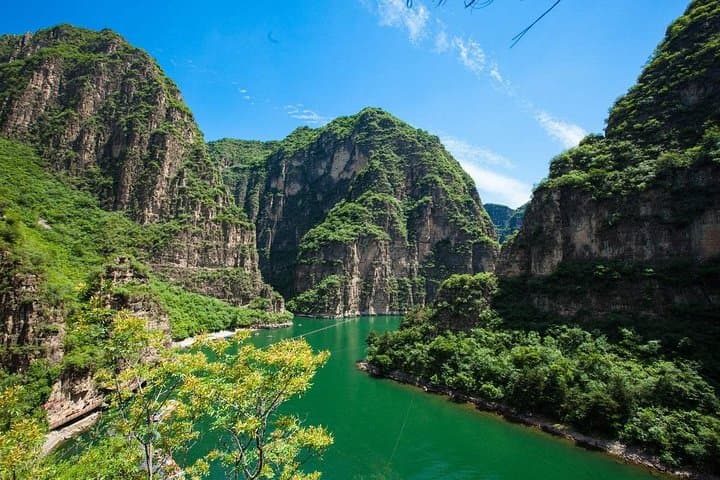
You arrive before the coach crowd, the highway pulling you northwest out of Beijing and across a landscape loosening into hills. The air tastes of stone and late-summer dust; fields bend away from the city. At the base of the gorge the river hunches and glares—dark, clean water daring you forward—while sheer limestone walls stitch vertical lines into the sky. Closer still, a series of hand-hewn doorways peer out of a cliff face like windows into a vanished life. That contrast—rivers that move you and stone that keeps its secrets—is the spine of this single, satisfying day.
The private excursion, conceived as a roughly eight-to-nine hour loop from Beijing, pairs two very different kinds of topography and history. Longqing Gorge is the water: a narrow, scenic canyon nicknamed the "Little Three Gorges" for its dramatic limestone cliffs and seasonal boat rides. Guyaju Caves are the land: a labyrinth of ancient cliff dwellings carved into loess and sandstone, their origins debated but their atmosphere undeniable. Taken together, the sites read like a compact primer in northern China’s geology, settlement history, and the way landscapes shape human lives.
Geology and history come with texture. Longqing Gorge’s walls were cut by the Juma River over eons; the canyon channels wind and light into narrow, theatrical slits. In winter the gorge hosts an elaborate ice lantern festival, when artists carve colorful sculptures and drop temperatures transform waterfalls into glass. Guyaju Caves, perched higher and drier, are an archaeological curiosity—clusters of rooms and storage niches with uneven floors and low ceilings. Scholars argue about when the site was inhabited; most dates place human use across centuries, likely including the Tang period and later local communities, though much remains uncertain. Walking those chambers you can almost hear the low, hand-tooled rhythms of daily life echoing across centuries.
Cultural texture is immediate on this trip. Your English-speaking driver smooths logistics—tickets, routes, timing—leaving you free to pay attention. Around both sites, small vendors and tea stalls serve simple food: grilled corn, fried buns, and tea brewed on tiny stoves. The ride itself is instructive—the road out of Beijing traces a transition from metropolitan sprawl to rural terraces and grazing hills. That geography matters: this is a place where a day trip can feel like a real shift in pace.
Practicality lives under the scene-setting. The tour runs about 8–9 hours and often includes entrance fees and pickup/drop-off in Beijing; prices start near $158. Longqing Gorge is sometimes closed for maintenance or seasonal operation (note: Longqing Gorge may not open every year; check current status before booking). When it is open, the best experiences combine an early start to avoid crowds, a short boat ride through the canyon, and a hike along the upper trails for panoramic shots. Guyaju requires a different posture—slow, exploratory walking among low-ceilinged rooms, watching your head and carrying water.
What travelers love most is variety. There’s the tidy exhilaration of a boat nudging through narrow water, the hush of a cave chamber, the immediacy of regional snacks and the openness of a Chinese countryside that still feels raw compared to Beijing’s controlled bustle. It’s an itinerary that satisfies different appetites in a single day—nature, light adventure, and a quiet ache of historical curiosity.
If you’re planning it: aim for autumn for crisp air and color; bring layered clothing and good shoes; pack a camera with a wide-angle and a telephoto for the canyon walls and cliff details. An English-speaking driver makes logistics painless: entrance tickets handled, a route that optimizes light and crowd flow, and return to Beijing without fuss. For independent planners, the same day can be assembled by train or private transfer, but expect more time on your feet coordinating tickets and transfers.
This trip is not about hardship; it’s about a balanced day that rewards attention. Bring the practical—water, sun protection, a rain layer—and leave time for small discoveries: a tea vendor’s recommended snack, a local old man who remembers the gorge before the railings, the weird geometry of a cave’s carved doorway. Those are the moments that convert a destination into a memory.
To book, plan, and find a local guide who can stitch the logistics, see this private day trip from Beijing that pairs both sites and includes an English-speaking driver: <a href="https://app.advcollective.com/local-experts/day-trip-from-beijing-longqing-gorge-guyaju-caves-private-excursion">Longqing Gorge and Guyaju Caves private excursion</a>. Whether you go for the canyon’s reflective quiet or the cave’s earthen intimacy, this route is one of northern China’s most compact and satisfying escapes from the city.
Trail wisdom
Small choices, better day.
Start Early
Begin at first light to avoid coaches and capture the canyon in soft morning light.
Wear Grippy Shoes
Trail surfaces at both sites can be uneven and slippery; choose sturdy footwear with traction.
Hydrate & Snack
Carry at least 1–1.5 liters of water and portable snacks—the climb and cave exploration are more draining than they look.
Bring Cash
Small vendors and some entrance lines may accept only cash (RMB); have small bills for snacks and tips.
Local knowledge
Read the place, not just the route.
Watch for native species including Migrant waterfowl in the canyon, Small mammals such as roe deer and foxes in the hills.
Keep an eye out for wildlife during the transition between areas and habitats. Respect distance guidelines.
Both sites are managed scenic areas—stay on marked trails, pack out litter, and avoid disturbing archaeological features or wildlife.
Follow the guide's instructions on size limits, ethical handling, and leave-no-trace practices.
Upper canyon viewpoints reached by a short, steep trail for unobstructed panoramas. A roadside tea stall near Guyaju where locals stop for boiled tea and roasted corn
Locally recommended viewpoints and quiet spots known best to local operators.
Guyaju Caves are an enigmatic cluster of cliff dwellings likely occupied in the historic period (scholars suggest Tang-era use among other possibilities); Longqing Gorge’s rockcut forms are the result of long-term river erosion.
Maritime roots and regional tradition shape the waterways and working coasts.
Seasonal guide
Four versions of the same landscape.
Spring
Best forWildflowers · Fewer crowds · Cool hikes
ChallengesUnpredictable rain · Chilly mornings
Spring brings fresh green on the hills and milder hiking temperatures, but be ready for occasional rain and cool starts.
Summer
Best forBoat rides · Lush canyon views · Evening festivals
ChallengesHeat and humidity · Crowds on weekends
Summer showcases full river flow and dense foliage—best early in the morning to avoid heat and crowds.
Fall
Best forAutumn colors · Crisp visibility · Photographic light
ChallengesShorter daylight hours · Cooler evenings
Fall is the optimal balance: clear skies, vivid color, and comfortable hiking—plan for warmer layers by sunset.
Winter
Best forIce lantern displays · Empty trails · Sharp light
ChallengesCold temperatures · Some attractions may be closed
Winter can be spectacular—Longqing Gorge’s ice festival is a highlight—but prepare for freezing temperatures and possible closures.
Operator details
What the booking data adds.
Included
- ✓Hotel pickup and drop-off
- ✓Bottled water
- ✓English speaking driver
- ✓Entrance fees
- ✓Transport by private vehicle
Not included
- —Lunch
- —Tour guide
- —Gratuities
Good to know
- ✓Specialized infant seats are available
- ✓Suitable for all physical fitness levels
- ✓A maximum of 6 people per booking
- ✓Children must be accompanied by an adult
- ✓Please wear comfortable walking shoes
Pack with intention
What to bring.
Good to know
Common questions.
Expect roughly 8–9 hours door-to-door, depending on traffic and how long you spend at each site.
Plan the edges
The details that make the day easier.
Longqing Gorge is sometimes called the "Little Three Gorges" and hosts an annual winter ice lantern festival where giant colorful ice sculptures line the canyon.
After the day, head back toward Beijing for regional noodles or a Peking duck dinner, or stop in Yanqing for grilled trout and roadside corn—small tea stalls near the attractions offer simple, authentic snacks.
- Closest airport
- Beijing Capital (PEK) or Beijing Daxing (PKX); Typical driving time from central Beijing: ~2 hours each way; Cell service: generally available but spotty in the canyon; Permits
- tickets
- entrance fees usually required (often included in private tour).
These scenic areas are sensitive—stay on established trails, do not remove artifacts or stones, and pack out anything you bring in to preserve the sites for future visitors.
Explore by topic
Follow the threads.
Keep exploring
Make the story part of the trip.
Set out from Bass Harbor for a private, customizable day on Blue Hill Bay — lighthouses, puffins, seals, and the chance to feel Acadia from the water. Small groups, local captains, unforgettable views.
In four hours you can move from shaded canyon ferns to wind-scoured coastal ridgelines, guided by someone who knows where the light—and the hidden views—live. This private half-day hike on the Monterey Peninsula or Big Sur is compact, curated, and perfect for travelers who want depth without a multiday commitment.
 Related story
Beneath a sky of shifting light, Skaftafell’s ice reads like a map of time. This three-hour guided glacier hike mixes technical instruction with geology and culture: compact, safe, and unforgettable.