
What the day feels like
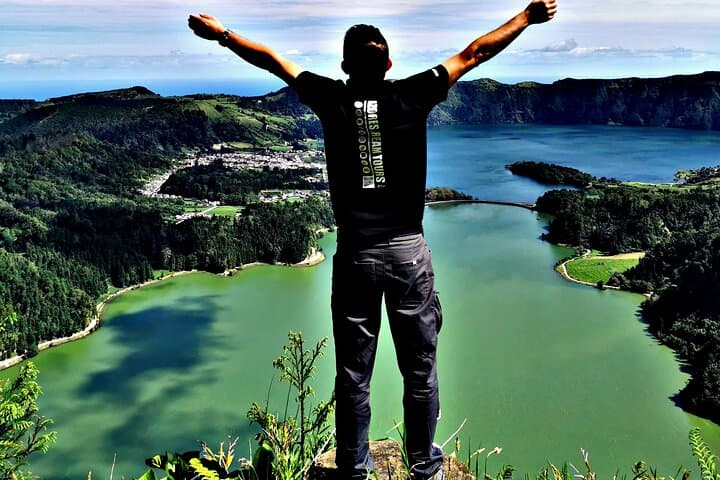
You arrive at the rim as the island exhales. Wind pushes across the crater, lifting the scent of damp cryptomeria and turf; below, two lakes sit like old rivals — one calm, blue as a clear sky, the other a mossy, emerald green. At Vista do Rei the world narrows to a perfect frame: the stair-stepped parish of Sete Cidades tucked into the crater bowl, fields cut by stone walls, and a shoreline that traces volcanic memory. This is the opening act of a three- to four-hour loop that reads like São Miguel in miniature — geology, folklore, agriculture and coastal drama all arranged for a brief, brilliant encounter. Book this shore excursion through your local experts here: <a href="https://app.advcollective.com/local-experts/sete-cidades-shore-excursion-blue-green-twin-lakes-sao-miguel">Sete Cidades shore excursion</a>.
Sete Cidades is not merely scenic; it’s sculpted. The twin lakes occupy a volcanic caldera formed by a massive eruption, later modified by landslides and rain that filled its low points. Locals tell a parallel history: two lovers, a princess from the north and a shepherd from the south, parted on these cliffs, and their tears formed the blue and green lakes — a tidy human explanation for a complex geological past. You’ll see the island’s layers: old lava flows, black basalt cliffs, fertile deposits that have made São Miguel a patchwork of small farms and feverish greenhouses. On this shore excursion you don’t just look — you’re led to vantage points (Vista do Rei and Escalvado), into the quiet village center, and into pineapple greenhouses that ripple with warmth and steam where a tropical fruit matures in the middle of the Atlantic.
The guided timing is pragmatic. Tours normally start at 9 a.m.; cruise passengers arriving after that will have the tour begin one hour after docking. That predictability means you can plan coffee and a quick stroll in Ponta Delgada, then settle into a comfortable rhythm: short drives, short walks, and plenty of stops to photograph the lakes from different angles. Expect paved overlooks and easy gravel paths; the excursion is accessible to most travelers who can manage moderate walking and a few shallow steps. Along the way your guide will point out cryptomeria plantations (introduced and now ubiquitous), laurisilva remnants, and the surprisingly local practice of growing pineapples in heated glasshouses — the crop takes nearly two years to mature and is still harvested by hand.
Photography drives many visitors here: the split-color lakes look different at every angle and time of day. But Sete Cidades is more than an Instagram postcard. The parish has about 800 inhabitants whose lives remain shaped by the crater — small-scale agriculture, local taverns, and simple stone churches. If you take the short detour to Escalvado, you’ll see where lava meets coast and the far town of Mosteiros, where basalt stacks rise from the sea and Ferraria’s geothermal bay simmers with natural heat. These are the practical draws: varied landscapes within a short radius, and the chance to thread how São Miguel’s volcanic personality informs both daily life and extraordinary views.
Practicalities are straightforward but worth noting. The excursion runs about 180–240 minutes and the advertised price starts from $70.74 USD with a flexible cancellation policy. Wear layers — mornings can be brisk and the crater rim is exposed — and bring a waterproof shell: showers can arrive as quickly as ferry ferries. If you’re on a cruise, tell your guide your docking time; the departure buffer is designed to accommodate ship schedules. Finally, be mindful: the crater’s soils and native patches are fragile. Stick to paths, take your trash with you, and consider a local guide to deepen your understanding of the landscape and local livelihoods.
Why go? Because Sete Cidades condenses the Azores into an accessible, emotionally resonant slice: volcano and ocean meet, human history nests in fertile ground, and the twin lakes hold a lesson in perspective — the same place can look very different depending on where you stand. If your stop is brief, this shore excursion gives you more than a view; it gives context, texture, and a few memorable sips of pineapple liqueur at a greenhouse tasting. Reserve a place and get a guide who knows the best lighting windows and the quieter paths to the parish for a more human encounter with this volcanic heart of São Miguel: <a href="https://app.advcollective.com/local-experts/sete-cidades-shore-excursion-blue-green-twin-lakes-sao-miguel">book Sete Cidades shore excursion</a>.
On land and from viewpoints, you’ll find the Azores’ personality is candid rather than contrived: practical fishermen, farmers tending small plots, and the kind of hospitality that slips a warm pastry across the counter with your coffee. It’s an efficient, satisfying shore day — compact, scenic, and rooted in island culture — and, if you pay attention, it will also teach you how the Atlantic shaped not just the rocks, but the people whose lives orbit these twin lakes. For photographers, hikers with limited time, or anyone who wants a grounded introduction to São Miguel, this is a near-perfect opening act. For a longer stay, pair it with a dip at Ferraria, a stop at a tea plantation, or an evening in Ponta Delgada to taste local cheese and seafood — the crater will still be there tomorrow, but the light that made the lakes sing will have moved on.
Trail wisdom
Small choices, better day.
Start Early for Best Light
Plan to be at Vista do Rei in the morning to avoid crowds and catch the cleanest light across both lakes.
Layer Up
Bring a windproof shell—conditions on the crater rim change fast and it can be colder than Ponta Delgada.
Respect the Crater Ecology
Stay on designated paths and don’t pick vegetation; native laurisilva patches are fragile and recovering.
Carry a Reusable Bottle
Water stops are limited; a 1–1.5L bottle keeps you hydrated during viewpoints and short walks.
Local knowledge
Read the place, not just the route.
Watch for native species including Azores Bullfinch (Priolo) — endemic bird species, Seabirds such as Cory's shearwater along the coast.
Keep an eye out for wildlife during the transition between areas and habitats. Respect distance guidelines.
The crater’s native vegetation and agricultural terraces are sensitive; stay on trails, respect local farms, and pack out all waste to protect this fragile landscape.
Follow the guide's instructions on size limits, ethical handling, and leave-no-trace practices.
Escalvado viewpoint for coastal panoramas toward Mosteiros and Ferraria. A quiet walk into the parish center of Sete Cidades to see local stone houses and a small church
Locally recommended viewpoints and quiet spots known best to local operators.
Sete Cidades sits in a volcanic caldera formed hundreds of thousands of years ago; the twin lakes and surrounding settlements reflect both geological forces and an enduring agricultural tradition.
Maritime roots and regional tradition shape the waterways and working coasts.
Seasonal guide
Four versions of the same landscape.
Spring
Best forWildflowers · Mild temperatures · Fewer crowds
ChallengesChangeable showers · Windy rims
Spring brings vivid greens, comfortable hiking temperatures, and fewer visitors; pack a light rain layer.
Summer
Best forClear skies · Longer daylight · Warm coastal swims
ChallengesHigher visitor numbers · Stronger sun
Warm, long days make for excellent views and photography; arrive early to avoid mid-day crowds.
Fall
Best forDramatic skies · Quieter trails · Autumn colors
ChallengesUnstable weather front · Shortening daylight
Autumn can be atmospheric with dramatic cloudscapes; expect cooler mornings and occasional rain.
Winter
Best forStorm-watching · Lower prices · Coastal drama
ChallengesWind and rain · Possible road closures
Wintry Atlantic weather keeps visitor numbers low but make sure to dress for wind and rain and check local conditions.
Operator details
What the booking data adds.
Included
- ✓Views at Sete Cidades are subject to weather conditions and visibility.
- ✓Pick-up and drop-off at port
- ✓Live commentary
- ✓Air-conditioned vehicle
- ✓Tour duration and stops may vary depending on cruise schedules and local conditions.
- ✓Driver / local guide
Not included
- —Gratuities
Good to know
- ✓Specialized infant seats are available
- ✓Suitable for all physical fitness levels
- ✓Children must be accompanied by an adult
- ✓At time of booking, Cruise ship passengers must provide the following information at time of booking: ship name, docking time, disembarkation time and re-boarding time
- ✓May be operated by a multi-lingual guide
Pack with intention
What to bring.
Good to know
Common questions.
Tours normally start at 9:00 a.m. For cruise ship passengers arriving after 9:00 a.m., the tour will start one hour after docking.
Plan the edges
The details that make the day easier.
The two lakes are called the Blue Lake and Green Lake due to differences in depth and the presence of algae and vegetation; nearby pineapple greenhouses require nearly two years for the fruit to mature.
After the outing, head to Mosteiros for grilled seafood and sunset over basalt stacks or return to Ponta Delgada to sample local cheese, try pineapple liqueur, and sip a coffee in the old town—visit a greenhouse tasting if your guide offers one.
- Closest airport
- João Paulo II Airport (Ponta Delgada). Driving from Ponta Delgada: ~25–35 minutes (approx. 25–30 km). Cell service: generally available at viewpoints but can be patchy inside the crater. Permits: none required for standard sightseeing; check local rules for drones.
Sete Cidades’ crater environment is ecologically sensitive—stick to trails, avoid trampling vegetation, use established parking areas, and choose local guides to support community-based tourism.
Explore by topic
Follow the threads.
Keep exploring
Make the story part of the trip.
Set out from Bass Harbor for a private, customizable day on Blue Hill Bay — lighthouses, puffins, seals, and the chance to feel Acadia from the water. Small groups, local captains, unforgettable views.
In four hours you can move from shaded canyon ferns to wind-scoured coastal ridgelines, guided by someone who knows where the light—and the hidden views—live. This private half-day hike on the Monterey Peninsula or Big Sur is compact, curated, and perfect for travelers who want depth without a multiday commitment.
 Related story
Beneath a sky of shifting light, Skaftafell’s ice reads like a map of time. This three-hour guided glacier hike mixes technical instruction with geology and culture: compact, safe, and unforgettable.