
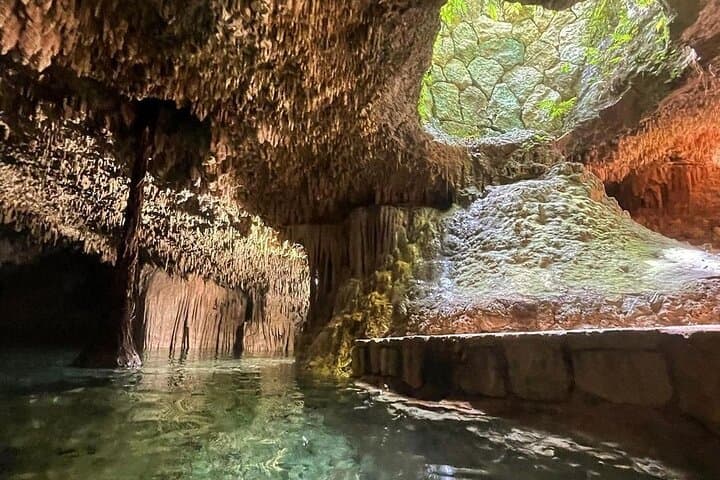
What the day feels like
You step off the minivan into a pocket of silence, the kind that presses down after highway noise and hotel-pop music fall away. The jungle breathes around you — a green cathedral of ceiba and strangler fig — and somewhere below that canopy, the limestone gives way to water. This is Zapote Prehistoric Park: a single-day loop that stitches three cenotes together with swinging cables, wooden platforms and jungle trails. For seven to eight hours you trade the beaches of the Riviera Maya for something older and darker: sinkholes that light up like aquamarine wells and a cavernous cenote that keeps its secrets in stalactites.
The trip begins with the easiest thrill: the zip lines. Four cables thread you over the jungle and the smell of damp earth, shifting from the nervous grin of a first-timer to the steady, elastic calm of someone who’s found their appetite for speed. Zip lines here aren’t just adrenaline; they’re a viewpoint. You get a quick reading of the landscape — karst shelf, patches of secondary forest, and the occasional glint where water has cut open the ground.
Then the water takes over. Zapote cenote is a plunge pool of vivid clarity; its 14- and 16-meter diving platforms dare you to test gravity. The jump is short and fierce: a breath, a drop, and then that exhilarating buoyant calm as the cave-mouth sunlight blooms on the surface. Abuelo Cheche—less a plunge than a quiet revelation—drops you into a cavern where the ceiling is a sculptural map of millennia, and the water is unexpectedly warm and glass-clear. Las Palmas closes the day like a private cove, a shallow, reflective pool where you can float and listen to the jungle’s exhale.
Geology and culture are folded into every stroke. The Yucatán Peninsula is a limestone sponge: rainwater dissolves bedrock, and when the roof collapses you get a cenote. These pools were critical to Mayan life; they were water sources and sacred places, portals to the underworld in ancient cosmology. The park’s rough-hewn walkways and local guides reflect a living relationship with that history — not museumization, but stewardship and storytelling.
This is as much a nature day as an activity day. Expect turquoise visibility in the open cenotes, dappled light in caverns, and shadow-draped banks where iguanas sun themselves. Guides will point out endemic plants and explain the fragile, connected aquifer that threads beneath the peninsula — a freshwater system that’s surprisingly vulnerable to contamination and mismanagement.
Practicalities: the tour runs 7–8 hours, typically with hotel pickup in Cancún and nearby resort zones; the listed starting price is about USD 142 and includes equipment, guides and most park fees. It’s a full day — take it seriously. Bring swimwear under shorts, reef-safe sunscreen, and a small dry bag for your phone and a camera. If you jump, expect a photographer or guide to offer shots; if you’re a swimmer, bring fins or rent them from the operator to make snorkeling the caverns more efficient.
Who is this for? Casual travelers who like variety — a little adrenaline, a little exploration — will find a day here perfectly balanced. Moderate hikers and outdoor people who want an activity-rich trip without technical climbing skills will be comfortable. Families with older kids can join; the jumping platforms are optional. The water is forgiving, but if you aren’t a confident swimmer, a life jacket is standard and recommended.
Timing matters. Mornings mean clearer water and fewer crowds; afternoons can be hotter and busier. Weekdays in shoulder season (March–May or late October–November) often produce the best combination of light, temperature and fewer tour groups. Rain makes zip-lining slick and cavern ceilings darker, though a quick tropical shower won’t ruin the experience — it can even deepen the jungle scent.
Sustainability shows up in small ways here: park staff will brief you on not using chemical sunscreens, staying on trails, and not touching delicate formations. That’s important — these cenotes connect to an underground river system that feeds local communities and fragile reef systems. The day feels celebratory and intimate: a chance to touch a part of the peninsula that’s at once recreational and sacred.
If you go, plan the rest of your stay to reflect the tone of the day. Slow down afterward — a seafood dinner in Puerto Morelos, a quiet cerveza while you watch pelicans, or a stroll through a local market will keep the vibe low and rooted. Zip lines and cliff jumps make for a great story, but the lasting impression is usually the water: its temperature, its clarity, and the way the jungle gathers around it like an audience.
In short: Zapote Cenotes Adventure Tour mixes high-country playfulness with groundwater reverence. It’s a full-day, itinerary-rich way to experience the Yucatán’s signature landscape without heavy technical demands — and the kind of trip that leaves you a little wetter, slower to speak, and more aware of the delicate network of water beneath your feet.
Trail wisdom
Small choices, better day.
Start early
Morning departures mean clearer water, cooler temps and fewer tour groups at each cenote.
Bring a dry bag
Protect your phone, wallet and spare clothes between cenotes—waterproof pockets can save a day.
Use reef-safe sunscreen
Chemical sunscreens harm karst aquifers and downstream reefs; opt for mineral-based formulas.
Choose the jump that fits you
14–16 meter platforms are optional—start low and work up if you’re nervous.
Local knowledge
Read the place, not just the route.
Watch for native species including Iguana, Tropical birds such as motmots.
Keep an eye out for wildlife during the transition between areas and habitats. Respect distance guidelines.
The Yucatán’s underground aquifer is fragile; visitors are encouraged to use reef-safe sunscreen, avoid soaps in cenotes, and follow guide instructions to protect water quality.
Follow the guide's instructions on size limits, ethical handling, and leave-no-trace practices.
Ask guides for a shaded rock near Las Palmas—great for quiet floating away from groups. Look for small cenote outlets where freshwater trickles into mangrove pools, often teeming with small fish
Locally recommended viewpoints and quiet spots known best to local operators.
Cenotes were central to Mayan life and ritual; many acted as freshwater sources and were often considered entrances to the underworld in Mayan cosmology.
Maritime roots and regional tradition shape the waterways and working coasts.
Seasonal guide
Four versions of the same landscape.
Spring
Best forClear water visibility · Comfortable temperatures
ChallengesOccasional crowds during spring break · Breezy afternoons
Spring is one of the best times: warm days, clear cenotes and generally stable weather—arrive early to avoid crowds.
Summer
Best forLush jungle scenery · Longer daylight
ChallengesHot, humid conditions · Afternoon rainstorms
Summer brings dense, vivid jungle but also higher humidity and daily showers—bring quick-dry layers and stay hydrated.
Fall
Best forFewer tourists · Good water levels
ChallengesHurricane season window (Aug–Oct) · Possible rough travel days
Fall offers quieter parks and pleasant water levels; keep an eye on weather forecasts during hurricane season.
Winter
Best forCooler mornings · Low rainfall
ChallengesTourist season increases prices · Cooler morning temps may feel brisk after swimming
Winter is dry and comfortable, but expect more visitors and higher prices—book transfers and pickup early.
Operator details
What the booking data adds.
Included
- ✓Entrance/Entry to the Abuelo Cheche cenote
- ✓Lifejacket
- ✓Flavored waters
- ✓hammock area
- ✓Light meal
- ✓Circuit of 4 zip line lines
- ✓Entrance/Entry to the Las Palmas cenote
- ✓Entrance/Entry to the Zapote cenote
Good to know
- ✓Infants are required to sit on an adult’s lap
- ✓Not recommended for travelers with spinal injuries
- ✓Not recommended for pregnant travelers
- ✓Suitable for all physical fitness levels
Pack with intention
What to bring.
Good to know
Common questions.
The tour runs about 7–8 hours and typically includes hotel pickup (Cancún area), guides, equipment for zip lines and cenote swims, park access and most fees.
Plan the edges
The details that make the day easier.
Cenotes are sinkholes formed when the limestone bedrock of the Yucatán collapsed, creating a connected freshwater system that was vital to Mayan civilization.
After the tour head to Puerto Morelos for fresh ceviche and grilled fish at a seaside palapa, or to Cancún’s quieter local taquerías for a cerveza—both keep the day rooted in local flavors and community.
- Closest airport
- Cancún International Airport (CUN); Typical driving from Cancún hotel zone: 45–60 minutes; Cell service: intermittent in cenotes and caverns; Permits
- passes
- usually included with operator booking.
These cenotes feed a fragile aquifer—use reef-safe sunscreen, pack out waste, avoid soaps in the water, and support local guides who practice low-impact tourism.
Explore by topic
Follow the threads.
Keep exploring
Make the story part of the trip.
In four hours you can move from shaded canyon ferns to wind-scoured coastal ridgelines, guided by someone who knows where the light—and the hidden views—live. This private half-day hike on the Monterey Peninsula or Big Sur is compact, curated, and perfect for travelers who want depth without a multiday commitment.
 Related story
Beneath a sky of shifting light, Skaftafell’s ice reads like a map of time. This three-hour guided glacier hike mixes technical instruction with geology and culture: compact, safe, and unforgettable.
 Related story
Lose the city for a few hours without leaving it: this 5-mile, 900-foot-gain Forest Park loop threads old-growth pockets, city viewpoints, and cultural landmarks for a compact taste of Portland’s wild side. Expect moss, roots, and stories.