
What the day feels like
You step off the bus in Progreso with salt in your hair and the Gulf pushing a cool breath across the pier. The group gathers—families, solo travelers, a couple who keep checking a waterproof camera—and the guide folds a map like a secret. The road out of town is short and scrubby, the kind of highway that peels away from the coast and lets limestone take over. In minutes the heat becomes softer, shaded by low-growing ceiba and the occasional flowering thorn tree. Then, without fanfare, the jungle opens and the earth admits itself: a round, blue hole that looks as if the sky has been scooped into a natural well.
Cenotes in the Yucatán are literal doorways to the peninsula’s past. These are collapsed limestone caverns where the freshwater table meets open air, fed by an underground network of rivers that carve the island from below. Swim in one and you’re floating on a dissolved history—the same water systems people used for millennia, long before roads or towns. The guide explains that Maya settlements clustered around cenotes because they were reliable water sources and spiritual thresholds. Today those waters offer a different kind of sustenance: quiet, cool refuge from the heat and a direct encounter with a unique karst landscape.
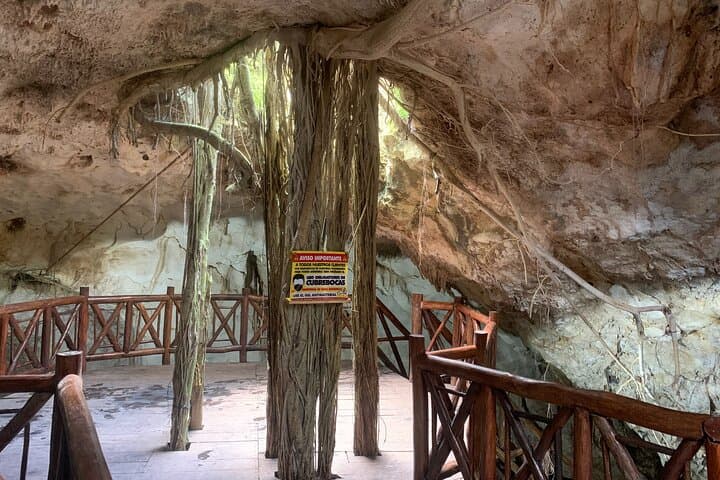
This Cenote Adventure Tour, run from Progreso, is designed to move deliberately between several of those wells—some open and sunlit, some tucked into collapsed caverns like secret courtyards. The itinerary is compact: expect a half-day (about four hours) that balances short hikes, snorkeling, and guided swims. You’ll suit up, slip into water that is near-tepid but startlingly clear, and let the cenote do the heavy lifting: submerged roots that wave like chandeliers, limestone formations that catch light and hold it, and fish that glance up as if reading your reflection.
Geologically, Yucatán’s cenotes are the result of a long conversation between water and soft carbonate rock. Rain seeps into porous bedrock, dissolving channels that eventually widen into caverns. The region’s lack of surface rivers is deceptive—below you, in a cool, dark labyrinth, water runs fast and clean. It’s also why the cenotes are sensitive. The same permeability that makes them pristine also makes them vulnerable to contamination, so tour operators emphasize responsible gear—biodegradable sunscreen, no soaps—and controlled group sizes.
Culturally, a visit to a cenote is an invitation to listen. Local guides will tell you about Maya offerings and the symbolic importance of these wells; they’ll point to pottery shards or tell the story of cenotes used in rituals. Progreso itself is a working port town—lively, informal—and the short drive inland provides an immediate contrast between coastal commerce and karst quiet.
Practically, this tour is accessible. No technical cave-diving certifications are required—this is snorkeling and guided swims in open or semi-open cenotes. The water is buoyant but pay attention to swim technique in low-light caverns: keep your hands to your sides and move slowly to avoid stirring silt. Expect steps or ladders in and out; some sites have wooden platforms. Shoes stay on until the water—pack a pair of water shoes or sturdy sandals for the short walks over limestone and roots.
Timing matters. Morning visits mean cleaner water and better light for photography; later in the day, wind-driven runoff can cloud shallows if there’s been rain. The best season is the dry months, when skies are clear and the heat is tolerable. Bring a light towel, a dry change of clothes, and a sense of curiosity—the cenote refuses to be summarized in a single photograph.
For travelers plotting this trip from Mérida, Progreso is an easy launch point: 30 to 40 minutes by car. The tour is an efficient way to visit multiple sites in one morning or afternoon and is operated by local guides who know the channels and traditions. Entrance fees are typically included, but tipping for guides and boat crews is customary for good service. If you want to add depth, spend an extra day in Mérida sampling cochinita pibil and visiting the Gran Museo del Mundo Maya; it will make the cenote feel like part of a broader cultural conversation.
The Cenote Adventure Tour trades the adrenaline of extreme sport for a different reward: a thoughtful, sensory immersion into a landscape that is at once fragile and resilient. Nature here has a personality—water that won’t be rushed, limestone that holds stories, light that filters like a slow film. If you’re looking to disconnect from the predictable and float into something unchanged, this half-day from Progreso is a precise, practical way to do it.
Trail wisdom
Small choices, better day.
Use biodegradable sunscreen
Cenote ecosystems are sensitive; use reef-safe or biodegradable sunscreen to avoid contaminating the water.
Bring water shoes
Limestone edges and roots are slippery—closed-toe water shoes protect feet and improve traction when entering/exiting.
Go early for the best light
Morning visits offer cleaner water and softer light for photos; afternoons can be windier or murkier after rain.
Respect the site rules
Follow guide instructions about where to swim and what to touch—many cenotes contain archaeological material or fragile formations.
Local knowledge
Read the place, not just the route.
Watch for native species including Freshwater fish (e.g., characins), Birds such as kingfishers and herons along the approach.
Keep an eye out for wildlife during the transition between areas and habitats. Respect distance guidelines.
Cenotes are hydrologically connected and vulnerable to pollution—use biodegradable products, avoid single-use plastics, and support local guides who practice sustainable access.
Follow the guide's instructions on size limits, ethical handling, and leave-no-trace practices.
Smaller private cenotes with wooden platforms where fewer visitors go. A roadside palapa offering fresh ceviche near the route back to Progreso
Locally recommended viewpoints and quiet spots known best to local operators.
Maya communities relied on cenotes as sacred water sources and ritual sites; many were integrated into settlement patterns across the peninsula.
Maritime roots and regional tradition shape the waterways and working coasts.
Seasonal guide
Four versions of the same landscape.
Spring
Best forClear water visibility · Comfortable temperatures · Wildflower season nearby
ChallengesOccasional showers · Slightly busier with tourists
Spring offers mild temperatures and great visibility, though late-season rains can bring short storms.
Summer
Best forLush jungle scenery · Warm water · Long daylight hours
ChallengesHotter humidity · Afternoon thunderstorms · Higher insect activity
Summer is vibrant but humid; mornings are best before convective storms develop in the afternoon.
Fall
Best forFewer crowds · Warm sea and freshwater · Good snorkeling conditions
ChallengesHurricane season overlap (early fall) · Possible travel disruptions
Early fall can be pleasant, but check weather forecasts during hurricane season and avoid periods of heavy rain.
Winter
Best forDry skies · Comfortable air temps · Excellent visibility
ChallengesCooler mornings · More tour groups during high season
Winter is the optimal season for clear water and comfortable outings, though mornings may feel brisk out of the water.
Pack with intention
What to bring.
Good to know
Common questions.
This is a half-day experience—about 3 to 4 hours including transfers from Progreso and time at two to three cenotes.
Plan the edges
The details that make the day easier.
Many cenotes in the Yucatán align with the rim of the Chicxulub impact crater, and the peninsula’s underwater river network is one of the largest subterranean systems in the world.
After the cenote, head back to Progreso for fresh ceviche or pescado frito at a beachfront palapa; if you have time, detour to Mérida for cochinita pibil and craft beers—both places offer a good way to taste regional Yucatecan flavors and hospitality.
- Closest airport
- Mérida International Airport (MID) ~40 km
- 30–40 min to Progreso; Meeting point
- Progreso pier or operator-specified pickup; Driving distance from Mérida: ~30–40 minutes to Progreso; Cell service: Good near towns, patchy at remote cenotes; Permits
- fees
- Entrance fees usually included—no formal permits required for standard tours.
Cenotes are part of a fragile karst aquifer—use biodegradable products, avoid littering, and choose local operators who limit group sizes and follow leave-no-trace practices.
Explore by topic
Follow the threads.
Keep exploring
Make the story part of the trip.
Set out from Bass Harbor for a private, customizable day on Blue Hill Bay — lighthouses, puffins, seals, and the chance to feel Acadia from the water. Small groups, local captains, unforgettable views.
In four hours you can move from shaded canyon ferns to wind-scoured coastal ridgelines, guided by someone who knows where the light—and the hidden views—live. This private half-day hike on the Monterey Peninsula or Big Sur is compact, curated, and perfect for travelers who want depth without a multiday commitment.
 Related story
Beneath a sky of shifting light, Skaftafell’s ice reads like a map of time. This three-hour guided glacier hike mixes technical instruction with geology and culture: compact, safe, and unforgettable.