
What the day feels like
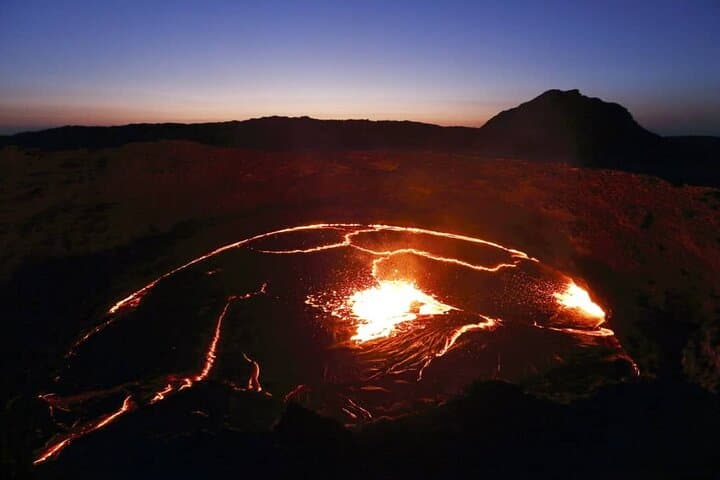
On the second night, when the desert finally swallows the last of the convoy’s taillights, the lava lake at Erta Ale pulses like a living furnace. The wind is warm and mineral-smelling, carrying the faint hiss of escaping gases; the crater rim glows an impossible orange that reflects off the goggles of the guides as they point and whisper. Standing there, toes dug into volcanic scree, you feel the earth’s temperature and chemistry in a way no polished museum exhibit can replicate — it’s raw, immediate, and quietly dangerous.
The Danakil Depression is a place of extremes. Stretching across northeastern Ethiopia, this bowl of salt flats, acidic springs, sulfur terraces and basalt plateaus sits hundreds of feet below sea level and traps heat like a pressed hand on your chest. In three days, a competent tour will take you from the dust-choked road into otherworldly landscapes: salt-harvest caravans crossing white plains; Dallol’s neon pools and geysered terraces; and the slow, stubborn glow of Erta Ale’s eastern lava lake. The itinerary is compact but immersive, each stop a study in geology and human adaptation.
Geologically, Danakil is where the Arabian and African plates are pulling apart. That rift gives us active volcanism and geothermal chemistry: iron-oxide reds, sulfurous yellows, and salt-crust whites that look painted. Dallol’s hydrothermal fields are a photographer’s culture shock — shimmering, fluted mineral shelves and acidic ponds that steam in the morning. Erta Ale, farther southeast, is less about color and more about the spectacle of molten rock humming at night. Together, these places are textbook pages — tectonics, hydrothermal alteration, salt deposition — written across a scale you can walk.
There’s also human history threaded through the salt. The Afar people have for generations harvested and transported salt slabs across the depression on camel caravans, a trade older than many national borders in the region. Their knowledge — routes, where to find water, how to read the salt crust — is what makes modern travel here possible. Today’s tours rely on those skills and local guides; when the wind picks up and the salt is blown thin and glassy, it’s the Afar drivers and scouts who know when to stop and where to camp.
Practicalities matter here more than anywhere else. This is three days of long drives over corrugated roads, short hikes across unstable salt crust and sandy climbs up volcanic scree. You’ll sleep in basic desert camps — sometimes in tents, sometimes under the truck canopy — and nights can be cold despite the daytime heat. Distances are deceptive: a few kilometers on a map can feel much longer when wind-blown sand sifts underfoot and the sun is a furnace. Tours typically include transport, guides, permits, and local support, but bring your own water and sun protection. Expect spotty or no cell coverage; this is a place to be present.
How hard is it? Physically it’s moderate to challenging. The walking itself isn’t technical, but the heat and the terrain — brittle salt, picket-sized crusts, and volcanic scree — demand steady footing, good footwear, and the ability to carry several liters of water. Nights can dip sharply, so a warm layer matters. On the safety side, respect the fumaroles and acidic pools — they can be unstable and corrosive. Keep to marked areas the guides show you.
Culturally, the Danakil rewards patience. Time in camp brings conversation: the Afar’s salt-trade stories, the geology lessons from guides who grew up on these routes, and the quiet rituals of shared meals. Food is simple but comforting after a long day — stews, flatbreads, and sometimes spiced goat. If you want modern comforts, plan extra nights in Semera or Mekelle before or after the tour; both towns have more robust lodging and restaurants.
For photographers and curious travelers, timing is everything. The best light on the terraces of Dallol and on Erta Ale’s rim is an hour after sunset or before sunrise, when colors pop and shadows add depth. Bring a headlamp and spare batteries, a sturdy tripod for low-light shots, and lens wipes; the salt air and volcanic dust will coat optics quickly.
There are ethical dimensions to be aware of. These landscapes feel fragile — thin salt crusts and delicate mineral formations can be damaged by careless footsteps. The safest, most respectful way to experience Danakil is with a reputable operator that hires local guides, pays fair wages, and follows local rules regarding access. Permit systems and convoy rules exist for a reason: safety and cultural respect. Expect your tour operator to arrange these details; make sure to ask what percentage of your fee goes to local communities.
At the end of three days you won’t have conquered anything — there’s nothing to conquer here — but you’ll have witnessed processes that shaped the planet. Erta Ale will have tested your senses; Dallol will have bent your color perception; the salt plains will have given you an entire horizon of white. It’s not a gentle weekend; it’s a focused, compact study of raw earth and human resilience. For travelers who want to feel the tectonic heartbeat of the planet and return with stories that stick to your teeth like salt, the Danakil is unforgiving, unforgettable, and absolutely worth the planning it requires.
Trail wisdom
Small choices, better day.
Hydrate constantly
Carry 3–4 liters of water daily and sip frequently; the depression’s heat dehydrates faster than you think.
Double up on sun protection
Broad-brim hat, high-SPF sunscreen and UV sunglasses are critical; reflected sun from salt can burn quickly.
Footwear and gaiters
Sturdy hiking boots and lightweight gaiters protect against sharp salt crust and volcanic scree.
Respect hydrothermal features
Stay on marked paths; the terraces and pools are chemically hazardous and fragile.
Local knowledge
Read the place, not just the route.
Watch for native species including Dromedary camels (used by salt caravans), Lesser Flamingo at seasonal salt lakes.
Keep an eye out for wildlife during the transition between areas and habitats. Respect distance guidelines.
The hydrothermal features are fragile and chemically active — stay on guided paths, avoid removing mineral samples, and support operators who hire local communities.
Follow the guide's instructions on size limits, ethical handling, and leave-no-trace practices.
Sunrise over the salt pans outside Dallol, when mineral colors pop. The small Afar market in Semera for salsa-like local spices and hand-cut salt slabs
Locally recommended viewpoints and quiet spots known best to local operators.
Salt harvesting has been central to Afar economic life for centuries; caravan routes across Danakil predate modern borders.
Maritime roots and regional tradition shape the waterways and working coasts.
Seasonal guide
Four versions of the same landscape.
Spring
Best forFewer tourists · Milder nights · Photographic color contrasts
ChallengesOccasional dust storms · Warm days can be intense
Spring brings slightly cooler nights and clearer air than summer; days are still hot but manageable with early starts.
Summer
Best forOff-season solitude · Lower prices from some operators
ChallengesExtreme heat (dangerous) · Limited water sources · High risk of heat exhaustion
Summer is extremely hot and not recommended for most travelers; only experienced desert travelers with robust support should consider it.
Fall
Best forStable weather · Cooler mornings · Good lighting for photography
ChallengesOccasional wind · Sparse shade
Fall mirrors spring with stabilizing temperatures and good conditions for hiking and camp life.
Winter
Best forCoolest temperatures · Most comfortable hiking · Best stargazing
ChallengesCold nights · Demand for tours increases
Winter (November–February) is the optimal season: daytime heat is milder and nights can be chilly, so pack warm layers.
Operator details
What the booking data adds.
Included
- ✓Lunch
- ✓Dinner
- ✓Breakfast
Not included
- —tip
Good to know
- ✓Not recommended for travelers with spinal injuries
- ✓Not recommended for pregnant travelers
- ✓Not recommended for travelers with poor cardiovascular health
- ✓Travelers should have at least a moderate level of physical fitness
Pack with intention
What to bring.
Good to know
Common questions.
Yes — visits require regional permits and must be organized through a licensed operator who arranges local permissions and guides.
Plan the edges
The details that make the day easier.
The Danakil Depression reaches roughly 125 meters (410 feet) below sea level and is considered one of the hottest inhabited regions on Earth.
After the desert, seek out Semera or Mekelle for injera, stews and Ethiopian coffee ceremonies. Sample local Afar flatbreads and salt-cured goat where available; hotels in Mekelle offer the most options for a hot shower and a proper meal.
- Closest airport
- Semera (SMA) or Mekelle (MQX) for larger connections; Driving distance: expect several hours over rough roads from Semera to Dallol (approximately 150–250 km depending on route); Cell service: intermittent to none in the depression; Permits: regional permits and licensed guide required (operator typically handles).
Danakil’s salt flats and hydrothermal features are fragile — do not remove samples, avoid walking on delicate terraces, pack out all trash, and choose operators who hire and fairly compensate local guides and communities.
Explore by topic
Follow the threads.
Keep exploring
Make the story part of the trip.
Set out from Bass Harbor for a private, customizable day on Blue Hill Bay — lighthouses, puffins, seals, and the chance to feel Acadia from the water. Small groups, local captains, unforgettable views.
In four hours you can move from shaded canyon ferns to wind-scoured coastal ridgelines, guided by someone who knows where the light—and the hidden views—live. This private half-day hike on the Monterey Peninsula or Big Sur is compact, curated, and perfect for travelers who want depth without a multiday commitment.
 Related story
Beneath a sky of shifting light, Skaftafell’s ice reads like a map of time. This three-hour guided glacier hike mixes technical instruction with geology and culture: compact, safe, and unforgettable.