
What the day feels like
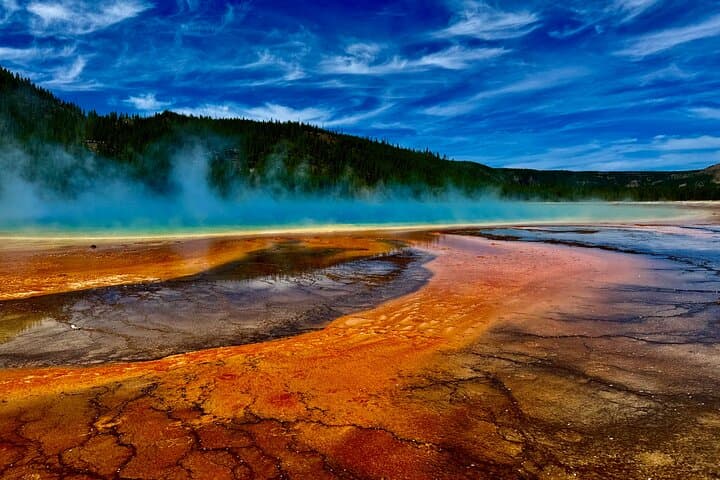
Dawn in West Yellowstone has the low, efficient light of a place that still sleeps with one ear on the park. Steam rises from hot springs like someone reheating the morning; a guide eases a Bronco-sized smile across the parking lot, keys jangling, picnic basket strapped in. You climb in knowing two things: you will not be one of the crowds and you will travel farther into Yellowstone’s moods than most day-trippers. A private jeep tour unwraps the park—Old Faithful’s punctual hiss, the painted terraces of Mammoth Hot Springs, the canyon that drops the Yellowstone River a hundred and more feet—at your pace, with context that turns landmarks into stories.
These private, customizable Jeep tours from West Yellowstone deliver an 8-hour, door-to-door passage through the Greater Yellowstone Ecosystem. The vehicles—Broncos or Jeeps outfitted for comfort and off-pavement nimbleness—are practical and polished. Guides bring the park to life: they are field-first naturalists who read elk sign like traffic reports and know which back roads open on a whim. The itinerary is flexible: choose the traditional Lower Loop “volcano” circuit to see geyser basins and thermal features, opt for the Upper Loop’s Lamar Valley sweep where wolves and bison hold court, or ask for a photography-focused day that chases light and quiet pullouts.
Geology in Yellowstone is theatre stage left, and the cast is dramatic. The park sits over a supervolcano; the caldera’s restless plumbing pushes magma warmth up through fractured bedrock, producing thermal basins that paint the ground with microbial life and geyserite. Rivers have carved deep canyons, and glacial epochs have left moraines and lake basins. Culturally, the valley is layered: Native tribes have stewarded the landscape for millennia, 19th-century trappers and explorers wrote the first non-native chapters, and the 1872 designation of Yellowstone as the world’s first national park established a new relationship between people and public land.
A private tour accelerates learning. Expect concise lessons on hydrothermal chemistry at the boardwalks, quick anthropology notes about Indigenous ties to the land (ask your guide for specifics and local perspectives), and natural-history storytelling—how elk migrations flex with the seasons, why bison roll in thermal grounds, which geysers are predictably punctual. Guides typically handle the National Park entry fee as part of the booking and bring a deli-style lunch and healthy snacks, which turns a roadside pullout into a comfortable picnic with a view.
The practical advantages of a private vehicle are immediate. You stop where the light is right, linger when wildlife appears, and avoid long, mass-tour queues. For photographers and families, that control is the difference between snapshots and a memory that looks like a scene from a travel book. For days when the park hums—July and August—your private guide can route you to less congested overlooks and quiet thermal basins. When late September pulls in colder air and copper aspen, the same advantage yields intimate wildlife encounters and crisper skies.
This experience is premium—expect pricing from roughly $1,499 for a private full-day tour—so plan according to priorities: intimate wildlife viewing, a customized photo route, or a geology-focused study. Reviews show high satisfaction (average rating ~4.8 from recent guests), and the private nature of the trip means you define the tempo.
Logistics are simple in principle and demand a little planning in practice. West Yellowstone is the usual launch point; the nearest major airport is Bozeman Yellowstone International (BZN), roughly 90–100 miles away. Cell coverage is patchy inside the park—download maps and route info, and bring printed copies of any reservations. Weather can flip from sun to sleet in an afternoon; layering and preparation pay off. Book well ahead in summer to secure prime dates, and consider shoulder-season windows (late May to early June and September) for fewer crowds and strong wildlife viewing.
If you want to lean into the comfort and context of a private vehicle but prefer more structure, look for tours that include a guide with a background in ecology or photography and that list their route options clearly. For a taste before you commit, you can read more about a similar private route and the kinds of customized stops guides can make on this dedicated private tour page: <a href="https://app.advcollective.com/local-experts/private-yellowstone-luxury-cadillac-tour-from-west-yellowstone-old-faithful-grand-canyon-loop">Private Yellowstone Luxury Cadillac/Jeep Tour</a>. That page is useful for comparing sample itineraries and seeing how guides frame a day’s worth of decisions.
Who should book this? Families who want a comfortable, educational approach; photographers chasing early- or late-day light; and small groups that want flexible timing to maximize wildlife or thermal-site visits. Bring sturdy shoes for short walks, a telephoto or good zoom lens for wildlife, and patience—wildlife sightings aren’t guaranteed but are much likelier with a guide who knows the corridors animals use.
A private Jeep day in Yellowstone is a concentrated lesson in scale: the smallness of a person beside a steaming terrace, the patient persistence of a herd crossing a valley, the geological drama underfoot. It’s a trip designed for people who want the park’s stories told rather than merely shown, for travelers willing to invest in time and context. When the engine hum quiets and your guide says, “Hold here for ten minutes,” you’ll know why private days are more than convenience—they’re the difference between seeing and understanding.
Trail wisdom
Small choices, better day.
Book early for peak season
This private tour is popular in summer—reserve at least 4–6 weeks out to secure the best dates and guides.
Bring layers and rain protection
Yellowstone’s weather shifts rapidly; pack a waterproof shell and insulating mid-layer for comfort during roadside stops.
Use a long lens for wildlife
A 200–400mm zoom helps capture bison, elk, and wolves from safe distances without disturbing animals.
Respect boardwalks and wildlife buffers
Stay on designated paths near thermal areas and keep at least 25 yards from wildlife—your guide will enforce safe distances.
Local knowledge
Read the place, not just the route.
Watch for native species including American bison, Elk (and occasional wolves in Lamar Valley).
Keep an eye out for wildlife during the transition between areas and habitats. Respect distance guidelines.
Practice Leave No Trace in thermal areas and around wildlife—stay on boardwalks, pack out trash, and maintain safe viewing distances to reduce disturbance.
Follow the guide's instructions on size limits, ethical handling, and leave-no-trace practices.
Off-loop thermal overlooks where crowds thin by mid-morning. Early-morning pullouts in Lamar Valley for wolf and bird activity
Locally recommended viewpoints and quiet spots known best to local operators.
Yellowstone was designated the world’s first national park in 1872, establishing the U.S. model for preserving public lands.
Maritime roots and regional tradition shape the waterways and working coasts.
Seasonal guide
Four versions of the same landscape.
Spring
Best forCalving and newborn wildlife · Migratory birds · Quieter roads
ChallengesUnpredictable snow at higher elevations · Cold mornings · Some roads may still be closed early season
Spring delivers active wildlife and green valleys; roads and trail access can be variable—expect cool temps and plan for layered clothing.
Summer
Best forFull access to loops and attractions · Warm daytime weather · Consistent guide services
ChallengesHeavier crowds · Busy parking and viewpoints · Afternoon thunderstorms
Summer offers full park access and stable weather, but book early and start early to beat crowds and afternoon storms.
Fall
Best forAutumn color and crisp skies · Wildlife rut viewing · Fewer visitors
ChallengesColder mornings and nights · Shorter daylight hours · Some facilities close late season
Early fall balances good weather with smaller crowds and dramatic wildlife behavior—ideal for photographers and quiet drives.
Winter
Best forSnow-sculpted landscapes · Unique thermal contrasts · Solitude
ChallengesMost roads closed to wheeled vehicles · Severe cold and limited services · Specialized vehicles required
Winter transforms the park but typically requires snow-capable transport; private jeep wheeled tours are generally not offered in deep winter.
Pack with intention
What to bring.
Good to know
Common questions.
This is an 8-hour private tour; pricing generally includes the guide, vehicle, deli-style picnic lunch and snacks, and park entrance payment—confirm specifics with your operator.
Plan the edges
The details that make the day easier.
Yellowstone National Park, established in 1872, is widely considered the first national park in the world—its creation helped define modern conservation.
After a day on the road, eat in West Yellowstone at locally owned diners and family-style restaurants for bison or elk burgers; grab a beer and swap stories at a neighborhood brewpub or a casual pizzeria—ask your guide for current local favorites and business hours.
- Closest airport
- Bozeman Yellowstone International (BZN); Driving distance: ~90–100 miles to West Yellowstone (1.5–2 hours); Cell service: limited inside the park—plan offline; Permits
- passes
- Park entrance fee required (often handled by tour operator).
Yellowstone’s thermal features and wildlife are fragile—stay on boardwalks, do not feed animals, pack out trash, and follow your guide’s instructions to minimize impact.
Explore by topic
Follow the threads.
Keep exploring
Make the story part of the trip.
Set out from Bass Harbor for a private, customizable day on Blue Hill Bay — lighthouses, puffins, seals, and the chance to feel Acadia from the water. Small groups, local captains, unforgettable views.
In four hours you can move from shaded canyon ferns to wind-scoured coastal ridgelines, guided by someone who knows where the light—and the hidden views—live. This private half-day hike on the Monterey Peninsula or Big Sur is compact, curated, and perfect for travelers who want depth without a multiday commitment.
 Related story
Beneath a sky of shifting light, Skaftafell’s ice reads like a map of time. This three-hour guided glacier hike mixes technical instruction with geology and culture: compact, safe, and unforgettable.