
What the day feels like
The road tilts south out of Anchorage and the mountains immediately close ranks, their flanks brushed with birch and spruce as Turnagain Arm unfurls beside you like a living thing. The tide flexes, pushing silvery currents against gravel bars. On the cliffs above, Dall sheep peer down as if counting vehicles, while a bald eagle rides the air where salt and alpine wind collide. This is the Seward Highway, a corridor where the wild insists on being seen, and the perfect runway to launch a cruise—without missing what the shore has to say. A curated pre-cruise journey from Anchorage to Seward slows the clock on this drive into something richer. It’s a day braided with scenic stops, a gentle glacier walk, and up-close moments with Alaska’s resident heavyweights at the Alaska Wildlife Conservation Center. You move in the comfort of a Mercedes Sprinter while your guide threads together wildlife sightings with the human story etched into the landscape. It starts in Anchorage, that working port of a city with mountains in its backyard. You’ll roll past Lake Hood—busiest seaplane base on Earth—then pause at Earthquake Park, where the land still carries the memory of the 1964 Good Friday quake. The ground here once liquefied, slid, and reset; some of the trees still lean like they’re listening. History isn’t tucked behind glass in Alaska. It stands at the roadside bearing scars, and it invites you to look closer. Turnagain Arm demands attention next. Named by Captain James Cook, who kept turning again and again trying to find the Northwest Passage, the Arm is known for a dramatic tide that gallops in like a low wall—the bore tide—chasing salmon and pushing belugas toward shore. On a good day, Beluga Point becomes a balcony over a moving drama: white whales surfacing like quiet commas, eagles shouldering the wind, the water itself daring the gravel to hold its line. En route, your guide stitches in local context: the Dena'ina people whose ancestral lands you are crossing; why black spruce tilt in boggy pockets; how moose pick their paths through willow thickets and sometimes right across the highway. It’s a ride that asks you to look out the window the way you might look through a viewfinder—curiously, patiently, ready for the frame to change. In Portage Valley, the glaciers gather like old guardians, their blue held tight in the folds of the Chugach. The Byron Glacier walk is the most approachable window into this ice world: an easy 20–25 minute trail along cold, talking water to views of a glacier tucked between dark rock walls. Even on calm days, the place hums—water hurrying, stones clicking underfoot, ravens conversing. If the air is still, your breath feels louder, and the ice seems to listen back. Terrain remains friendly enough for families, but the landscape keeps your senses squared. A visit to the Alaska Wildlife Conservation Center reframes grandeur as intimacy. Here, rescued bears pad across grasses, wood bison—the continent’s largest land mammals—graze with prehistoric gravity, and wolves move with that quiet certainty that humans always notice. It’s conservation you can see: science married to stewardship, wildlife given space to be itself. The stop is often a highlight because it reduces the distance between textbook Alaska and the fur-and-feather version. Past Girdwood—an alpine town tucked neatly into the folds of the Chugach—lunch is locally sourced and unhurried. Mountains keep watch and, on clear days, glaciers throw light from the skyline. Then the road swings for Resurrection Bay and Seward, where the North Pacific muscles against a harbor built for comings and goings. You’ll be dropped at your ship or stay without the usual shuffle, already layered with context and sightings. By the time you board, the coastline isn’t just a view to sail past; it’s a place you’ve met. That practicality is the heart of this curated transfer. You’re not burning a day with luggage and logistics. You’re spending a day having an Alaskan experience—without straining a step-count or the schedule. Families manage it easily, older explorers appreciate the comfort, and photographers quietly reactivate their batteries at every turn. If you want a dependable, fully guided bridge between hotel and hull, the <a href="https://app.advcollective.com/local-experts/anchorage-to-seward-post-cruise-curated-wildlife-tour-transfer">Anchorage to Seward pre-cruise wildlife tour and transfer</a> sets the tone for the voyage that follows. Geology is a co-pilot on this route. The Chugach Range is young and restless, heaved up by collisions of plates still on speaking terms. Glaciers carve the valleys, grind the rock to silt that turns rivers glacial green. The tide responds like a living barometer. In fall, cottonwoods flare bright and then go quiet; in spring, the meltwater drums louder, and the Arm’s mudflats sparkle—all beauty, all hazard, always asking for respect. Culture stitches the miles together as well. This drive crosses Dena'ina Ełnena (Dena'ina homeland), where salmon have long defined seasons and stories. In modern times, Girdwood grew around mining and skiing, and Seward took its name from the U.S. Secretary of State who brokered the Alaska Purchase. The highway itself is a National Scenic Byway—one of those ribbons of pavement that earns the title with every curve. Practical? Absolutely. The experience is about seven hours, with short walks and plenty of stops. Pack layers—weather can throw a new personality across the glass every 20 minutes. Good shoes help on the Byron Glacier path. Binoculars bring distant wildlife closer. And if you want to map out moments or deepen your planning, the <a href="https://app.advcollective.com/local-experts/anchorage-to-seward-post-cruise-curated-wildlife-tour-transfer">Anchorage to Seward tour</a> resource is an easy, reliable place to start. The tide will keep speaking whether you’re listening or not; this trip teaches you to listen. By the time you reach Seward, the horizon feels wider and your cruise already has its prologue. Alaska has a way of shaking off the abstract and stepping right up to the window. This curated day leans into that truth, letting the coast, the ice, and the animals introduce themselves before the ship’s horn sounds. If you’re after a comfortable, well-paced first chapter to your voyage—equal parts scenery and substance—the <a href="https://app.advcollective.com/local-experts/anchorage-to-seward-post-cruise-curated-wildlife-tour-transfer">wildlife tour and transfer between Anchorage and Seward</a> is exactly the on-ramp you want.
Trail wisdom
Small choices, better day.
Time the Bore Tide
If your schedule aligns, checking a tide chart can boost chances of spotting the Turnagain Arm bore tide and belugas near Beluga Point.
Footwear Matters at Byron
Wear waterproof, grippy shoes for the Byron Glacier walk; the path can be wet, rocky, and slick with meltwater.
Wildlife Etiquette
Keep a respectful distance from animals, move quietly, and use binoculars—your guide will advise on best practices at each stop.
Layer for Four Seasons
Coastal weather can shift quickly; pack a warm layer and a rain shell even on sunny mornings.
Local knowledge
Read the place, not just the route.
Watch for native species including Dall sheep, Bald eagles.
Keep an eye out for wildlife during the transition between areas and habitats. Respect distance guidelines.
The Alaska Wildlife Conservation Center rehabilitates and provides long-term sanctuary for Alaska’s wildlife; Cook Inlet beluga whales in Turnagain Arm are a protected endangered population—view from a distance and never approach.
Follow the guide's instructions on size limits, ethical handling, and leave-no-trace practices.
Potter Marsh boardwalk near Anchorage for birdlife and easy strolls. Virgin Creek Falls in Girdwood—a short, mossy forest walk to a photogenic cascade
Locally recommended viewpoints and quiet spots known best to local operators.
The 1964 Good Friday earthquake reshaped Anchorage’s shoreline; Earthquake Park preserves evidence of the landslide and ground failure that followed.
Maritime roots and regional tradition shape the waterways and working coasts.
Seasonal guide
Four versions of the same landscape.
Spring
Best forBore tide viewing · Snow-framed glacier photos
ChallengesUnpredictable rain · Lingering ice on trails
Shoulder season means fewer crowds, variable weather, and snow still clinging to the Chugach. Wildlife activity begins to ramp up.
Summer
Best forLong daylight for sightseeing · Lush landscapes and active wildlife
ChallengesBusy viewpoints · Mosquitoes in sheltered areas
Peak cruise season delivers the greenest valleys, energized waterfalls, and the most reliable access to all stops along the route.
Fall
Best forAutumn colors · Crisp, clear air
ChallengesShortening daylight · Early snowfall at higher elevations
Cottonwoods and birch turn gold; crowds thin and visibility can be superb on clear days across Turnagain Arm.
Winter
Best forQuiet roads and moody seascapes · Potential aurora near Anchorage
ChallengesIcy conditions · Limited daylight and some closures
A starkly beautiful season best left to guided transport; expect frozen paths at Byron and reduced services in smaller communities.
Pack with intention
What to bring.
Good to know
Common questions.
It’s an easy, mostly flat 20–25 minute trail over uneven, sometimes slick terrain. Most visitors with basic mobility can enjoy it.
Plan the edges
The details that make the day easier.
Turnagain Arm has one of the largest tidal ranges in North America, reaching up to 40 feet and occasionally creating a visible bore tide that surfers can ride.
Stop in Girdwood for a hearty lunch and a local pint at Girdwood Brewing Company. In Seward, The Cookery serves fresh, inventive Alaska fare, while Resurrect Art Coffee House is a relaxed spot for pastries and espresso. If you’re overnighting in Anchorage before departure, a pizza and craft beer at Moose’s Tooth is a local rite of passage.
- Closest airport
- Ted Stevens Anchorage International (ANC). Driving distance: ~125 miles Anchorage to Seward (about 2.5–3 hours without stops). Cell service: Generally good near Anchorage and Girdwood, spotty in stretches along Turnagain Arm. Permits: None required for the drive or Byron Glacier trail; some parking areas may charge fees. Your operator handles route timing and cruise drop-off.
Turnagain Arm and its mudflats are sensitive habitats for migratory birds and endangered belugas—view wildlife from a distance, stay on marked paths at Byron Glacier, and pack out all trash. Support centers like the Alaska Wildlife Conservation Center by respecting boundaries and animal space.
Explore by topic
Follow the threads.
Keep exploring
Make the story part of the trip.
In four hours you can move from shaded canyon ferns to wind-scoured coastal ridgelines, guided by someone who knows where the light—and the hidden views—live. This private half-day hike on the Monterey Peninsula or Big Sur is compact, curated, and perfect for travelers who want depth without a multiday commitment.
 Related story
Beneath a sky of shifting light, Skaftafell’s ice reads like a map of time. This three-hour guided glacier hike mixes technical instruction with geology and culture: compact, safe, and unforgettable.
 Related story
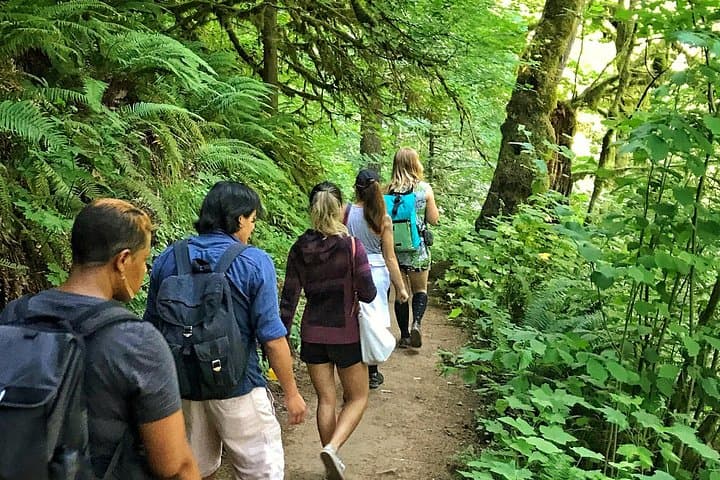
Lose the city for a few hours without leaving it: this 5-mile, 900-foot-gain Forest Park loop threads old-growth pockets, city viewpoints, and cultural landmarks for a compact taste of Portland’s wild side. Expect moss, roots, and stories.