
What the day feels like
The first thing you notice is the sound: a low, persistent susurrus as the river negotiates the gorge’s ribs. You step off the road and the south-Cretan light changes—hard Mediterranean sun softening into the green shadow of limestone walls. The trail isn’t a carved ribbon but a conversation with the landscape: river stones that shift underfoot, small cascades that dare you closer, reeds brushing your calves. For the next four and a half hours you are moving with the water, not against it, letting the canyon’s cadence set your pace. This is river trekking at Kourtaliotiko Gorge, and its appeal is straightforward: wild geology, intimate scale, and the sense that you’re walking through a place that’s been shaped slowly—and deliberately—by water.
Kourtaliotiko is one of Crete’s shorter, more accessible gorges, sliced into the island’s southerly flank by the Kourtaliotis River. The gorge funnels runoff from the Psiloritis massif to the Libyan Sea, and in its joints you’ll see the island’s geological biography: layered limestone, tectonic folds, and pockets where the water has cut bowls and steps. Historically, these southern gorges were travel corridors, seasonal pastures and, in backcountry lore, refuges from storms and raiders. Today, small-scale guides and local families steward the routes; groups travel light and respectful—part of a slower, more observant form of tourism that suits the gorge’s fragile ecosystems.
Walking here is a mixture of hiking, scrambling, and river negotiation. The route offered by a local guide typically lasts about 4.5 hours (the tour runs roughly 270 minutes), moves at a relaxed tempo, and includes stretches of ankle-deep wading, short rock-hops, and shady olive-and-mastic groves. You aren’t contending with the long drops of Samaria, but you are trading solitary comfort for proximity—close encounters with rock and water, and the chance to watch ravens or griffon vultures ride the thermals above the cliffs. Guides on these treks are small-group specialists; expect a more personalized experience and a local stop—often at a family cottage—where Cretan hospitality turns a river walk into a lesson in place.
Practical detail is part of the pleasure. The organized excursion is priced from about $113 per person, confirmed instantly when you book, and typically leaves from a meeting point near the gorge’s rim or a nearby village (many travelers stay in Plakias or nearby towns). The walking is best done in morning cool or late afternoon light: the gorge’s microclimate shades the route but also holds cool air where the river pools. Footwear matters—this is not a casual beach stroll—and so does a small dry bag for your phone and snacks. The guide will manage group flow, ecology-focused briefings, and local stories that thread the route into the island’s culture: Cretan cheese-making, shepherding, and the stubborn horticulture of tamarisk and oleander that clings to canyon edges.
For those planning the trek: aim for shoulder seasons—May or late September—when water levels are pleasant and heat isn’t oppressive. Summer can be low-water and intense on exposed approaches; winter brings higher flows and is not recommended for casual groups. The route’s technical demand is moderate: you need sure footing, steady ankles, and a willingness to get slightly wet. Expect gentle exposure, short scrambles, and no technical rope work. The local guide’s presence matters—beyond safety, they interpret the wildlife, point out nesting vultures, and ensure the group respects nesting sites and fragile reed beds.
If you want to go deeper, look for treks that end with a local meal. Many itineraries include a stop at a family-run cottage where you can taste dakos, daktylota (local biscuits), and the sharp olive oil that defines Cretan cuisine. That pause is not mere hospitality; it ties the river to the people who have used its corridor for centuries.
Booking a guided river trek in Kourtaliotiko is simple and suited to small groups; if you prefer a private outing, ask about tailoring the route and pace. Bring a camera—a wide-angle lens will help you capture the gorge’s depth—and be prepared to trade staged panoramas for intimate, textural photographs: wet stones, lichen, water-beaded grass, and cliff faces that catch late light.
This kind of day—short, tactile, and heavily rooted in place—attracts a certain traveler: someone who favors tactile experiences over summit selfies, who wants to feel rather than conquer the island. If that’s you, follow the river’s pull. For straightforward booking details and a vetted local operator, see this river-trekking offering with certified guides in Kourtaliotiko Gorge: <a href='https://app.advcollective.com/local-experts/river-trekking-in-kourtaliotiko-gorge-crete-wild-water-walk'>river trekking in Kourtaliotiko Gorge</a>. It’s an excellent starting point for arranging transport, understanding group size limits, and learning whether a cottage meal is included. A guided walk here isn’t flashy; it’s clarifying—an afternoon where geology, water, and local knowledge align to make a short stretch of Crete feel vast.
Trail wisdom
Small choices, better day.
Wear water-capable footwear
Stream crossings and wet rocks make lightweight hiking shoes with grippy soles or neoprene river shoes preferable to sandals.
Bring a small dry bag
Protect electronics and snacks; a 5–10L dry sack is enough for essentials and keeps them dry during wading.
Start early
Morning hikes avoid midday heat and maximize bird activity on the cliffs.
Hire a local guide
Guides ensure minimal impact, point out wildlife and geology, and often include a local cottage stop.
Local knowledge
Read the place, not just the route.
Watch for native species including Griffon vulture, Common kestrel and other raptors.
Keep an eye out for wildlife during the transition between areas and habitats. Respect distance guidelines.
Groups are kept small to reduce impact; stay on river stones without trampling reed beds, and follow guide instructions to protect nesting raptors.
Follow the guide's instructions on size limits, ethical handling, and leave-no-trace practices.
A short side scramble to a small waterfall pool not on main viewpoints. A family cottage offering fresh dakos and handmade cheese after the walk
Locally recommended viewpoints and quiet spots known best to local operators.
The gorge has long been a seasonal corridor connecting interior shepherding lands to the southern shore; local hamlets historically relied on its microclimates for grazing.
Maritime roots and regional tradition shape the waterways and working coasts.
Seasonal guide
Four versions of the same landscape.
Spring
Best forWildflowers and high water · Birdwatching
ChallengesVariable river flow · Cooler pools
Spring brings higher flows and blooming vegetation—excellent for lush canyon scenes and active birdlife, but expect some cold pools and variable footing.
Summer
Best forStable weather · Late-afternoon light
ChallengesLow water levels · Heat on open approaches
Summer offers predictable weather; water can be low in July–August, making some river features subdued but leaving good scrambling conditions.
Fall
Best forComfortable temperatures · Warm light for photos
ChallengesOccasional autumn storms · Shortening daylight
Fall balances comfortable hiking temperatures with dramatic light; plan for afternoon storms in late fall and book daylight hours wisely.
Winter
Best forDramatic runoff after storms · Quieter trails
ChallengesHigh water and slippery rock · Cool air and limited services
Winter can bring heavy runoff—beautiful but riskier; many operators suspend river treks during peak wet periods for safety.
Operator details
What the booking data adds.
Included
- ✓English speaking hiking guide
- ✓Transfer from the exit point back to participant´s vechicle if the group size is over 4 person
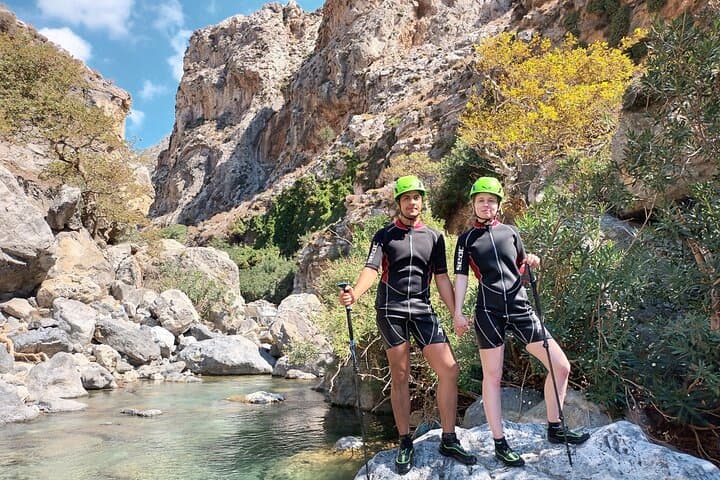
- ✓Each participant will be provided with summer noeprenne suits, hiking poles , rock helmets , photos
- ✓Coffee and/or Tea
Not included
- —Lunch
- —Private transportation
Good to know
- ✓Public transportation options are available nearby
- ✓Not recommended for pregnant travelers
- ✓Not recommended for travelers with poor cardiovascular health
- ✓Travelers should have at least a moderate level of physical fitness
Pack with intention
What to bring.
Good to know
Common questions.
The guided tour runs about 270 minutes (4.5 hours), with moderate effort: short scrambles, ankle-deep wading, and uneven footing—suitable for fit hikers comfortable on rocky terrain.
Plan the edges
The details that make the day easier.
Kourtaliotiko Gorge funnels runoff from Crete’s central mountains to the Libyan Sea and supports species of raptors that nest on its cliffs, including griffon vultures.
After the trek, head to a family-run cottage or taverna in Plakias for dakos, grilled fish, and a glass of local Cretan wine; small bakeries nearby sell sweet rusks that pair well with local olive oil.
- Closest airports
- Heraklion (HER) ~95 km, Chania (CHQ) ~80 km; typical driving time from Plakias 15–30 minutes; cell service patchy in the gorge; no permits required but guided group booking recommended.
Operators keep groups small and emphasize leave-no-trace practices—pack out trash, avoid disturbing wildlife, and follow guide directions to protect fragile riparian vegetation.
Explore by topic
Follow the threads.
Keep exploring
Make the story part of the trip.
Set out from Bass Harbor for a private, customizable day on Blue Hill Bay — lighthouses, puffins, seals, and the chance to feel Acadia from the water. Small groups, local captains, unforgettable views.
In four hours you can move from shaded canyon ferns to wind-scoured coastal ridgelines, guided by someone who knows where the light—and the hidden views—live. This private half-day hike on the Monterey Peninsula or Big Sur is compact, curated, and perfect for travelers who want depth without a multiday commitment.
 Related story
Beneath a sky of shifting light, Skaftafell’s ice reads like a map of time. This three-hour guided glacier hike mixes technical instruction with geology and culture: compact, safe, and unforgettable.