
What the day feels like
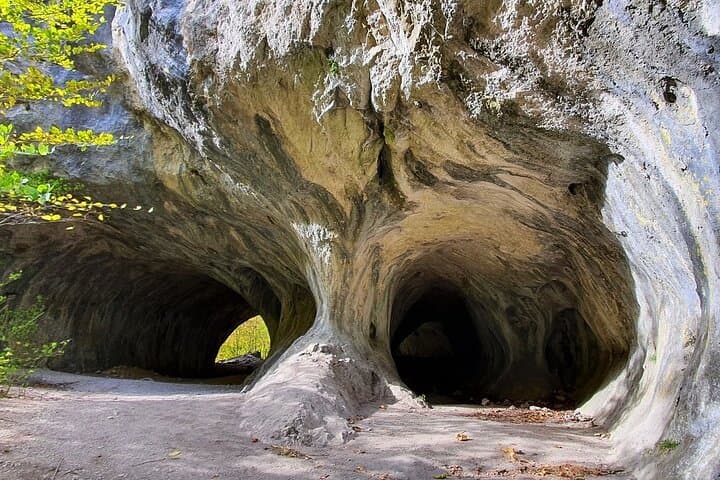
You push through a narrow lip of beech and step into a corridor of limestone that has been quietly shaping itself for millennia. The Varghis River, silver and cool, threads the gorge like a restless seam—sometimes a whisper, sometimes a rapid daring you closer to the edge. The walls rise on either side in bands of pale gray and honey, streaked with moss and the dark mouths of caves. Sunlight finds slivers of the valley floor and pools there, illuminating fern fronds and the occasional glint of trout below.
This is Varghis Gorge—Cheile Vârghișului—a protected slice of the Eastern Carpathians that feels, alarmingly and wonderfully, like a secret. The route on this private day tour crosses nine pedestrian bridges and opens into three accessible caves from the more than 250 that punctuate the limestone. You walk in the company of beech, oak, birch, ash and hazel; you hike through the same corridors where lesser spotted eagles wheel and wild boar slip into the understory at dusk. For seven to nine hours, the canyon dictates the rhythm: step, listen, look up, move on.
Geology is the gorge’s headline. Over tens of thousands of years the Varghis River carved the channel into limestone beds—rock that splits and caves easily, giving the walls their vertical and often skeletal look. The caves here are karst features, once home to humans and animals and now repositories of centuries of bones, clay deposits and small archaeological finds. If you like being able to read the land, Varghis is a tidy book: each outcrop, each cave mouth and each patch of scree explains how water and time have collaborated to sculpt the Carpathians.
The human context is compact and tactile. This part of Romania is a patchwork of Hungarian-speaking Székely communities and Romanian villages where pastoral life still runs on an older clock—sheep bells, wooden gates, and ovens that fill the air with smoke and bread. Huts and small guesthouses cluster in the valley outside the gorge; local guide services—often run by families—offer not just navigation but stories: how villagers used caves for shelter, where the best trout pools lie, and which footpaths lead to spring-fed meadows.
Practical hikers will find this gorge a satisfying day objective. The tour is most often a 10–12 km loop (approximate), with roughly 300–500 meters of cumulative elevation gain depending on exact route choices. Terrain alternates between packed dirt trail, wooden plank bridges over the river, and short sections of loose scree near cave entrances. Footing can be narrow at times; expect uneven stone, damp rock, and brief climbs. The river’s presence keeps temperatures cool and the air fresh, but it also means the trail can be slippery after rain.
Wildlife is a quiet but present actor. You may see wild trout in shallow pools, the quick dart of a mustela (weasel family) among rocks, roe deer prints in soft soil, and a wide array of resident birds including the lesser spotted eagle. Keep your eyes upward and listen more than you speak—animals here are used to silence.
Why take a private tour? Because Varghis rewards slow attention. A private guide arms you with local hazard knowledge—where a path narrows, which caves are accessible, how the river rises after rain—and offers cultural context that turns a walk into a story. You also avoid the handful of crowded viewpoints and experience stretches of the gorge that are less trodden.
Timing and preparation matter. Start early in shoulder seasons to catch the gorge before the light flattens and to avoid afternoon thunderstorms. Good, broken-in hiking shoes with sticky soles and ankle support are non-negotiable; trekking poles help on slick approaches to caves and on sections of loose rock. Bring at least 2 liters of water and a layered system: the gorge’s microclimate can be cool in the shade and warm in exposed meadows.
There’s an understated charm to the end of the day: a guesthouse in a nearby village serving stews, smoked cheese and a locally distilled fruit brandy, or a seat in Brașov if you’re staying in the city and booked this as a day excursion. Either way, the canyon’s quiet tends to follow you—there’s a satisfaction to the kind of exhaustion that comes from a long day on your feet and a head full of small, tactile memories.
For planners: the tour runs 7–9 hours and is private with manual confirmation, priced from about USD 118 per person (subject to change). It’s an ideal option for hikers who appreciate geology, solitude, and cultural texture more than summit tick-boxes. If you want a single, well-paced day that blends natural spectacle with rural life and a reliable guide, Varghis Gorge is precisely that.
Personified, the gorge is an old host: generous with shade, quick to show you a cave, and indifferent to hurry. Come prepared, be curious, and you’ll leave feeling you’ve been permitted into something timeless—a corridor where rock remembers the river, and both remember us.
Trail wisdom
Small choices, better day.
Shoes That Stick
Wear sturdy hiking boots with a grippy sole—trail sections can be wet and the approaches to cave mouths are often slick.
Bring 2+ Liters of Water
There’s limited potable water on the route; a hydration reservoir or two 1‑liter bottles will keep you comfortable for 7–9 hours.
Use Trekking Poles
Poles help with balance on bridges and loose scree and reduce knee stress on descents.
Respect Caves & Wildlife
Stick to marked paths, don’t enter sealed or fragile caves, and keep noise low to avoid disturbing birds and mammals.
Local knowledge
Read the place, not just the route.
Watch for native species including Lesser Spotted Eagle, Wild Boar.
Keep an eye out for wildlife during the transition between areas and habitats. Respect distance guidelines.
The area is a protected reserve—stay on trails, avoid entering delicate cave systems, and pack out all trash to preserve habitat and archaeological features.
Follow the guide's instructions on size limits, ethical handling, and leave-no-trace practices.
A short side trail to a high meadow with panoramic valley views. A shallow trout pool below Bridge 6 where fishermen sometimes cast in early morning
Locally recommended viewpoints and quiet spots known best to local operators.
The gorge is a classic karst landscape carved by the Varghis River; local villages in the valley belong to Székely communities with centuries-old rural traditions.
Maritime roots and regional tradition shape the waterways and working coasts.
Seasonal guide
Four versions of the same landscape.
Spring
Best forWildflower displays · Birdwatching · Cool hiking
ChallengesMud on trails · Higher stream levels · Unpredictable weather
Spring brings fresh green and breeding birds; trails can be muddy and the river higher after thaw and rain—waterproof footwear recommended.
Summer
Best forFull daylight hours · Trout spotting · Warm valley meadows
ChallengesAfternoon thunderstorms · Warmer temperatures in exposed areas · Increased insect activity
Summer offers long days and accessible caves but expect midday heat and potential sudden storms—start early.
Fall
Best forAutumn foliage · Clear visibility · Stable weather
ChallengesCooler mornings · Shorter daylight hours
Fall is ideal for color and calmer weather; bring warm layers for crisp mornings and an earlier sunset.
Winter
Best forSnow-clad scenery · Quiet solitude
ChallengesIcy trails · Limited access to caves · Cold conditions
Winter can be magical but trails get icy; unless experienced with winter alpine hiking, opt for guided trips only.
Operator details
What the booking data adds.
Included
- ✓Local expert guide, English and German speaking
- ✓Private transport in a modern premium minivan (Mercedes V Class or similar)
- ✓Water (still and sparkling) and bites are available in the vehicle
Not included
- —Lunch is not included. It is recommended to have packed lunch with you.
Good to know
- ✓Suitable for all physical fitness levels
- ✓This is a rather easy hike that is 8km in length and takes 3-4 hours to complete. You will need to have high trekking boots, rain jacket, 1.5l of water or tea.
Pack with intention
What to bring.
Good to know
Common questions.
The private tour runs about 7–9 hours and covers roughly 10–12 km with moderate elevation gain; terrain is mixed and best suited to hikers with moderate fitness.
Plan the edges
The details that make the day easier.
Varghis Gorge contains more than 250 caves in the surrounding limestone—three of which are commonly accessible on guided hikes.
After the hike, seek out a village guesthouse for homemade stews, smoky cheese and a glass of local fruit brandy; if staying in Brașov, try regional Transylvanian dishes and a local craft beer to round out the day.
- Closest airports
- Brașov-Ghimbav (regional) or Cluj-Napoca for international flights; Driving time from Brașov: ~2.5–3.5 hours; Cell service: intermittent in the gorge; Permits: none required for day visits but follow reserve rules.
This gorge is a protected reserve—stick to trails, pack out waste, avoid disturbing caves and wildlife, and support local guides who practice low-impact tourism.
Explore by topic
Follow the threads.
Keep exploring
Make the story part of the trip.
Set out from Bass Harbor for a private, customizable day on Blue Hill Bay — lighthouses, puffins, seals, and the chance to feel Acadia from the water. Small groups, local captains, unforgettable views.
In four hours you can move from shaded canyon ferns to wind-scoured coastal ridgelines, guided by someone who knows where the light—and the hidden views—live. This private half-day hike on the Monterey Peninsula or Big Sur is compact, curated, and perfect for travelers who want depth without a multiday commitment.
 Related story
Beneath a sky of shifting light, Skaftafell’s ice reads like a map of time. This three-hour guided glacier hike mixes technical instruction with geology and culture: compact, safe, and unforgettable.