
What the day feels like
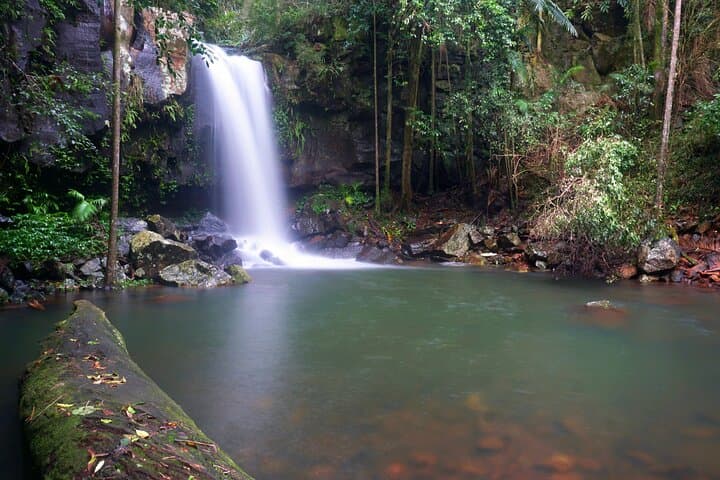
The track is a hush of wet leaves and soft rock. Headlamps bob like distant boats while the rainforest inhales and exhales damp, eucalyptus-scented air. Ahead, the waterfall throws a silver veil into the cave’s mouth; behind that veil, the ceiling is studded with tiny, unnatural constellations—lines of pale green pinpricks, each a glow worm lampshade. On a clear night at Natural Bridge in Springbrook National Park you can stand within that grotto and feel the forest press in around you: the roar of the falls, the hush of the hollow, and a crowd of luminous larvae doing what they've done for millennia.
This is not theater but ecology. The glow worms you’ll see on the <a href='https://app.advcollective.com/local-experts/springbrook-glow-worm-walk-nocturnal-rainforest-natural-bridge-waterfall-tour'>Glow Worm Walk</a> are the bioluminescent larvae of Arachnocampa fungus gnats; their light is a lure, and their silk snares are masterfully simple traps. The Natural Bridge itself—the place where the creek tunneled through basalt and left a roofed amphitheater—tells a parallel story of geology. Ancient lava flows, cooled and eroded, created cavities that water later exploited. The result is one of Southeast Queensland’s most intimate waterfall experiences, where the human footprint is kept intentionally small to protect the fragile glow-worm colonies.
Culturally, Springbrook is part of the broader Gold Coast hinterland, an area rich with Indigenous history and early timber and dairy farming heritage. You’ll pass signs pointing to Aboriginal cultural sites and read plaques that map how different generations have read the landscape. Many local guides weave ecological interpretation with stories—about pademelons that hop among the understorey, or the tawny frogmouth’s improbable camouflage—so a walk here feels like a lesson yoked to spectacle.
Practically, this is a short, intentional excursion: expect about three hours out from Surfers Paradise or Gold Coast base towns, with a moderate amount of walking on wet, uneven trails and some wooden boardwalks near the waterfall. The tour is structured for small groups and aims to minimize interference with the glow worms; that’s why guides avoid using harsh lights and why the best views are savored in respectful silence. If you’re a photographer, know that light-sensitive sensors need long exposures and steady tripods—and even then, you’ll be capturing more mood than high-resolution detail.
When to go and how to plan matter. The glow worms prefer cool, humid nights—after rain or when humidity is high—so winter months can be excellent. The tour runs at night and offers a free return if you don’t see glow worms, a practical reassurance that speaks to the natural variability of the site. Because the site is intentionally quiet, you’ll often avoid crowds; this is part of the design to keep the colony thriving. Guides frequently start from Gold Coast pickup points such as Surfers Paradise, and many travelers combine the experience with nearby daytime hikes in Springbrook or sunrise overlooks toward the coast.
Getting the most from the night requires small habits: use red or low-intensity lights, keep voices low, and follow your guide’s instructions about where to stand (and what not to touch). Trail footwear with tread, a waterproof jacket, and insect repellent will make the damp, leaf-littered conditions comfortable. If you’re bringing kids, prepare them for the quiet; excitement here is best measured in whispers.
This walk is equal parts spectacle and stewardship. The glow worms fascinate because they are delicate and specific about where they live. The natural bridge’s dripping ceiling, the waterfall’s curtain, and the darkened amphitheater create the precise microclimate these larvae need. Guides emphasize conservation—no flash photography, stay on pathways, and keep the crawlspace free of litter—so your night out is also a vote for a living, breathing ecosystem.
For travelers, this experience is a compact, high-reward slice of hinterland adventure: a short drive from the Gold Coast’s beaches into cloud-wreathed forests, an evening that transitions from starlit ridges to a secret, luminous grotto. Whether you’re a first-time visitor or a seasoned naturalist, the walk reorients expectations: big thrills can arrive in small packages—a single cave, a single colony, and a sky of living green.
If you plan to go, book with a guide who understands both the science and the etiquette. Expect a small-group rhythm: a steady paced walk, a pause for interpretation, time in the amphitheater to absorb the glow worms and the waterfall’s soundtrack, and then a measured return. The walk doesn’t just show you the glow worms; it shows you how to be a good guest in their world.
Trail wisdom
Small choices, better day.
Use red or low light
Bring a headlamp with a red filter or use the lowest setting to avoid disturbing glow worms.
Wear grippy footwear
Trails are wet and uneven—trail runners or boots with good tread reduce slips on mud and boardwalks.
Stay on the boardwalk
Paths are routed to protect the colony—do not step off trails or enter the cave without guide permission.
Keep voices low
Quiet improves your chance to see nocturnal wildlife and maintains the experience for others.
Local knowledge
Read the place, not just the route.
Watch for native species including Pademelon (small wallaby), Tawny Frogmouth (nocturnal bird).
Keep an eye out for wildlife during the transition between areas and habitats. Respect distance guidelines.
The glow-worm colony is sensitive to light, noise, and trampling—guided access and no-flash rules help protect the habitat.
Follow the guide's instructions on size limits, ethical handling, and leave-no-trace practices.
Purling Brook Falls lookout (short drive from Natural Bridge). Sunrise views at Springbrook Plateau for coastal panoramas
Locally recommended viewpoints and quiet spots known best to local operators.
Springbrook’s caves and ridges formed from prehistoric lava flows; the area also holds Indigenous cultural significance and later European timber and dairy heritage.
Maritime roots and regional tradition shape the waterways and working coasts.
Seasonal guide
Four versions of the same landscape.
Spring
Best forPost-rain glow · Mild evenings
ChallengesOccasional heavy showers · Increased insect activity
Spring brings regeneration and strong humidity—good for glow-worm visibility after rain but expect more mosquitoes.
Summer
Best forWarm nights · Extended evening wildlife
ChallengesHigh heat and humidity · More rainstorms
Summer is hot and humid; short storms can improve glow-worm conditions but trail mud is common.
Fall
Best forComfortable evenings · Less crowding
ChallengesCooler nights · Variable rain
Autumn provides crisp nights that are pleasant for hiking and often clear skies for stargazing.
Winter
Best forCool, clear nights · Excellent glow-worm activity
ChallengesChilly conditions · Fewer daylight hours
Winter’s cool, humid nights are often ideal for glow-worm displays—bring warm layers for standing still.
Operator details
What the booking data adds.
Included
- ✓Private transportation
- ✓Bottled water or fresh water for you to refill your own bottle
- ✓All Fees and Taxes
- ✓Headlamps/Torch/Flashlight
Good to know
- ✓Public transportation options are available nearby
- ✓Specialized infant seats are available
- ✓Not recommended for travelers with poor cardiovascular health
- ✓Suitable for all physical fitness levels
- ✓Approximately 1 mile of walking is involved
Pack with intention
What to bring.
Good to know
Common questions.
The tour guarantees a glow worm sighting or a free return trip; sightings depend on conditions such as rain and humidity.
Plan the edges
The details that make the day easier.
Glow worms at Natural Bridge are the bioluminescent larvae of fungus gnats in the genus Arachnocampa; they produce light to lure prey into silk threads.
After the walk, head back toward the Gold Coast for a late dinner in Burleigh Heads or a craft beer in Currumbin—local cafés serve hearty pies and seafood, while hinterland lodges offer relaxed pub meals with mountain views.
- Closest airport
- Gold Coast Airport (OOL). Driving distance: ~45–60 minutes from Surfers Paradise. Cell service: limited near Natural Bridge. Permits: guided tours typically cover access; check park alerts before you go.
This is a fragile microhabitat—no flash photography, stay on paths, and avoid touching glow worms; small-group tours help limit ecological disturbance.
Explore by topic
Follow the threads.
Keep exploring
Make the story part of the trip.
Set out from Bass Harbor for a private, customizable day on Blue Hill Bay — lighthouses, puffins, seals, and the chance to feel Acadia from the water. Small groups, local captains, unforgettable views.
In four hours you can move from shaded canyon ferns to wind-scoured coastal ridgelines, guided by someone who knows where the light—and the hidden views—live. This private half-day hike on the Monterey Peninsula or Big Sur is compact, curated, and perfect for travelers who want depth without a multiday commitment.
 Related story
Beneath a sky of shifting light, Skaftafell’s ice reads like a map of time. This three-hour guided glacier hike mixes technical instruction with geology and culture: compact, safe, and unforgettable.