
What the day feels like
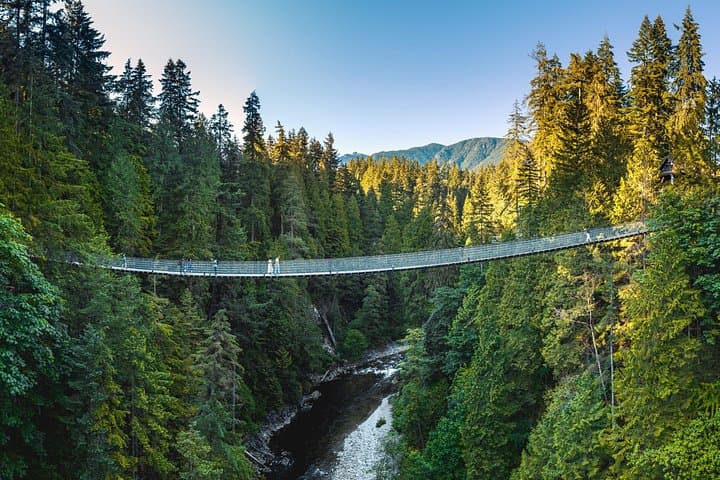
The first steps across the Capilano Suspension Bridge feel like a small, intentional surrender. The cedar planks dip and sway underfoot; the bridge exhales and settles, the tall firs nodding like old friends as you cross. Below, the Capilano River threads through a mossy gorge, its current daring you to look down. For six hours this day tour from downtown Vancouver keeps that sense of measured risk in easy reach: a coach ride, a Step-On Guide with local stories, a 4D rainforest experience, and enough trail and treetop walking to leave your legs pleasantly tired and your camera card full.
Capilano is not a single attraction so much as a stitched-together way of seeing the North Shore rainforest. The bridge—originally a simple log span built in 1889 by George Grant Mackay—grew into a curated park with cliffwalks, treetop platforms, and interpretive exhibits. The land itself is older than any story: the bridge hangs above a geologic gouge carved by retreating glaciers and the Capilano River over millennia, and the temperate rainforest is threaded with western red cedar, Douglas fir, and hemlock, their trunks freckled with lichen and their roots anchored in glacial till.
Culturally, Capilano sits on the unceded territories of the Squamish and Tsleil-Waututh Nations. Indigenous presence and stewardship of these forests long precede tourism, and contemporary visitor materials at the park increasingly recognize and incorporate that history. The park’s evolution from a privately owned curiosity into a developed tourist site mirrors Vancouver itself: a place where wilderness and city life press close, where the sound of traffic can be swapped for a chorus of birds and dripping moss within twenty minutes.
The tour is intentionally accessible. New coach buses—air-conditioned and with power points at every seat—deliver you to the park with a Step-On Guide who frames the visit: which platforms will have the best light, where the food kiosks are, and how long to expect on each trail. The itinerary is calm rather than breathless: an optional guided walking tour, a staged 4D presentation that brings the rainforest to life, and ample time to linger on the Suspension Bridge and the Cliffwalk, a cantilevered walkway clinging to granite and offering sharp views into the canyon.
Practicalities matter here. The experience is six hours from pickup to drop-off, priced from about USD 126.76, and includes small conveniences that matter in rain-ready Vancouver—loaner umbrellas, an exclusive souvenir for collectors, and seasoned guides who know how to steer you away from crowds. For photographers, mid-morning and late afternoon light is the most flattering for both the forest canopy and the river below; mid-day can be busy, especially on summer weekends.
What makes this a compelling soft adventure is balance. You get the visceral thrill of a swaying bridge and the hush of an old-growth canopy without needing mountaineering skills or heavy packs. The terrain is a mix of boardwalk, stairs, and maintained trails—sturdy footwear is sufficient. The park’s interpretive panels and staff make it a great first introduction to the coastal rainforest; for families it’s an easy, educational day that still feels exploratory.
A few local insights smooth the day. Start early if you can—buses leave in the morning to capture the clearest light and the thinnest crowds. Don’t rush the Cliffwalk; its vantage points reveal geology and scale in ways the bridge alone does not. If rain is in the forecast, embrace it: the rainforest dramatizes under drizzle, and the park’s loaner umbrellas and covered signage make the experience cozy rather than miserable.
If you have extra time in North Vancouver, consider pairing the park with a short ferry to Granville Island or an hour at Deep Cove for a kayak. After the day’s walking, the Shipyards at Lower Lonsdale is a nice place to eat and decompress—local breweries and seafood-focused kitchens reward tired legs.
Planning tips in brief: allow six hours for the tour, bring comfortable shoes and layers for variable weather, and budget extra time for traffic between downtown Vancouver and the North Shore—especially if you’re on a tight schedule. For travelers who want the feel of the wilderness without the logistical friction, this tour is a well-engineered compromise: wild enough to thrill, gentle enough to recommend to less experienced companions.
The Capilano Suspension Bridge Park is never going to be remote; it’s a curated gateway. But it’s also a genuine doorway into the coastal rainforest—an ecosystem that smells like earth and salt, that feels alive underfoot, and that rewards both slow observation and a willing step out onto planks that swing. If you want a day that stitches together narrative, natural history, and a properly memorable vantage point over a wild river gorge, this soft adventure delivers.
Trail wisdom
Small choices, better day.
Time your visit
Mornings and late afternoons have the best light and fewer crowds—aim for early departures to maximize quiet time on the bridge.
Bring steady footwear
The park mixes boardwalks, stairs, and slick rocks—trail shoes with good grip keep you confident on wet surfaces.
Pack light rain protection
Loaner umbrellas are available, but a compact rain jacket keeps you hands-free for photos and trail sections.
Mind the cliff edges
Cliffwalk viewpoints are spectacular but narrow—keep children close and avoid leaning over railings.
Local knowledge
Read the place, not just the route.
Watch for native species including Douglas squirrel, Bald eagle (occasional).
Keep an eye out for wildlife during the transition between areas and habitats. Respect distance guidelines.
The park works with local partners to protect riparian zones and native plantings—stay on trails, avoid disturbing vegetation, and pack out litter.
Follow the guide's instructions on size limits, ethical handling, and leave-no-trace practices.
Cliffwalk viewpoints that face upstream for dramatic canyon shots. A short trail along the riverbank downstream from the bridge with quieter seating
Locally recommended viewpoints and quiet spots known best to local operators.
The original bridge was a simple log and hemp-rope span built in 1889 by George Grant Mackay; it has since evolved into a developed park that interprets the coastal rainforest.
Maritime roots and regional tradition shape the waterways and working coasts.
Seasonal guide
Four versions of the same landscape.
Spring
Best forWildflower blooms · Milder crowds
ChallengesUnpredictable rain · Muddy trail sections
Spring brings fresh greenery and rushing runoff; expect cool, damp conditions and pack waterproof layers.
Summer
Best forWarm weather · Longer daylight
ChallengesPeak crowds · Limited shaded seating
Summer is busy but comfortable—book early slots to avoid lines and bring sun protection for exposed viewpoints.
Fall
Best forAutumn color · Crisper air
ChallengesShorter daylight hours · Occasional wind storms
Fall offers dramatic foliage and softer light; go midweek for a calmer experience and layer for cooling temperatures.
Winter
Best forMoody rainforest atmosphere · Fewer visitors
ChallengesCold, wet conditions · Potential icy spots
Winter is atmospheric but wet—non-slip footwear and warm layers are essential, and some elevated walkways may be slick.
Operator details
What the booking data adds.
Included
- ✓Exclusive postcard souvenir
- ✓2025 Prevost H3-45 Passenger Coach or 2025 TEMSA TS30
- ✓For days with 8 passengers or less, we send a Mercedes-Benz Sprinter Van with a driver-guide for a more personalized experience.
- ✓At least x2 water bottles per guest available per trip
- ✓Aquabus to Granville Island
- ✓Step-on Guide
- ✓Booster seat available upon request
- ✓Capilano Suspension Bridge (skip-the-line tickets)
- ✓Wheelchair available upon request
- ✓2025 Prevost H3-45 Passenger Coach or 2025 TEMSA TS30
Not included
- —Plenty of lunch options during break on Granville Island
- —Multiple languages (check-out our private tours for multilingual options)
Good to know
- ✓Infants and small children can ride in a pram or stroller
- ✓Service animals allowed
- ✓Public transportation options are available nearby
- ✓Specialized infant seats are available
- ✓Suitable for all physical fitness levels
- ✓Folding wheelchairs can be stored in the undercarriage of the bus.
- ✓Coach bus kneels for easier entry and exit.
Pack with intention
What to bring.
Good to know
Common questions.
The tour runs about six hours and includes coach transportation, a Step-On Guide, entry to Capilano Suspension Bridge Park, a 4D rainforest experience, optional guided walks, and loaner umbrellas.
Plan the edges
The details that make the day easier.
The original Capilano Suspension Bridge was first built in 1889 by Scottish civil engineer George Grant Mackay and has since been rebuilt and updated into the modern park.
After your walk, head to Lower Lonsdale’s Shipyards for local seafood and a pint at Tap & Barrel, or take a short drive to Lonsdale Quay Market for fresh eats and waterfront views—both great ways to extend the North Shore experience.
- Closest airport
- Vancouver International Airport (YVR); Driving from downtown: ~20–30 minutes (8–15 km) depending on traffic; Cell service: patchy under dense canopy; Permits: park entry fee required, no special permits needed for day visitors.
This park protects sensitive riparian and forest habitats—stay on marked trails, dispose of waste properly, and avoid feeding wildlife to minimize human impact.
Explore by topic
Follow the threads.
Keep exploring
Make the story part of the trip.
Set out from Bass Harbor for a private, customizable day on Blue Hill Bay — lighthouses, puffins, seals, and the chance to feel Acadia from the water. Small groups, local captains, unforgettable views.
In four hours you can move from shaded canyon ferns to wind-scoured coastal ridgelines, guided by someone who knows where the light—and the hidden views—live. This private half-day hike on the Monterey Peninsula or Big Sur is compact, curated, and perfect for travelers who want depth without a multiday commitment.
 Related story
Beneath a sky of shifting light, Skaftafell’s ice reads like a map of time. This three-hour guided glacier hike mixes technical instruction with geology and culture: compact, safe, and unforgettable.