
What the day feels like
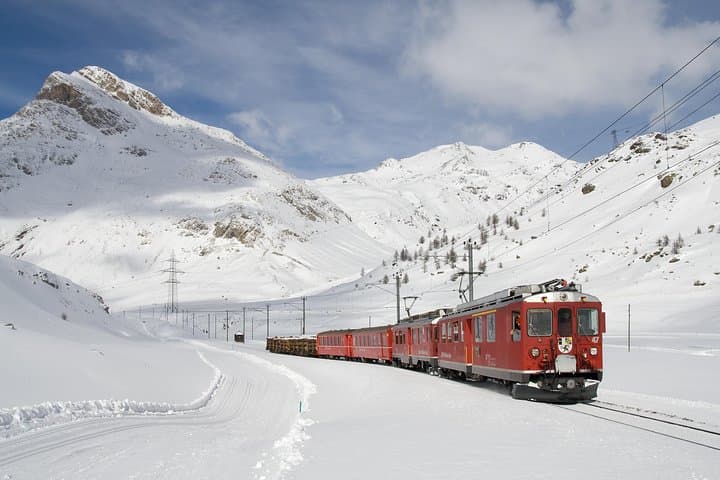
You step off a coach onto a platform that smells of cold metal and hot coffee, the air already thin enough to make conversation quieter. A red rail car curves around a turn below a glacier-scarred peak, sunlight slicing the valley into silver and slate. This is the Bernina Red Train—the little scarlet serpent of the Rhaetian Railway—and for a full day it will rearrange how you think about distance and altitude: Milan to the leafy luxury of St. Moritz in one long uphill breath.
The trip starts with the practical hum of departure: a private coach out of Milan that threads north through Lombardy and the Valtellina valley. You’re climbing without feeling like you’ve climbed; the train does the work. At 2,256 meters above sea level the Bernina line reaches alpine panoramas usually reserved for multiday hikes, crossing viaducts and spiraling through hairpin bends with the sort of engineered grace that earned it UNESCO World Heritage status. Along the way, villages appear like carefully painted models—Tirano with its baroque basilica, the shepherding villages of Poschiavo—and each stop is an invitation to stretch your legs and taste local specialties.
Geology and engineering are partners on this route. The Bernina line cuts across glacial valleys and moraine fields left by the last ice age; rock here is an honest thing, sharp and exfoliated by freeze-thaw cycles. Railway builders of the early 20th century used stone and rivets to tame the slopes, threading rails through tunnels and over bridges that make pompous, modern engineering look clumsy. The line’s UNESCO listing recognizes not just scenery but the technical mastery of marrying a railway to such dramatic topography.
Culturally, the day is a two-cup espresso: Italian and Swiss. Valtellina feels Mediterranean in the quality of light and the food—pizzoccheri (buckwheat pasta), cured meats, and hardy mountain wines—before you cross into the Germanic-leaning Engadin valley, where St. Moritz sits polished and chic. In town, chocolatiers and high-end boutiques stand cheek-by-jowl with Engadine wood houses and a calm that comes from precise Swiss timing. The contrast is part of the appeal: rustic valley life gives way to curated alpine elegance.
Why do this as a day trip? For one, the logistics are merciful: a single-day commitment (the tour runs approximately 13 hours, round-trip) that delivers maximum alpine scenery for minimal planning. For another, the physical demand is low—most of the day is scenic riding, with short walks at selected stops—so it's accessible to travelers who want alpine views without summiting a peak.
Practicalities matter. The day departs from Milan; expect an early start and a long but not exhausting day that finishes back in the city. Bring layered clothing (it can be warm in the Valtellina and sharply cold at 2,200 meters), a small daypack, and a camera with a wide-angle lens—this is a photographic route where panoramic framing matters. Buy snacks or plan to taste Valtellina specialties in Tirano; St. Moritz has cafés but meal service can be brisk.
Book this as an organized excursion if you prefer a single reservation that bundles transport, a seat on the Bernina Express segment, and guiding details; independent travelers can stitch trains together, but the packaged option simplifies border crossings and transfers. The tour price starts from about USD 161.98 and confirmation is instant, with free cancellation, which makes it easy to slot into a flexible itinerary.
For the traveler who wants to press deeper: linger in Poschiavo to walk a high-alpine stream, or detrain early at the Ospizio Bernina stop for a short glacier-side walk if conditions allow. In shoulder seasons, the train has a different character—less polished, more local—and the light on the glaciers is often the best for photography.
This route doesn’t demand heroics, but a little thought keeps it excellent. Time your visit for clear weather if alpine panoramas are the goal. Keep documents handy for the brief Swiss-Italian border formalities, and remember that mountain weather can rearrange plans in minutes. Do the trip once for spectacle, and again when you want to notice the small things: the handpainted station signs, the shepherd dogs in the lower valleys, the tannin-rich regional wines in a simple enoteca.
If you want to reserve a spot, or read more about the exact routing and local guides, this organized day trip is a dependable option: <a href="https://app.advcollective.com/local-experts/bernina-red-train-and-st-moritz-day-trip-from-milan-scenic-bernina-express-rail">Bernina Red Train and St. Moritz day trip from Milan</a>. For photographers, hikers, and travelers short on time, it’s one of those rare travel moves that feels efficiently triumphant: you’ll return to Milan with alpine air in your lungs and a sequence of landscapes that will keep you scrolling through your photos, trying to decide which moment matters most.
Trail wisdom
Small choices, better day.
Layer for altitude swings
Temperatures change dramatically from Valtellina to 2,200m—pack a lightweight insulated layer and waterproof shell.
Reserve a window seat
Book early and choose a window seat on the uphill Bernina Express segment for uninterrupted panoramic views.
Carry local currency and ID
You cross from Italy to Switzerland—carry passport and some Swiss francs for small purchases in alpine towns.
Protect your camera gear
Alpine wind and glare are real—bring a lens hood and microfibre cloth to keep lenses clear.
Local knowledge
Read the place, not just the route.
Watch for native species including Alpine ibex, Marmot.
Keep an eye out for wildlife during the transition between areas and habitats. Respect distance guidelines.
The line runs through sensitive alpine ecosystems; stay on paths, avoid disturbing wildlife, and use public transport to reduce car traffic.
Follow the guide's instructions on size limits, ethical handling, and leave-no-trace practices.
Tirano’s basilica and the small culinary shops selling Valtellina cured meats and cheeses. The lesser-known Poschiavo valley for quiet lakeside walks and traditional Engadine architecture
Locally recommended viewpoints and quiet spots known best to local operators.
The Bernina Railway was completed in the early 20th century and later recognized as part of the Rhaetian Railway UNESCO World Heritage for its engineering and landscape integration.
Maritime roots and regional tradition shape the waterways and working coasts.
Seasonal guide
Four versions of the same landscape.
Spring
Best forMelting snow streams · Fewer crowds
ChallengesVariable weather · Limited mountain hiking options
Late spring shows melting glaciers and brisk light; expect mixed weather and some services opening later in the season.
Summer
Best forClear skies · Full rail schedule · Alpine meadows
ChallengesPeak crowds · Higher temperatures in valleys
Summer offers the most reliable weather and full train services—ideal for panoramic views and easy walking at stops.
Fall
Best forAutumn colors · Crisp light for photography
ChallengesShorter daylight · Possible early snow
Early fall balances fewer tourists with vivid coloration; bring warm layers for cool mornings at altitude.
Winter
Best forSnow-capped drama · St. Moritz winter culture
ChallengesCold temperatures · Possible service reductions
Winter transforms the route into a glacial spectacle; trains run but expect colder platforms and potential timetable shifts.
Operator details
What the booking data adds.
Included
- ✓One Way 2nd class train ticket St. Moritz - Tirano (or vv) or St. Moritz - Thusis
- ✓Professional Bilingual Tourist Guide (English and Spanish)
- ✓Luxury air-conditioned coach trip
- ✓Headphones for the tour
- ✓Walking tour and free time in St. Moritz
Not included
- —Food and drinks
- —Gratuities
- —Hotel pickup and drop-off
- —An upgrade to 1st class is not available on this tour
Good to know
- ✓Infants and small children can ride in a pram or stroller
- ✓Public transportation options are available nearby
- ✓Infants are required to sit on an adult’s lap
- ✓Suitable for all physical fitness levels
- ✓Operates in all weather conditions, please warm dresses suggested
- ✓Operated by a multi-lingual guide
- ✓A current valid passport or a European ID is required on the day of travel
- ✓Train itinerary may change to ensure the best experience, so the train ride could start from Tirano to St.Moritz. • The train trip will not be in 1st class (panoramic carriage), but in 2nd class, where you can open the windows to take beautiful photos.
- ✓The train trip will not be in 1st class (panoramic carriage), but in 2nd class, where you can open the windows to take beautiful photos.
- ✓During the tour, you are given a radio system to easily listen to the guide. In case of no return or lost device, you will be charged a 50€ penalty fee
- ✓Be at the stop 15 minutes before departure time
Pack with intention
What to bring.
Good to know
Common questions.
The organized tour runs about 13 hours round-trip from Milan, including coach transfers and Bernina Express segments.
Plan the edges
The details that make the day easier.
The Bernina line, part of the Rhaetian Railway, is a UNESCO World Heritage site—the highest railway crossing in the Alps at over 2,200 meters.
Taste Valtellina’s pizzoccheri and local wines in Tirano before the Swiss section; in St. Moritz try a chocolatier or a simple fondue in a mountain inn—both sides of the border offer distinct culinary rewards.
- Closest airports
- Milan Malpensa (MXP) or Linate (LIN); Departure: central Milan coach pickup; Driving distance to St. Moritz ~220–240 km via Maloja Pass; Cell service: good in towns, patchy at high altitudes; Permits: none required for day travel.
The Bernina Railway crosses fragile alpine habitats; favor rail travel, pack out waste, and avoid feeding or approaching wildlife to help preserve these landscapes.
Explore by topic
Follow the threads.
Keep exploring
Make the story part of the trip.
Set out from Bass Harbor for a private, customizable day on Blue Hill Bay — lighthouses, puffins, seals, and the chance to feel Acadia from the water. Small groups, local captains, unforgettable views.
In four hours you can move from shaded canyon ferns to wind-scoured coastal ridgelines, guided by someone who knows where the light—and the hidden views—live. This private half-day hike on the Monterey Peninsula or Big Sur is compact, curated, and perfect for travelers who want depth without a multiday commitment.
 Related story
Beneath a sky of shifting light, Skaftafell’s ice reads like a map of time. This three-hour guided glacier hike mixes technical instruction with geology and culture: compact, safe, and unforgettable.