
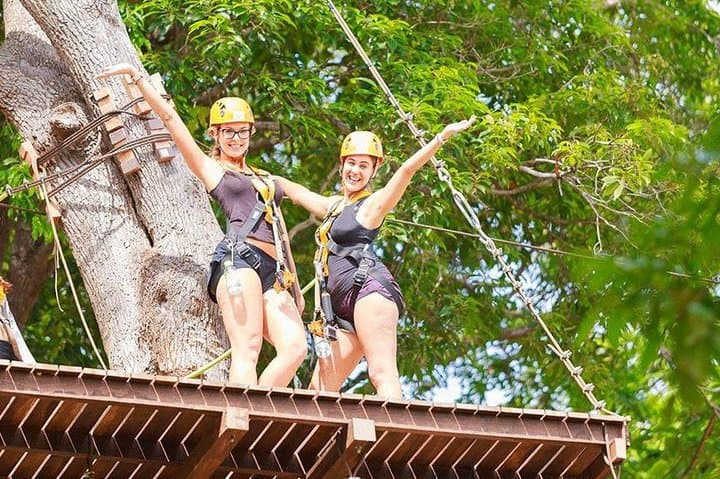
What the day feels like
The harness clicks and the jungle inhales. For a breathless second you hang between two worlds: the dense, green hush of Phuket’s lowland rainforest and the pale sweep of sky above the island’s ridgeline. Then the cable takes you—fast, steady, defiant—and the treetops slide beneath your boots like a living map. This is the promise of the Zipline 18 Platforms and ATV Adventure Tour from Phuket: a three-hour pulse of speed, view, and a little friendly fear tucked into the island’s interior.
The course is built into an old-growth pocket of tropical forest that survived centuries of human activity—once logged, later cultivated, now regrown—and the platforms are hewn to fit each trunk, a carpenter’s logic that lets the trees remain themselves. Eighteen platforms link a variety of features: eight ziplines including two lengthy runs (about 100 and 200 meters), a 15-meter abseil, a flying skateboard, net and sky bridges and spiral staircases that thread you up and through the canopy. For those who add the ATV option, a Polaris Phoenix 200cc quad adds a sediment-of-mud, speed-on-dirt counterpoint to the airy zipline, and the itinerary often includes a stop at Phuket’s Big Buddha for a quieter, panoramic moment.
Phuket’s interior reads differently than the postcard beaches. The island’s spine is granite and ancient soils, cut into rounded hills that catch and hold rain; small streams once fed tin-mining operations that made Phuket globally famous in the 19th and early 20th centuries. After the boom faded, much of the land shifted back toward vegetation, and the result is a jungle that grows quickly and thickly—vines that grip like memory, orchids that hide in bark. Local guides are as much stewards as hosts: they know which trees bear cicada-sound at noon and which ridges clear into a sunset you can see from the Big Buddha’s base.
Culturally, the “Big Buddha” stop ties the adrenaline of the morning to the island’s quieter life. The statue—45 meters tall, clad in Burmese white marble—was built in the early 2000s with donations from across Thailand and stands on Nakkerd Hill like a slow sentinel. Pausing there gives the tour a frame: you arrive muddy or windblown, then step into a space where fishermen’s villages, rubber plantations, and the Andaman’s blue distance meet under a Buddhist gaze.
The tour sells itself on variety: canopy flight, a short abseil, suspended bridges that wobble politely underfoot, and for many, the ATV run—an almost tactile contrast, where the forest seems to push back with dust and root and sudden incline. Guides brief groups thoroughly on safety; the gear is modern and inspected. Still, the experience rewards people who come prepared mentally for motion, for a jungle that keeps moving beneath their feet.
Practical reality matters here as much as spectacle. The course runs about three hours from pickup to drop-off, with the active zipline portion roughly an hour depending on group size. Temperatures in Phuket climb quickly; early-morning departures cut the heat and the chance of afternoon showers. Wear closed-toe shoes with good tread, lightweight long sleeves to guard against sun and bites, and bring a small daypack with hydration, sunscreen, and a waterproof layer—tropical rain wants to be part of your story sometimes.
This tour fits a wide spectrum of travelers. Families with older children, couples on a discovery day, and solo adventurers chasing a different perspective on Phuket’s landscapes will find something to like. The zipline’s higher platforms give riders a nearly 360-degree look at jungle and ridge; the ATV adds a hands-on, messy sense of place that photography alone cannot capture.
If you go: choose the morning slot for clearer light and fewer bugs, and plan the Big Buddha stop as a cool-down rather than a hurried photo op. Bring a light, secure camera—phone clips are sometimes allowed but check with the operator—and consider a small tip for guides who juggle harnesses, safety checks, and group morale. Respect the trees and the marked paths; this is a private camp operating inside a living ecosystem.
Beyond the rush, the zipline-and-ATV combo offers a compact way to see an interior of Phuket that’s often overshadowed by beaches. It’s not the island’s entire story, but it’s a magnified chapter: wet, loud, urgent, and green. You will leave with a smear of jungle dust on your shoes, a silent memory of the Big Buddha’s hum, and a surprising respect for the calm the island holds just beyond the shore.
Trail wisdom
Small choices, better day.
Go early
Book a morning departure to avoid heat and afternoon rain; light is better for photos and cooler for the ATV segment.
Closed-toe shoes only
Wear sturdy trainers or light hiking shoes—the course and ATV trails get slippery and rooted.
Secure small valuables
Use a small dry bag or leave cameras in a locker; phone clips are allowed only if operator-approved.
Hydrate before you go
Bring water and sip frequently—tropical humidity heats you faster than you expect.
Local knowledge
Read the place, not just the route.
Watch for native species including Long-tailed macaque, Varied tropical birds such as hornbills and bulbuls.
Keep an eye out for wildlife during the transition between areas and habitats. Respect distance guidelines.
The camp minimizes tree impact by fitting platforms to each trunk and encourages visitors to stay on marked trails and avoid feeding wildlife.
Follow the guide's instructions on size limits, ethical handling, and leave-no-trace practices.
Forest viewpoint trails near the mid-course spiral stairs. Quiet shrine terraces at Big Buddha early morning
Locally recommended viewpoints and quiet spots known best to local operators.
Phuket’s interior was shaped by tin mining and rubber plantations; many jungle pockets regrew over former agricultural land.
Maritime roots and regional tradition shape the waterways and working coasts.
Seasonal guide
Four versions of the same landscape.
Spring
Best forFewer tourists · Lush post-wet foliage
ChallengesOccasional showers · Higher humidity
Spring (Mar–May) heats up quickly; mornings are excellent, but afternoons can get hot and storm-prone.
Summer
Best forLong daylight hours · Active wildlife
ChallengesHigh heat · Strong sun
Summer months are very warm—early starts and sunscreen are crucial, and expect lively insect activity.
Fall
Best forFull, green canopy · Fewer crowds mid-season
ChallengesMonsoon rains possible · Trail muddiness
Fall overlaps with the monsoon; heavy rains can force cancellations, but the forest is at its verdant peak when dry.
Winter
Best forDry, cooler weather · Clear island views
ChallengesSlightly busier tourist season
Winter (Nov–Feb) is ideal: dry, cooler mornings and the best visibility for panorama stops like Big Buddha.
Operator details
What the booking data adds.
Included
- ✓Drinking water
- ✓Accident Insurance for rider & passenger (ATV damages not covered)
- ✓First Aid Kit
- ✓Join in ATV experience
- ✓Safety equipments
- ✓Round trip transfer from Patong, Kata, Karon, Rawai or Chalong
- ✓Tour Guide
- ✓Raincoat (on rainy days)
Not included
- —Extra Transfer: 300 THB/person (roundtrip) – Phuket Town, Ao Yon, or Panwa.
- —Extra Transfer: 1,400 THB/car (roundtrip) – Kamala, Kathu, Siray Bay, or Leam Hin Pier.
- —Extra Transfer: 1,600 THB/car (roundtrip) – Pakok, Cape Yamu, Surin Beach, or Bangtao Beach.
- —Extra Transfer: 1,600 THB/car (roundtrip) – Cherng Thalay, or Thalang.
- —Extra Transfer: 1,800 THB/car (roundtrip) – Nai Yang, Airport Area, Nai Thon Beach, or Layan Beach
- —Extra Transfer: 2,000 THB/car (roundtrip) – Maikhao Beach Area
Good to know
- ✓Not recommended for travelers with spinal injuries
- ✓Not recommended for travelers with poor cardiovascular health
- ✓Not recommended for pregnant travelers
- ✓Public transportation options are available nearby
- ✓Suitable for all physical fitness levels
- ✓Child ticket age between 4-11 years or less than 130cm in height (proved may be required)
- ✓The trip is not recommended for a person with more than 120 kg., pregnant women, a child under 4 years old and people with a surgical history of fewer than 6 months or with hypertension, asthma, infectious diseases, diabetes, epilepsy, and any mental health condition
- ✓During the tour, riders are asked to strictly follow the tour guide/instructor. The tour operator has the right to stop any risky riding with no refund
- ✓On the rare occasion that we should be required to cancel a tour, we will inform you in advance and offer a different tour date, an alternative tour or provide a full refund
Pack with intention
What to bring.
Good to know
Common questions.
The experience runs about three hours from pickup to drop-off, with roughly one hour on the canopy elements depending on group size.
Plan the edges
The details that make the day easier.
The Big Buddha on Nakkerd Hill is about 45 meters tall and clad in Burmese white marble, visible from many parts of Phuket.
After the tour, head to Old Phuket Town for Hokkien noodles, local seafood, and a cold beer at a street-side stall; if timing allows, visit the Sunday market (Lard Yai) for snacks and local crafts.
- Closest airport
- Phuket International Airport (HKT)
- Typical drive
- 30–60 minutes from main tourist areas depending on pickup location
- Cell service
- generally available but patchy in denser forest
- Permits
- none typically required—operator handles access
The operator builds platforms to reduce tree damage and asks guests to stay on marked routes, pack out trash, and avoid feeding wildlife to protect local ecosystems.
Explore by topic
Follow the threads.
Keep exploring
Make the story part of the trip.
Set out from Bass Harbor for a private, customizable day on Blue Hill Bay — lighthouses, puffins, seals, and the chance to feel Acadia from the water. Small groups, local captains, unforgettable views.
In four hours you can move from shaded canyon ferns to wind-scoured coastal ridgelines, guided by someone who knows where the light—and the hidden views—live. This private half-day hike on the Monterey Peninsula or Big Sur is compact, curated, and perfect for travelers who want depth without a multiday commitment.
 Related story
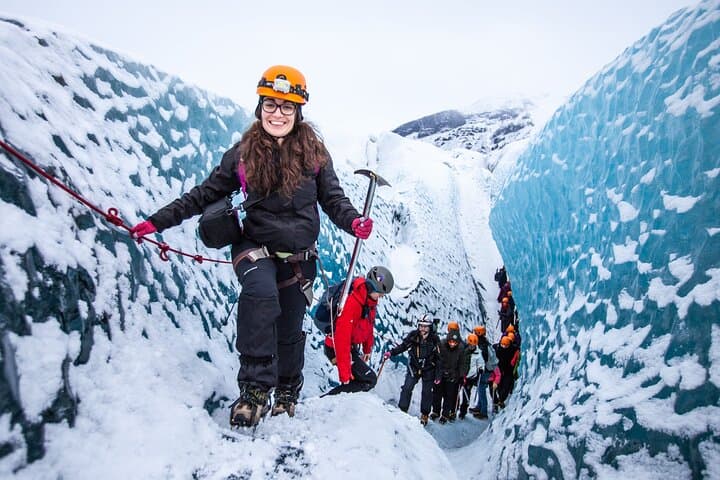
Beneath a sky of shifting light, Skaftafell’s ice reads like a map of time. This three-hour guided glacier hike mixes technical instruction with geology and culture: compact, safe, and unforgettable.