
What the day feels like
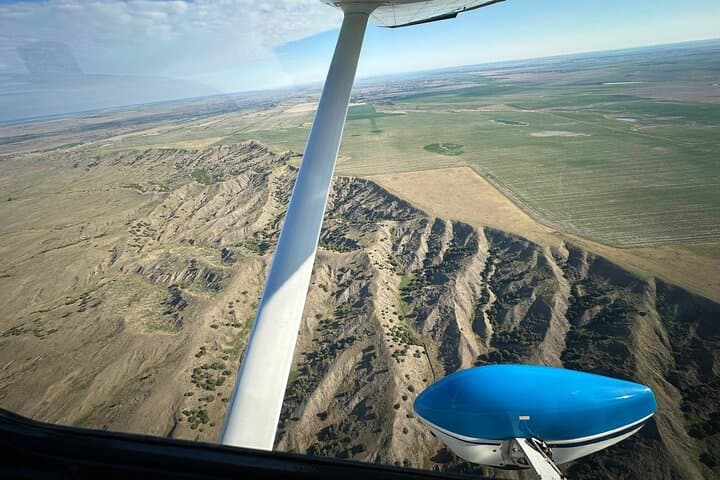
We lift off from a small strip outside Wall and, within minutes, the earth rearranges itself. The jagged teeth and layered ribs of the Badlands unfurl beneath us—pinks and buff-colored spires edged in shadow, a patchwork of prairie stitched with dry washes. Wind hushes as the prop finds its rhythm; the pilot points out the window and you realize scale from the ground never prepared you for this: the eroded pinnacles are not mere rocks but a topographic language that reads like time.
This is the promise of Fly Badlands’ 40-minute small-plane air adventure: a compact, intimate flight that strips away the limitations of roads and trails and gives you the full sweep of one of America’s most arresting landscapes. Unlike a bus tour that nudges you to a single overlook, a small plane traces the folds and faults formed by eons of uplift and erosion—arcing low over badland battlements, banking above sage-scented prairie, and offering angles that make geology legible for anyone with binoculars or a camera.
Geologically the Badlands are a textbook in motion. Layers of volcanic ash and sediment, deposited during the Oligocene and sculpted by millennia of wind and water, create the signature banding you’ll see from above. It’s also one of North America’s great fossil repositories: paleontologists have pulled exquisitely preserved remains of early mammals—ancient horses, rhinoceros relatives, and saber-tooth predecessors—out of these clay-rich beds. From the airplane you’re not examining bones, but you are looking at the terrain those creatures once roamed, a landscape that tells the story of climate shifts and continental cataclysms.
The human history that overlays these rocks is quieter but no less compelling. The Northern Plains were historically home to Lakota people who read and respected the land’s seasonal rhythms; later, explorers and settlers navigated—and sometimes misread—this austere country. Today, small towns like Wall exist as portals. Wall Drug, the kitschy neon landmark and general store, anchors this stretch of highway culture and serves as a reminder that the Badlands have long been a destination of contrast: remote country softened by roadside hospitality.
What a flight gives you—practically and poetically—is perspective. You’ll see how deep the coulees run and how the prairie and badlands interlock, how ephemeral watercourses cut into ancient sediments. Wildlife becomes visible in patterns rather than single sightings: prairie dog towns pockmark the flats like polka dots, bison herds come into relief as dark brushstrokes, and raptors cruise the thermals, their shadows speeding across the land below.
Practicalities: the flight is 40 minutes long and priced from about $155 per person. Plan for early morning or late afternoon departures for the best light—the low sun sculpts the badlands’ ridges and improves depth in photographs. Flights are intimate and private-feeling; every seat is a window seat, and pilots double as knowledgeable guides. If you’re prone to motion sickness, opt for a morning flight after a light meal, and pick a seat toward the wing for the smoothest ride.
For photographers, a small plane is a dream with caveats. Bring a fast lens in the 24–70mm to 70–200mm range to capture both sweeping panoramas and tighter geological details. Use a fast shutter to counter vibration and a polarizer to cut glare and saturate the sky. Keep straps secured and be mindful of window reflections—wear dark clothing to reduce bounce in the glass. If you want unobstructed frames, ask the pilot beforehand about doorless or removable-window operations; many small-plane operators can accommodate photo-friendly runs when weather and regulations allow.
Seasonal and safety notes are straightforward. Summers deliver wide, clear skies and thermal lift good for soaring birds—and hot afternoons on the ground. Spring and fall offer crisp light and migrating raptors; winter flights are stark and dramatic but require flexible scheduling for weather. Cell service is spotty in places; rely on the operator for weather and schedule updates. Fly Badlands emphasizes safety and local knowledge: pilots are familiar with low-altitude regulations around protected lands and will navigate to give you the best views within legal flight paths.
More than a scenic joyride, a small-plane outing like this changes how you map the landscape in your head. After the flight you’ll find yourself recognizing ridgelines from miles away and reading the contours while driving the scenic loop through Badlands National Park. The experience also quickens a sense of stewardship: seeing the scale of the badlands—its fragile soils, sparse vegetation, and the prairie that surrounds it—helps contextualize conservation decisions and the need for responsible visitation.
If you go: book a morning or late-afternoon slot, bring a lightweight jacket (it’s often cooler aloft), and charge your batteries. Consider pairing the flight with a short hike in the park or a visit to the Ben Reifel Visitor Center to connect what you saw from above to the textures on the ground. Whether you’re chasing a lifetime photograph, celebrating a milestone, or simply wanting to see the Badlands as a single, coherent landform, this flight condenses a vast and complicated landscape into 40 memorably framed minutes.
Trail wisdom
Small choices, better day.
Book golden hour flights
Schedule early morning or late-afternoon departures for the best light and calmer skies.
Bring motion-sickness remedies
If you get airsick, take preventative medication before boarding and sit over the wing for a steadier ride.
Protect your camera setup
Use a fast shutter, a wide-to-tele zoom lens, and secure straps—hold your camera close to the window to minimize reflections.
Dress in layers
Temperatures can fall noticeably in the air—bring a windproof layer even on warm days.
Local knowledge
Read the place, not just the route.
Watch for native species including Bison, Prairie dogs.
Keep an eye out for wildlife during the transition between areas and habitats. Respect distance guidelines.
The region contains fragile soils and fossil beds; stick to designated roads and trails, and avoid collecting fossils or disturbing native prairie.
Follow the guide's instructions on size limits, ethical handling, and leave-no-trace practices.
Ben Reifel Visitor Center overlooks—short hikes that connect aerial views to ground textures. Pinhole of Badlands formations visible from the Sheep Mountain Table area
Locally recommended viewpoints and quiet spots known best to local operators.
The Badlands are part of land historically used by the Lakota people and later explored by settlers; nearby Wall developed into a highway-era service town centered on tourism.
Maritime roots and regional tradition shape the waterways and working coasts.
Seasonal guide
Four versions of the same landscape.
Spring
Best forMigratory raptors · Crisp visibility · Fewer crowds
ChallengesUnpredictable weather · Cooler mornings
Spring offers clear air and active raptors; pack for variable temperatures and watch for sudden wind.
Summer
Best forStable skies · Long daylight · Prairie wildflowers
ChallengesHeat on the ground · Afternoon turbulence
Summer brings sunny flights and dramatic contrast—opt for morning departures to avoid thermals and heat haze.
Fall
Best forGolden light · Comfortable temps · Migratory birds
ChallengesShorter days · Possible wind events
Fall provides the richest light and often the clearest air—ideal for photography and wildlife observation.
Winter
Best forStark landscapes · High-contrast photos · Low visitor numbers
ChallengesWeather cancellations · Cold waits on the ground
Winter flights are dramatic and spare but require flexibility—expect cancellations and dress very warmly.
Operator details
What the booking data adds.
Included
- ✓Souvenir Polaroid to Take Home
- ✓Photo Opportunities on the Ground and in the Air!
- ✓Use of Noise Dampening Headsets for your Comfort
- ✓Narrated Tour
Not included
- —Tips (optional)
- —Snacks and Drinks Available for Purchase (optional)
Good to know
- ✓Not recommended for travelers with poor cardiovascular health
- ✓Suitable for all physical fitness levels
Pack with intention
What to bring.
Good to know
Common questions.
The standard flight duration is 40 minutes.
Plan the edges
The details that make the day easier.
Badlands National Park is one of North America’s richest fossil beds, preserving Oligocene-era fossils (about 33 million years old) including ancient horses and rhinoceros relatives.
After your flight, stretch your legs at the Ben Reifel Visitor Center and then head to Wall for the kitschy-but-essential Wall Drug—grab a bison burger, local craft beer, or coffee and swap photos with other travelers.
- Closest airport
- Rapid City Regional Airport (RAP, ~1–1.5 hour drive); Meeting point: small airstrip near Wall; Driving distance from Wall: typically under 15 minutes; Cell service: intermittent in the park; Permits: none required for flights—park entry fee applies if you visit on the ground.
Fly responsibly: respect no-fly zones and wildlife disturbance rules, avoid low-altitude circling over wildlife, and pack out all trash—this landscape’s soils and fossils are nonrenewable.
Explore by topic
Follow the threads.
Keep exploring
Make the story part of the trip.
 Related story
Less than two hours from Nairobi, Kereita Forest pairs hands-on canopy adventure with quiet montane trails and a sobering colonial history—perfect for families, teams, and curious travelers seeking a full-day pulse of nature.
Set out from Bass Harbor for a private, customizable day on Blue Hill Bay — lighthouses, puffins, seals, and the chance to feel Acadia from the water. Small groups, local captains, unforgettable views.
In four hours you can move from shaded canyon ferns to wind-scoured coastal ridgelines, guided by someone who knows where the light—and the hidden views—live. This private half-day hike on the Monterey Peninsula or Big Sur is compact, curated, and perfect for travelers who want depth without a multiday commitment.