
What the day feels like
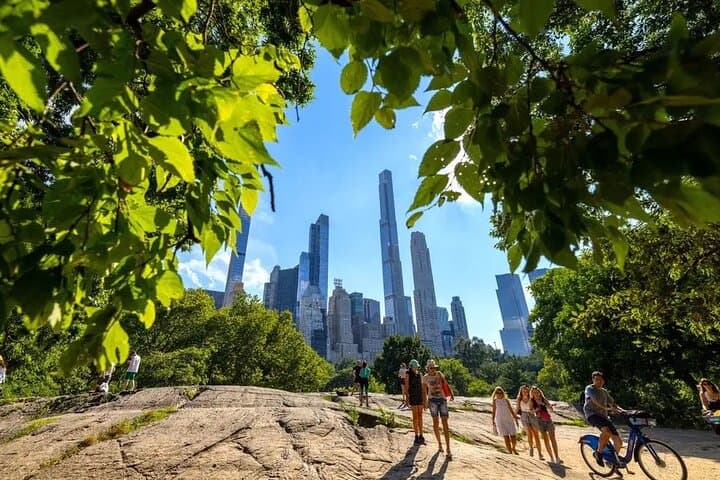
The city exhales in Central Park. Morning light pours through a lattice of plane trees and laces the pavement with gold; a row of joggers pass like punctuation, breath visible in the cool air. A rowboat bangs gently against the loamy edge of the lake as mallards stitch the surface into ripples. You could be forgiven for thinking you’ve slipped out of Manhattan — until a distant horn, the rumble of a subway, and a taxi’s shout remind you this urban wilderness is a sliver of engineered calm inside one of the busiest cities on earth.
That juxtaposition is the point of a private Central Park adventure. This is not a museum tour where you shuffle in a line past plaques. It’s a curated walk, paced to your curiosity: a beguiling mix of design history, geology that reveals the bones of the island, and small moments of quiet — a bench shaded by a linden, a bench warmed by the sun, a bridge framing a cinematic view. On a 60– to 180–minute visit you can sample the park’s essentials or dive deeper into hidden corners: the bird-rich thicket of the Ramble, the stone poetry of Bethesda Terrace, the sweeping arc of Bow Bridge, or a hush at Strawberry Fields.
Central Park’s story is a planned wilderness. In 1858 Frederick Law Olmsted and Calvert Vaux won a design competition with the Greensward Plan, creating a democratic landscape meant to relieve the city’s density and offer restorative access to nature. What looks accidental — the pond, the rolling meadows, the carefully framed vistas — is precise orchestration. The park’s topography is older than the plan: Manhattan’s bedrock, Manhattan schist, outcrops here and there, and the subtle hollows and ridges were accentuated by the designers. From a geology perspective, walking the park is to walk over 400 million years of stone dressed in nineteenth-century taste.
The cultural gravity of Central Park matters as much as its plants and stones. It’s a stage for New York life: impromptu brass bands, film shoots, wedding portraits, and dog walkers moving through routines as perennial as the seasonal trees. For visitors, the park is a place to witness New Yorkers at play and to feel how a civic vision shapes daily life.
A private guide turns the map’s black-and-white icons into stories. They’ll point out the Cast-iron lamp posts that date to the park’s early decades; tell you about the actors and movies that turned Bow Bridge into an icon; explain how the Great Lawn was once a reservoir. You’ll learn which trails attract migrating warblers in spring and where the best spot is for cityscape photography at dusk. The guide’s app-driven format lets you pause at a bench and deep-dive into a site’s history, then pick up the tour where you left off — perfect for travelers who want control without losing context.
Practicalities matter. Expect to walk 1.5–4 miles depending on how much you explore; elevation is modest (a few short rises up to a couple of hundred feet cumulative) but there are many stone steps. Weather shifts quickly in New York, so layers and good footwear keep the day enjoyable. Summer brings heat and concerts; fall brings a wardrobe of color and the most comfortable temperatures for long strolls. The tour is private and flexible — priced from around $20 — and is a quick, low-barrier way to add meaningful context to the park if you have limited time in the city.
There’s a small, necessary etiquette to enjoying the park like a local: keep left on shared paths, leash your dog where required, and avoid trampling planted beds. For photographers, the light is richest at golden hour on Bow Bridge and around the mall where the plane trees form a cathedral-like leaf canopy. Birders will want to linger in the Ramble in spring and early summer. If you want to add a boat ride, the Loeb Boathouse offers rowboats in summer and pairs perfectly with the tour’s lakefront stop.
Why book a private tour rather than go it alone? Context. Central Park rewards curiosity. Without a guide you’ll pass key features but miss the connective tissue — the why behind the view. A private tour is also adaptive: families can move at kid pace, photographers can linger, and history buffs can linger over the park’s transformation during New York’s industrial boom. For anyone with limited time in the city, a 60– to 180–minute guided walk is a concentrated dose of the park’s natural and civic riches.
When you leave, you’ll carry a different kind of memory than the one a quick status photo provides. You’ll recall a tree that feels like it’s been listening for a century, a stone terrace that absorbed generations of city life, and the way the park breathes with the rhythms of the city. That duality — a natural place made by human intention that remains resolutely alive — is the understatement that anchors the perfect urban adventure.
In short: bring sensible shoes, a curious mind, and leave time afterward for a coffee on the edge of the park. Central Park doesn’t give itself up fast, but a private adventure tour is the most efficient route to its quieter, wiser corners.
Trail wisdom
Small choices, better day.
Start Early for Quiet
Begin the tour in the morning to avoid crowds and get softer light for photos.
Wear Comfortable Shoes
Expect varied paving, gravel paths, and stone steps—supportive walking shoes make the tour more pleasant.
Bring a Water Bottle
Carry a reusable bottle; there are drinking fountains but having water on hand is convenient.
Pause and Listen
Take advantage of the app pause feature to soak in quieter spots like the Ramble or a bench by the lake.
Local knowledge
Read the place, not just the route.
Watch for native species including American robin, Migrating warblers (spring).
Keep an eye out for wildlife during the transition between areas and habitats. Respect distance guidelines.
NYC Parks actively manages habitats and encourages visitors to stay on paths, carry out trash, and avoid feeding wildlife to protect native species.
Follow the guide's instructions on size limits, ethical handling, and leave-no-trace practices.
The Whispering Gallery beneath Bethesda Terrace. The tucked-away Shakespeare Garden near the west side
Locally recommended viewpoints and quiet spots known best to local operators.
Central Park was designed by Frederick Law Olmsted and Calvert Vaux (Greensward Plan, 1858) as a landscaped public space for all New Yorkers.
Maritime roots and regional tradition shape the waterways and working coasts.
Seasonal guide
Four versions of the same landscape.
Spring
Best forMigratory birds · Blooming trees · Mild weather
ChallengesUnpredictable rain · Crowds on warm weekends
Spring is prime for birdwatching and blooming magnolias; expect cool mornings and occasional showers.
Summer
Best forLong days for extended tours · Boating on the lake · Outdoor concerts
ChallengesHeat and humidity · Higher visitor density
Summer fills the park with activity — pack sun protection and plan for shaded stops.
Fall
Best forFall foliage · Comfortable temperatures · Photography
ChallengesWeekend crowds during peak leaf color
Fall offers the most consistent comfortable weather and dramatic color displays—ideal for long walks.
Winter
Best forCrisp, clear light · Snow-covered landscapes · Low crowds
ChallengesCold, icy paths · Limited boating and some closures
Winter is quieter and can be magical with snow, but dress warmly and use caution on icy steps.
Operator details
What the booking data adds.
Included
- ✓Free Navigation on your Smartphone
- ✓App Guide
- ✓Admission to Museums if option is selected
Not included
- —Admission to Museums if option is excluded ($40)
Good to know
- ✓Service animals allowed
- ✓Public transportation options are available nearby
- ✓Infants and small children can ride in a pram or stroller
- ✓Transportation options are wheelchair accessible
- ✓Wheelchair accessible
- ✓Suitable for all physical fitness levels
Pack with intention
What to bring.
Good to know
Common questions.
Tours are 60–180 minutes and private, so routes and pacing are tailored to your interests via the guide and app.
Plan the edges
The details that make the day easier.
Central Park’s design (the Greensward Plan) by Frederick Law Olmsted and Calvert Vaux was selected in 1858 and remains one of the earliest and most influential examples of landscape architecture in the United States.
After a tour, head to the Loeb Boathouse for a lakeside meal, try a warm cookie from Levain Bakery on the Upper West Side, or grab a craft beer at a nearby neighborhood bar; the Upper East and West Sides are full of classic NYC cafés and delis.
- Closest airports
- JFK (~18 miles)
- LaGuardia (~8 miles); Typical driving distance from Midtown Manhattan
- under 15 minutes (traffic dependent); Cell service: reliable throughout most park areas; Permits: none required for small private tours—check NYC Parks for commercial group rules.
This park is maintained by NYC Parks and private conservancies—pack out trash, stick to designated paths, and avoid feeding birds or squirrels to protect the park’s ecosystems.
Explore by topic
Follow the threads.
Keep exploring
Make the story part of the trip.
In four hours you can move from shaded canyon ferns to wind-scoured coastal ridgelines, guided by someone who knows where the light—and the hidden views—live. This private half-day hike on the Monterey Peninsula or Big Sur is compact, curated, and perfect for travelers who want depth without a multiday commitment.
 Related story
Beneath a sky of shifting light, Skaftafell’s ice reads like a map of time. This three-hour guided glacier hike mixes technical instruction with geology and culture: compact, safe, and unforgettable.
 Related story
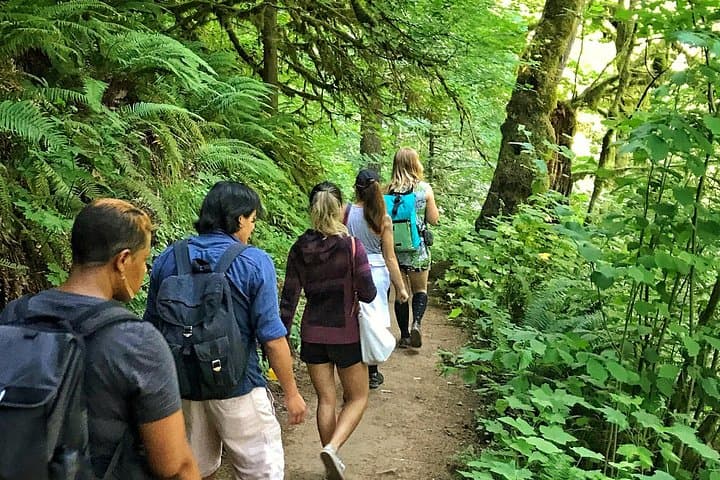
Lose the city for a few hours without leaving it: this 5-mile, 900-foot-gain Forest Park loop threads old-growth pockets, city viewpoints, and cultural landmarks for a compact taste of Portland’s wild side. Expect moss, roots, and stories.