
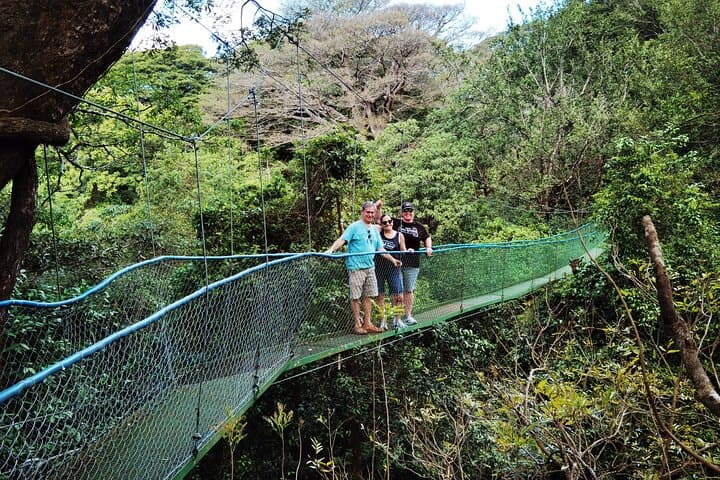
What the day feels like
You arrive before the heat has fully mounted—mornings in Guanacaste come with a slow, saline pull from the Pacific and a promise of motion. The shuttle slides off the coastal road at a stand of almond trees and the guide calls it a day: eight hours of zipline cables, hanging bridges, a cliff-edge waterslide, a canter along dusty trails, and a soak in mineral-rich hot springs. It reads like a theme park itinerary, but the elements here aren’t built, they’re coaxed from the land. The cables thread through old-growth canopy; the slide dumps you into a river that has been moving rocks for millennia; the hot springs are the residue of volcanic heat far below your feet.
This Mega Adventure Tour out of Playa Flamingo packages Guanacaste’s best adrenaline and relaxation into one long, private day—roughly 9–10 hours—guided at every step. It’s the sort of trip that attracts mixed groups: families who want variety, couples who can’t agree on one activity, and solo travelers who crave a curated introduction to the region. The guide stays with you, answering questions, pausing for photos, steering you toward the best local snacks. You don’t rush, but you do keep moving; the pace is purposeful, designed to let each part of the landscape show itself before you trade it for the next.
Geologically, you’re in the shadow of the Guanacaste highlands and the Rincon de la Vieja volcanic system. That subterranean heat is the reason hot springs bubble up near these coastal plains, and the area’s basaltic soils feed the stark contrasts of dry tropical forest and sudden green riparian corridors. The canopy you zip through is younger than the volcanic land beneath it, but it has its own silent history: a network of species that adapted to long dry seasons punctuated by intense rains, and communities that learned to live with—and build from—those rhythms.
Culturally, the tune here is “Pura Vida” but with a practical cadence. Guanacasteans are proud of a ranching history; you’ll see that in the ease of a local’s day on horseback and in the casual friendliness of roadside sodas (family-run eateries) where you can sample a casado—rice, beans, plantain, and grilled fish or beef—after a morning on the cables. Playa Flamingo itself was a quiet fishing village until tourism found its white sand coves; much of the food, music, and storytelling still comes from the water and the land.
On the day: you’ll sign waivers, get fitted for harnesses, and learn a few zipline basics—body position, braking technique, and how to trust the equipment. The hanging bridges are slower-paced and near the zip course; they’re a chance to feel the forest’s pulse beneath your boots. The waterslide is an engineered rush carved into a natural slope that empties into a river canyon; it’s playful rather than extreme, but the current and the drop are real—treat it like a moving feature, not a pool. Horseback rides wind across dry grasses and farm lanes, offering an intimate, low-gear view of the countryside. The day finishes with hot springs: mineral-steamed pools where heat rises off the skin and conversation slows.
Practicalities are just as important as spectacle. The tour runs a long day—pack for weather, sun, and quick changes. Wear closed-toe shoes for ziplines and bridges (you’ll thank yourself on the hike to the canopy platforms), and bring a lightweight set of clothes for the horse ride and hot springs. Hydration and sun protection aren’t optional; the dry season can be fierce, and even in the rainy months the humidity will sap energy. If you want photos, bring a handheld waterproof camera or secure a chest mount; pockets and backpacks need good straps. Guides speak English and Spanish, and the private-transport option means less time coordinating logistics and more time engaged with the route.
Safety is straightforward here: professionals inspect lines and tack, guides brief thoroughly, and hot-spring facilities keep water at safe temperatures—but personal caution matters. Follow instructions for braking on ziplines, ride within your comfort zone, and gauge hot-spring temperatures before easing in. For horseback, listen to the wrangler’s low commands and don’t try to control a spirited animal without instruction.
Why do this instead of splitting the activities over multiple days? Because the variety itself becomes the point: the way the forest’s hush contrasts with the noisy surf, the way the bright, impatient sun coaxes you to jump into mineral steam at day’s end. It’s an accelerated, efficient immersion into Guanacaste’s wild and social fabric. You’ll leave sandy, tired, and more familiar with the geography, food, and humor of a place that’s both tourist-friendly and unapologetically local.
If you plan to go: book a morning departure during the dry season (December–April) for the clearest skies and driest trails; bring a waterproof shell if you visit in the green season (May–November); tip guides who tailor the day to your group; and plan a calm evening—your muscles will appreciate it. The price point sits in the mid-range for full-day multi-activity packages and includes private transport and a guide, which is useful if you prefer a stress-free, door-to-door experience.
This is not a maximum-heroism, summit-only adventure. Instead it’s a well-paced, thoughtfully assembled day where natural forces—wind in the canopy, the river’s insistence, geothermal warmth—become the coils and brakes of your experience. You come for the zipline, you stay for the story the land tells between platforms and pools.
Trail wisdom
Small choices, better day.
Start Early
Morning departures avoid afternoon heat and reduce the chance of rain during the green season; you’ll also beat crowds at the zipline platforms.
Secure Small Valuables
Use a waterproof case or leave loose items at the base; harnesses and bridles aren’t forgiving of dangling phones.
Hydrate Strategically
Bring a 1–2 L hydration system and sip steadily—salt tablets can help on hot, dry days.
Layer for Transition
Light, quick-dry layers allow you to move from hot springs to horseback comfortably without excess packing.
Local knowledge
Read the place, not just the route.
Watch for native species including Howler monkeys, Toucans and motmots in the canopy.
Keep an eye out for wildlife during the transition between areas and habitats. Respect distance guidelines.
Local operators increasingly follow leave-no-trace principles and partner with reforestation efforts; choose companies that limit group sizes and avoid disturbing riparian zones.
Follow the guide's instructions on size limits, ethical handling, and leave-no-trace practices.
Early-morning viewpoint above Playa Flamingo for soft light and fewer people. Small inland soda (family restaurant) near the trailhead serving fresh ceviche and casado
Locally recommended viewpoints and quiet spots known best to local operators.
Playa Flamingo evolved from a fishing village into a coastal destination; Guanacaste’s ranching and indigenous Chorotega influences shape local culture and cuisine.
Maritime roots and regional tradition shape the waterways and working coasts.
Seasonal guide
Four versions of the same landscape.
Spring
Best forDry trails · Clear canopy views · Comfortable hot-spring evenings
ChallengesIncreasing heat late in season · Stronger sun exposure
Spring (March–May) tends toward the end of the dry season—bright skies and manageable trails, though afternoons can warm significantly.
Summer
Best forLusher green forest after early rains · Fewer crowds · Vibrant bird activity
ChallengesAfternoon showers begin · Trail muddiness in places
Summer (June–August) shows the forest greening; plan for a possible midday downpour and slippery approaches to bridges.
Fall
Best forDramatic skies · Fewer tourists · Lower prices
ChallengesHeaviest rains (Sept–Nov) · Possible road delays
Fall is the wettest period—expect true tropical rains and occasional shortened access to some sites after storms.
Winter
Best forDry, cool mornings · Best visibility for photos · Stable trail conditions
ChallengesHigher visitor numbers (holiday season) · Hot afternoons on exposed trails
Winter (Dec–Feb) is peak dry season—perfect for ziplines and rivers, but book early during holidays.
Pack with intention
What to bring.
Good to know
Common questions.
Expect about 9–10 hours total—transport from Playa Flamingo, a full day of activities, and return.
Plan the edges
The details that make the day easier.
The hot springs in Guanacaste are heated by geothermal activity associated with the Rincon de la Vieja volcanic range—this volcanic system contributes to the region’s mineral-rich springs.
After the day’s adrenaline, head back to Playa Flamingo for fresh seafood at a beachfront sodA or a casual restaurant—look for casado plates or ceviche and local craft beers; nearby Tamarindo also offers lively bars and surf-town nightlife if you want more options.
- Closest airport
- Daniel Oduber Quirós International Airport (LIR) in Liberia (~60–90 minutes drive to Playa Flamingo); Driving distance to trailheads varies—operators provide door-to-door transport; Cell service: generally good near towns, intermittent at remote canopy sites; Permits: none typically required for day tours—private tour includes access and gear.
Choose operators that minimize group sizes, stay on designated trails, and support reforestation or local community projects; pack out all trash and avoid using single-use plastics.
Explore by topic
Follow the threads.
Keep exploring
Make the story part of the trip.
In four hours you can move from shaded canyon ferns to wind-scoured coastal ridgelines, guided by someone who knows where the light—and the hidden views—live. This private half-day hike on the Monterey Peninsula or Big Sur is compact, curated, and perfect for travelers who want depth without a multiday commitment.
 Related story
Beneath a sky of shifting light, Skaftafell’s ice reads like a map of time. This three-hour guided glacier hike mixes technical instruction with geology and culture: compact, safe, and unforgettable.
 Related story
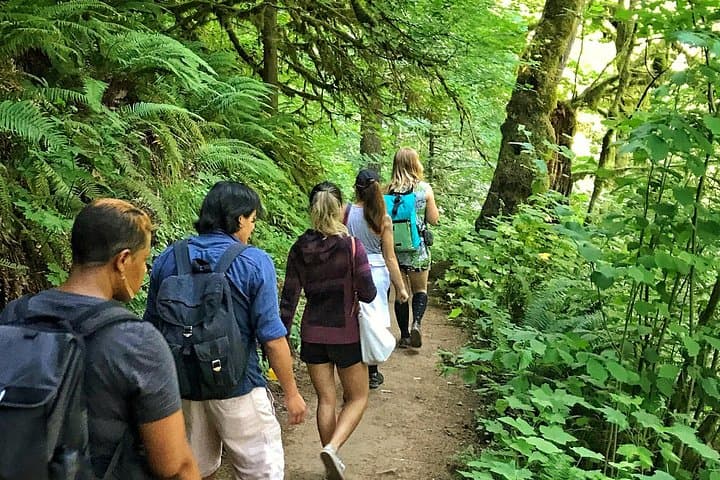
Lose the city for a few hours without leaving it: this 5-mile, 900-foot-gain Forest Park loop threads old-growth pockets, city viewpoints, and cultural landmarks for a compact taste of Portland’s wild side. Expect moss, roots, and stories.