
What the day feels like
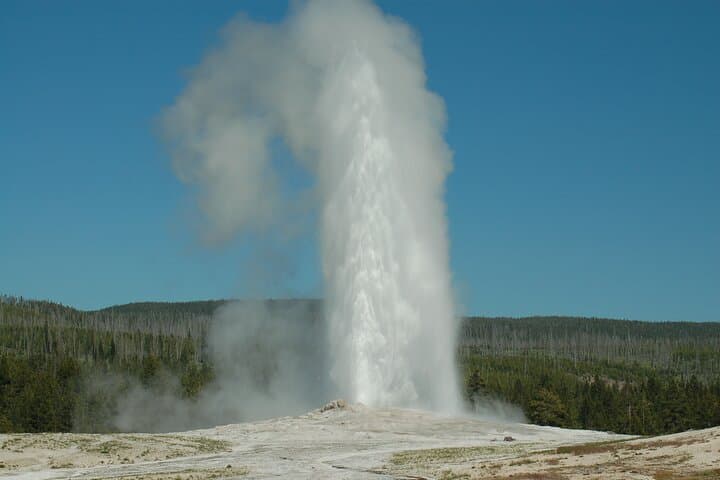
The morning begins with steam. You step off the shuttle and the air tastes faintly metallic, like a kitchen where something has been boiling for hours. A plume rises at the horizon and, even before you can see it, you feel the ground humming beneath your boots. This is the Lower (Southern) Loop of Yellowstone, a landscape that announces itself in bursts: geysers that erupt on cue, springs that bloom color like spilled paint, and bison that refuse to move because they own the road. On a full-day loop you will watch Old Faithful thunder skyward, stand over the prismatic swirl of Grand Prismatic Spring, and learn how a caldera built by an ancient supervolcano still shapes everything from the smell of the air to the pattern of trails.
Geology here reads like a primer on extremes. Yellowstone sits over a hot spot, a bubbling pocket of mantle that has been piercing the crust for millions of years. The Lower Loop is essentially the thermal theater: vents, fumaroles, mud pots, geysers, and sinter terraces. Grand Prismatic Spring is not just beautiful, it is biologically vivid, its colors created by heat-loving microbial mats that thrive in gradient zones of temperature. Old Faithful, meanwhile, earned its name for predictability; it is reliable enough that people time their coffee around its performances.
Human history layers over that geology. Indigenous nations such as the Crow and Shoshone have lived on these lands for millennia, hunting valley floors and translating seasonal shifts into routes on the landscape. The park itself entered the global imagination when Congress established Yellowstone as the world’s first national park in 1872, setting a precedent for conservation and public recreation. More recently, the park is a living classroom about how humans interact with large predators, migrating herds, and thermal features—all of which require respect and distance.
What makes a guided loop valuable is context and safety. On a packed itinerary that runs roughly 8 to 9 hours you trade solo uncertainty for an educated guide, local timing, and a route that hits the park’s high notes without wasting time. Expect several photo stops, stops at boardwalked thermal basins, and the inevitable traffic pause when a herd of bison decides the highway is a more interesting place to be than your schedule.
Practicalities matter. These tours typically start early from West Yellowstone and return there by evening; the window is long enough to see many features but not so long that you become burned out by crowds. Bring layers, because thermal zones create microclimates: chilly wind on the road, warm steam at the springs. The sun can be relentless on the boardwalks, so sunglasses and sunscreen are as important as a jacket. Cell service is spotty in the park, and boardwalks and viewing areas are strictly enforced to protect both people and fragile features.
A smart plan for the day is simple. Start with the big geysers when crowds are still forming, then move to the scenic overlooks and lesser-visited basins in the afternoon. If you want to learn more about the tour, or to book a guide who knows the best windows for eruptions and bison jams, consider this Yellowstone Lower Loop tour as your practical engine for the day: <a href="https://app.advcollective.com/local-experts/yellowstone-lower-loop-tour-old-faithful-grand-prismatic-bison-jams">Yellowstone Lower Loop tour</a>. Guides will time stops to avoid the worst congestion and can often read wildlife patterns to give you the best chance for a memorable sighting.
Safety and stewardship are part of the experience. Keep at least 25 yards from wildlife and 100 yards from bears. Disturbing thermal features is illegal and dangerous; the crust can be thin and water temperatures lethal. Carry water and snacks, use restrooms before entering remote areas, and be prepared to stay in the vehicle during wildlife jams. Lastly, check park alerts the morning of your trip for road closures or wildfire smoke that may affect visibility.
Who this day is for: families with older kids, photographers who want dramatic landscapes in changing light, and first-time visitors who want an efficient tour of the park’s most iconic features. It is also useful for travelers who prefer not to drive long distances on unfamiliar roads and who value interpretive narration that turns landmarks into stories.
The payoff is compact and enormous. You will leave with a sense of scale—how a supervolcano has sculpted valleys and dictated where rivers run—and with a catalog of images: a geyser’s columning steam, a prismatic basin rimmed in impossible cyan, and the slow, indifferent presence of bison at the roadside. Yellowstone asks you to slow down and to watch; on the Lower Loop you get the chance to do that without guessing where to go next.
If you want the most from the day, bring curiosity and patience. The park’s rhythms are not ours to command, and sometimes the best moments are the unplanned ones: an unexpected elk in the trees, a late-afternoon lens flare across steaming water, a guide pointing out a tiny lifeform that explains a color on a map. This is a tour that pairs spectacle with restraint, and by the end of the loop you understand why people return here again and again.
Trail wisdom
Small choices, better day.
Respect the boardwalks
Stay on established boardwalks around thermal features; the crust can be unstable and water is scalding.
Bring a refillable water bottle
Hydrate often—walking between features in sun and wind dehydrates faster than you think.
Pack layers and sun protection
Temperatures vary across the loop; windproof layers and sunscreen keep you comfortable.
Give wildlife plenty of space
Bison and elk can charge; keep at least 25 yards from wildlife and use binoculars or a telephoto lens.
Local knowledge
Read the place, not just the route.
Watch for native species including Bison, Elk.
Keep an eye out for wildlife during the transition between areas and habitats. Respect distance guidelines.
Stay on trails and boardwalks, pack out trash, and never feed wildlife; these simple steps protect delicate thermal features and animal health.
Follow the guide's instructions on size limits, ethical handling, and leave-no-trace practices.
Artist Paint Pots basin (smaller crowds than major springs). Overlooks along Firehole Canyon for salmonfly and trout activity
Locally recommended viewpoints and quiet spots known best to local operators.
Yellowstone was designated the worlds first national park in 1872, establishing a model for public lands and conservation.
Maritime roots and regional tradition shape the waterways and working coasts.
Seasonal guide
Four versions of the same landscape.
Spring
Best forWaterfalls swollen from snowmelt · Fewer crowds early in season
ChallengesVariable road openings · Cold mornings and possible snow
Spring offers dramatic meltwater and newborn wildlife, but some roads and services may not yet be open.
Summer
Best forFull park access · Long daylight for photography
ChallengesPeak crowds · Heat at thermal areas
Summer guarantees full access but expect heavy traffic and busier overlooks; arrive early to beat crowds.
Fall
Best forCrisp light for photos · Wildlife activity around meadows
ChallengesShorter days · Possible early snow
Early fall balances thinner crowds and vivid color, making it the sweet spot for a relaxed loop.
Winter
Best forSnow-clad landscapes · Opportunity for specialist snowcoach or snowmobile tours
ChallengesMuch of the loop is closed to regular vehicles · Extreme cold and limited services
Winter changes the loop into an intimate, quiet place accessed by winter-specific transport; plan with a specialist.
Operator details
What the booking data adds.
Included
- ✓Bottled water
- ✓Services of a skilled guide
Not included
- —Gratuities
- —Park Entry - $20 (exempt if you have NPS/Senior/Military/Veteran/Yellowstone Car Pass)
- —Meals
Good to know
- ✓Suitable for all physical fitness levels
- ✓Pets are not permitted in most of Yellowstone.
- ✓Yellowstone is located at altitude. Check with your medical professional that you'll be OK.
Pack with intention
What to bring.
Good to know
Common questions.
Expect about 8 to 9 hours on the Lower Loop; most departures are early morning from West Yellowstone and return by early evening.
Plan the edges
The details that make the day easier.
Yellowstone was established as the worlds first national park in 1872 and contains more than half of the worlds geysers and hydrothermal features.
After the loop, head to the Old Faithful Inn for historic architecture and lodge fare, or return to West Yellowstone for local museums like the Grizzly & Wolf Discovery Center and casual restaurants to swap photos and stories.
- Closest major airport
- Bozeman Yellowstone International Airport (BZN) ~90 miles; Tour typically starts
This area contains fragile thermal features and critical wildlife habitat—stay on boardwalks, pack out all trash, and never feed or approach animals.
Explore by topic
Follow the threads.
Keep exploring
Make the story part of the trip.
Set out from Bass Harbor for a private, customizable day on Blue Hill Bay — lighthouses, puffins, seals, and the chance to feel Acadia from the water. Small groups, local captains, unforgettable views.
In four hours you can move from shaded canyon ferns to wind-scoured coastal ridgelines, guided by someone who knows where the light—and the hidden views—live. This private half-day hike on the Monterey Peninsula or Big Sur is compact, curated, and perfect for travelers who want depth without a multiday commitment.
 Related story
Beneath a sky of shifting light, Skaftafell’s ice reads like a map of time. This three-hour guided glacier hike mixes technical instruction with geology and culture: compact, safe, and unforgettable.