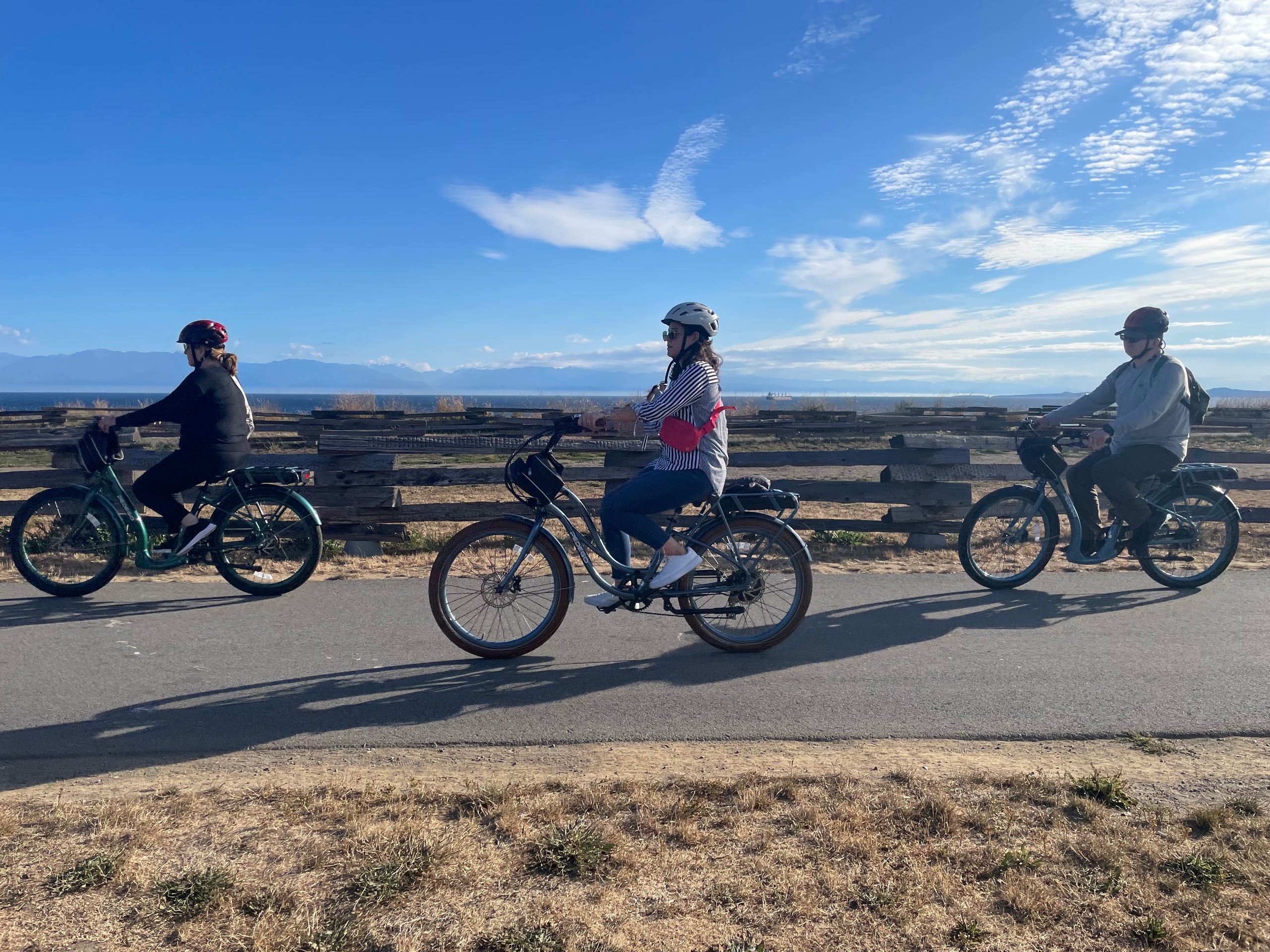
Top E-Bike Adventures on Orcas Island, Washington
Orcas Island compresses the best ingredients for an e-bike trip—quiet backroads, rolling farmland, shaded forest climbs and a summit that rewards effort with wide ocean views—into a compact, ferry-accessible playground. E-bikes on Orcas extend your range without erasing the island's slow, place-based rhythm: you move farther and higher, but you still arrive at farm stands, tide pools, and trailheads with time to spare. This guide focuses on the logistics, routes, gear and etiquette specific to e-biking here—how to plan around ferries and batteries, which surfaces and climbs suit pedal-assist, and how to combine riding with kayaking, hiking and seasonal wildlife viewing.
Top E-Bike Trips in Orcas
16 trips • Book with confidence • Instant confirmation
Why Orcas Island Is an Outstanding E‑Bike Destination
Orcas Island reorients speed and scale. There are no freeways, few traffic lights and a handful of hills that feel immense only because the views at the top are so immediate—glacial sculpted ridgelines, the glass of island-speckled Puget Sound, and the low, green quarter-acre farms that braid the interior. For riders who want to cover more ground without sacrificing the intimacy of a place, the e‑bike is a sublime compromise: you still pedal, you still choose your stops, but climbs like the ascent toward Mount Constitution turn from all-day commitments into approachable morning efforts.
The island’s infrastructure supports variety. Public roads range from smooth, quiet pavement along the shoreline to narrow country lanes that carry gravel and two-track shoulders. Moran State Park stitches in singletrack and forest roads; Turtleback Mountain offers short technical trails for traditional mountain bikes but also approachable service roads and connectors that are ideal for e‑bikes. Because Orcas is ferry-accessed, planning a trip means thinking in legs—water crossing, riding loop, charging window, then a second loop in the afternoon. That choreography rewards riders who can balance range and curiosity: tuck your phone into a café while teeth of battery power recover, stop at a viewpoint to drink in the Salish Sea, visit a sheep pasture or a winery and keep moving.
Beyond terrain, Orcas has a rhythm that suits exploratory travel. The island’s population is small, services are concentrated in Eastsound and Deer Harbor, and local businesses—from bike rentals to farm stands—are tuned to seasonal pulses. That means high summer invites more options but also busier roads and ferry waits; shoulder seasons deliver solitude and clearer air, though maintenance and opening hours can be sparse. Environmentally, Orcas is part of a sensitive marine and forest ecosystem: riding etiquette and responsible touring are not optional. Stay on permitted roads and trails, minimize noise near wildlife, and carry out what you carry in. The payoff for doing this well is immediate: the island feels lived-in and wild at the same time, and an e‑bike amplifies both sensations—distance becomes invitation rather than obstacle.
Finally, Orcas rewards mixed-mode days. Combine an early e‑bike climb to Mount Constitution with an afternoon kayak off the western shore, or park at a trailhead for a hike into a waterfall basin after a coastal circuit. E‑bikes open the island to people who want to layer experiences—gentle fitness, photography, food stops, and quiet lookouts—into a single day without burning it all on a single climb. If you’re planning your first trip, treat the island like a small, slow continent: plan routes that loop through villages, leave time for unplanned detours, and carry a mindset of curiosity. The island will return it.
E-bikes make the steep approaches—especially the road up to Mount Constitution—accessible to a wider range of riders, enabling summit views without a full-day commitment.
Road surfaces vary quickly: expect smooth shorelines, rolling country pavement and occasional gravel; choose tires and assistance levels accordingly.
Ferry logistics and seasonal business hours shape itineraries. Plan charging and meal stops around the ferry schedule and shop openings.
Best Time to Visit
Best Months
Weather Notes
Orcas has a maritime climate: mild summers, cool damp springs and autumns, and wetter winters. Late spring through early fall offers the driest roads and the most rental/service options. Morning fog can linger in coastal coves; afternoons are usually clearer but can bring breezes and sudden showers.
Peak Season
June–August: warmest and busiest, with the most ferry traffic and open services.
Off-Season Opportunities
Shoulder seasons (May, September) provide quieter roads, abundant blossoms or early fall color, and cooler temperatures—ideal for longer loops if you’re prepared for fewer open shops and shorter daylight.
Frequently Asked Questions
Do I need a permit to ride e-bikes on Orcas Island trails?
Most public roads and many service roads do not require permits. Some singletrack within state or county-managed areas may restrict e-bike access—always check trail signage and land manager rules before entering non-motorized trail networks.
Are there e-bike rentals on Orcas?
Yes—Eastsound and other hubs typically have rental shops offering pedal‑assist e-bikes and helmets during the main season. Availability varies by season; reserve in advance for summer weekends.
How do I handle ferry crossings with an e-bike?
Arrive early to secure a spot; ferry loading rules allow bicycles but space can be limited during peak periods. If you’re on a rental e-bike, check the operator’s advice about battery safety and whether you should remove or secure batteries for transport.
Choose Your Experience Level
Beginner
Flat to rolling coastal and village routes with low traffic and short climbs—ideal for riders new to e-bikes or island travel.
- Eastsound waterfront loop with farm-stand stops
- Deer Harbor coastal ride with tidepool detours
- Gentle point-to-point to a winery or café and back
Intermediate
Longer loops incorporating rolling farmland, gravel connectors, and moderate climbs where pedal assist is used to manage sustained grades.
- Full island clockwise loop hitting Moran State Park and Turtleback Mountain connectors
- Moran access with a short hike to cascades before a lakeside café return
- Gravel-first ride through central Orcas with viewpoints and picnic stops
Advanced
Extended, fitness-focused e-bike days that include the steep paved ascent to Mount Constitution, technical gravel descents, and high mileage—best for riders comfortable managing battery strategy and mixed surfaces.
- Mount Constitution summit push with multiple battery settings and descent through service roads
- Back-to-back long loops combined with a short hike or kayak for a full-day expedition
- High-mileage shoreline-to-summit circuits timed with ferry arrivals
Insider Tips & Local Knowledge
Plan ferries and charges, respect trail rules, and support local businesses; island rhythms matter.
Reserve rental e-bikes and any bike shuttles early—weekends fill fast in summer. Set your battery strategy before a long climb: start on a lower assist level and boost when the grade steepens to conserve range for the descent and second loop. Carry a compact charger if you’ll be out for the day with limited access to power—many cafés will let you plug in if you ask. Stay courteous on shared roads: use lights and bright clothing, call out when passing pedestrians, and yield to cars where the lanes narrow. On trail etiquette: many singletrack trails are designated non-motorized—stay on open service roads or permitted routes. Combine riding with short hikes or a kayak trip from Deer Harbor to diversify the day and avoid riding fatigue. Finally, leave time for spontaneous stops—farm stands, a quiet beach, or a seal haul-out can turn a good ride into a memorable one.
What to Bring
Essential
- E‑bike with a fully charged battery and a portable charger if available
- Helmet (required by many rental shops) and gloves
- Water (1–2 liters) and compact snacks or a plan for café stops
- Phone with offline maps or GPX files and a handlebar mount
- Basic repair kit: spare tube/patch kit, pump or CO2, multitool
Recommended
- Second battery or range extender for long circuits and repeated climbs
- Waterproof shell—marine weather can change rapidly
- Lock for leaving the bike while you explore on foot or eat
- Small first-aid kit and sunscreen
- Cash or card for small farm stands and ferries
Optional
- Compact binoculars for marine wildlife and birding
- Lightweight panniers for market purchases and picnic supplies
- Sturdy shoes for short hikes off the bike
- Portable battery pack for phone/handlebar computer
Ready for Your E-Bike Adventure?
Browse 16 verified trips in Orcas with instant booking
Explore Top 15 Orcas, Washington Adventures →