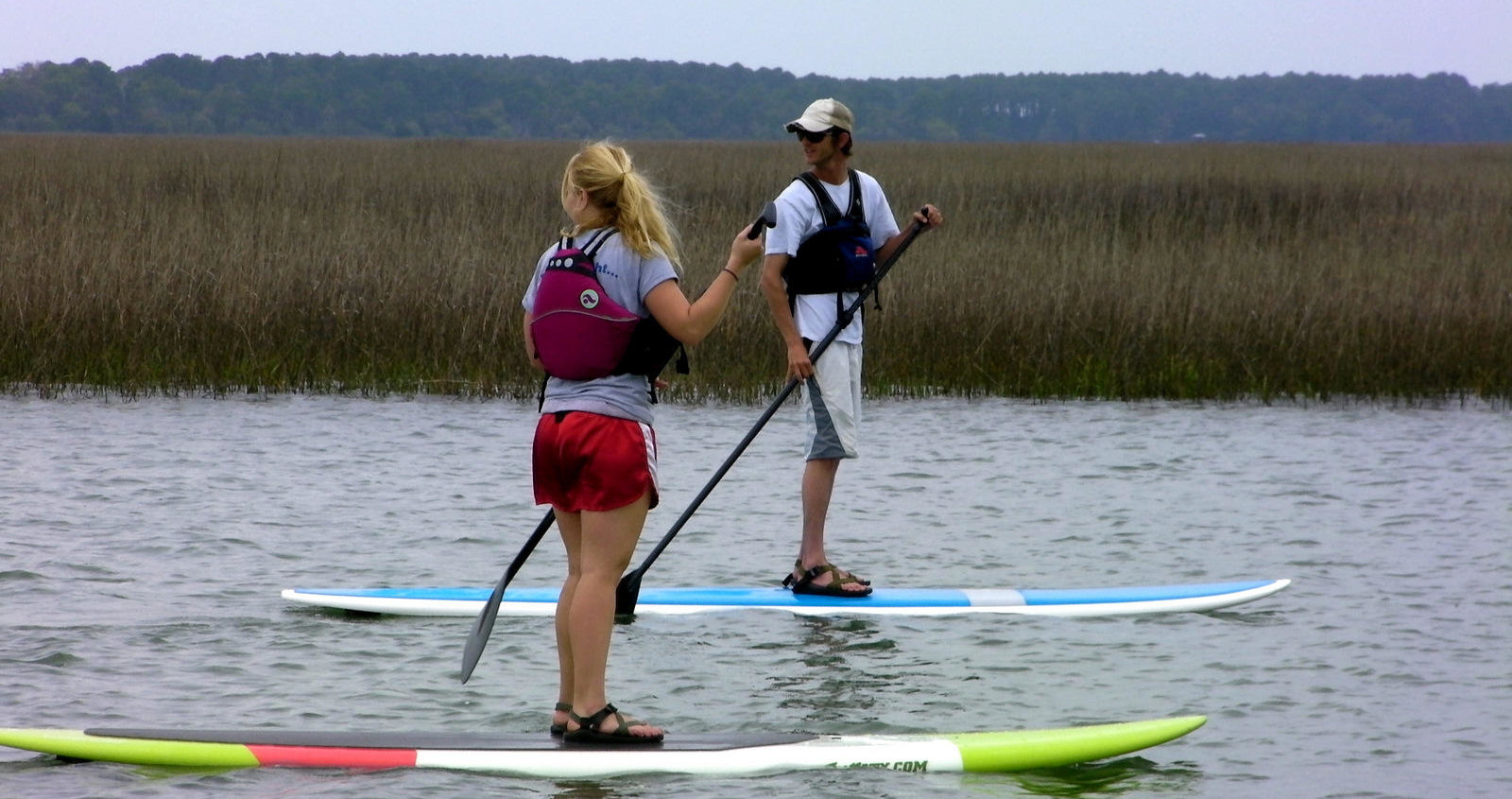
Top SUP Adventures in Johns Island, South Carolina
Johns Island folds the lowcountry into a paddler's playground: wide tidal creeks, shimmering salt marsh, and long, slow riverine corridors framed by live oaks and palmettos. Stand-up paddleboarding (SUP) here is a study in contrasts—placid early-morning glass, tidal currents that require a little planning, and rich wildlife encounters from wading birds to occasional dolphin passes. This guide zeroes in on the best ways to stand on a board and read the marsh, with practical advice for choosing routes, reading tides, booking guides or rentals, and pairing paddles with oyster roasts, bike rides, and Lowcountry history.
Top SUP Trips in Johns Island
13 trips • Book with confidence • Instant confirmation
Why Johns Island Is a Standout SUP Destination
Johns Island is a place where water shapes the story. The island’s maze of tidal creeks and broader river channels are the product of centuries of sediment, salt, and time—and they make for exceptional stand-up paddleboarding because they offer shelter from big ocean swell while still feeling wild and open. On calm mornings the marsh acts like a mirror: low tide exposes oyster beds and winding creeks, high tide floods fingered channels that allow you to glide deep into reflected canopy and cypress knees. For paddlers who want more than a workout, Johns Island delivers an intimate natural history lesson—mangrove-like cordgrass, fiddler crabs punching the mud, egrets and herons stalking shallow flats, and, at times, dolphins threading the river mouths.
SUP here is as much about reading subtle cues—wind direction, incoming tide, river current—as it is about balance. Routes range from mellow, sheltered loops ideal for first-timers to longer point-to-point runs that require timing and a basic understanding of tidal flow. Local guides and outfitters have built a regional knowledge base around tides and safe launch spots; they’ll route you past oyster bars and under live oaks while keeping an eye out for boat traffic. Beyond the technical, Johns Island’s cultural texture enriches the experience. Nearby plantations, Gullah-Geechee cultural sites, and small farm stands create easy add-ons for a day on the water—paddle in the morning, sample local oysters at lunch, and bike a backroad farm trail in the afternoon.
The setting also supports a quiet eco-tourism ethos. Because the island’s marshes are sensitive habitats, paddlers who come informed and respectful leave a small footprint: stick to marked launches, avoid trampling cordgrass when entering and exiting the water, and follow guidance from guides on wildlife distancing. Seasonally, spring and fall bring comfortable air and water temperatures and typically lighter afternoon breezes—prime windows for long exploratory paddles. Summers are warm and humid, producing flatwater mornings but more unstable weather in the afternoons. Winter paddles are possible with proper wetsuits and layered gear; the landscape’s stark angle of light then highlights mudflats and bird concentrations in a different, quietly dramatic way.
Johns Island’s estuarine network makes it uniquely suited to SUP: sheltered tidal creeks for beginners, longer river runs for intermediates, and estuary crossings that reward timing and local knowledge.
The paddling scene pairs easily with cultural and culinary stops—oysters, shrimp shacks, and farm stands give paddlers a genuine Lowcountry day off the water.
Best Time to Visit
Best Months
Weather Notes
Late spring and early fall offer the warmest water and generally light winds—ideal for relaxed SUP. Summer mornings can be glassy but afternoons bring thermal breezes and occasional thunderstorms. Winter paddles require layers and can be clear and quiet, but water will be cold.
Peak Season
May–October is the busiest period for tours and rentals; weekends fill up quickly, especially on holiday weekends.
Off-Season Opportunities
Winter weekdays offer solitude and unique birding opportunities. Many rental shops scale back operations, so book guides in advance.
Frequently Asked Questions
Do I need to worry about tides and currents?
Yes. Tidal exchange controls depth on many Johns Island routes; slack tide and an outbound tide can change difficulty and access. If you’re unfamiliar with local tides, book a guided trip or check a tide chart before launching.
Where can I rent gear or book a guided SUP tour?
Several outfitters in the greater Charleston area offer rentals and guided SUP trips that launch near Johns Island. Availability varies seasonally—reserve in advance, especially for guided wildlife or sunset tours.
Is SUP on Johns Island suitable for beginners?
Absolutely. There are calm, shallow creeks and sheltered inlets ideal for first-time paddlers. Start with a short, guided session or a protected loop at high tide to build confidence.
Choose Your Experience Level
Beginner
Sheltered creeks and calm estuary loops with minimal chop—good for learning balance and basic stroke technique.
- Short marsh loop near a sheltered launch
- Guided introductory SUP with safety briefing
- Sunrise calm-water paddle with basic wildlife spotting
Intermediate
Longer point-to-point paddles, estuary crossings timed with tides, and mixed boat traffic awareness required.
- Stono River scenic paddle with tidal planning
- Half-day estuary exploration toward Kiawah River channels
- Guided ecology tour combining paddling and shore stops
Advanced
Long-distance river runs, tidal timing across exposed flats, or high-wind days where board control and route planning are essential.
- Extended point-to-point paddles requiring shuttle and tide coordination
- Windy open-water crossings on a sturdy touring board
- Multi-hour exploratory runs combining marsh, river, and inlet navigation
Insider Tips & Local Knowledge
Respect the marsh—avoid trampling cordgrass, follow local launch rules, and ask guides about sensitive bird roosting sites before planning shore landings.
Launch at slack tide when learning; it reduces current and exposes clearer channels. If you plan a point-to-point paddle, arrange a shuttle or choose a route with predictable tidal assistance. Morning paddles typically offer the calmest water and the best light for photography. Watch for oyster beds at low tide and step carefully when entering or exiting the board. Local outfitters can provide tide-aware routes and often include natural-history commentary—take that guided window for your first Johns Island paddle. Finally, pair your SUP with a shore-side plan: a late lunch at a seafood spot, a bike ride on nearby country roads, or a visit to a historic site makes a full Lowcountry day.
What to Bring
Essential
- USCG-approved personal flotation device (PFD) or life vest
- SUP leash (coiled for shallow water) and board appropriate to skill
- Waterproof dry bag for phone, keys, and car key fob
- Plenty of water and high-energy snacks
- Sun protection: hat, SPF 30+ sunscreen, polarized sunglasses
Recommended
- Tide chart or tide app and a basic plan for the route and return time
- Light wetsuit or paddling top for cooler months
- Footwear for rocky or shell-strewn launches
- Whistle or small signaling device for safety
- Phone in a waterproof case and a portable charger
Optional
- Binoculars or a camera with a zoom for bird and wildlife viewing
- Dry change of clothes in your vehicle
- Compact first-aid kit
- Waterproof map or printed directions in case of low signal
Ready for Your SUP Adventure?
Browse 13 verified trips in Johns Island with instant booking
Explore Top 15 Johns Island, South Carolina Adventures →