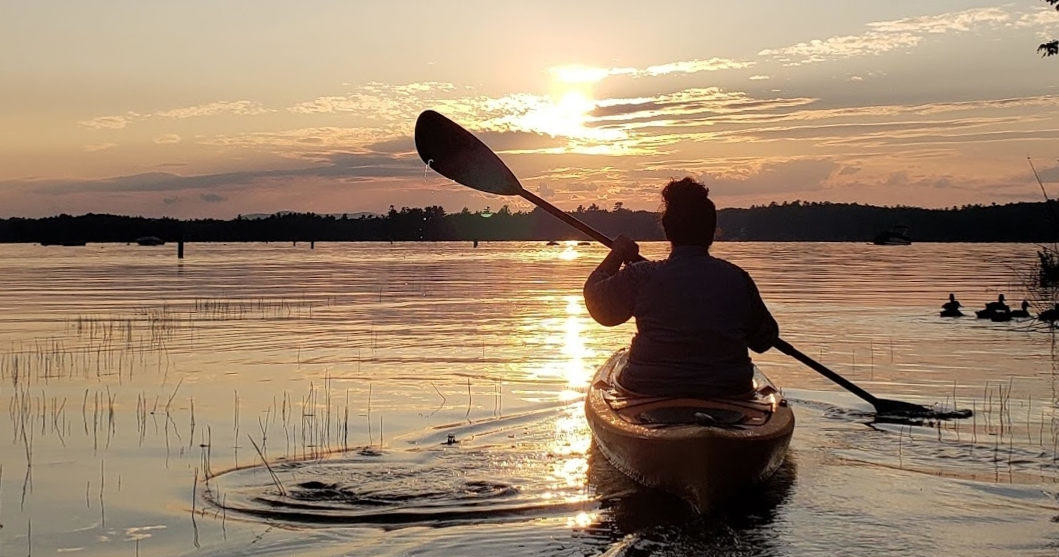
Why Jackson Is a Standout Kayaking Destination
Jackson’s paddling appeal is intimate rather than vast: a handful of accessible launch points, short drives between completely different water experiences, and the kind of mountain-backed scenery that makes every stroke feel like a small, focused escape. Mornings in Jackson often begin with glassy water and a hush of mist as mountain runoff eases into broader river channels. Birch and maple frame the banks; granite ledges and low, rounded hills reflect in sheltered coves. The result is an economy of beauty — you don’t need to travel far from the village to find a serene backwater, a riffled run that tees up playful moves, or a quiet inlet where a loon’s call cuts the air.
Those contrasts are important. Jackson sits at the transition between low-gradient stretches of the Saco River corridor and tributary-fed ponds and streams that are fed directly by the White Mountains’ snowpack and springs. That means paddlers can plan for a calm, family-friendly float in the morning and, with a short drive, access a steeper, more energetic section of river for a downstream run. The seasonality intensifies that appeal: late spring’s high flows flush through the system and create comfortable currents for intermediate paddlers; summer’s steadier levels expose more shoreline and safe swimming holes; fall delivers a visible shift in color, when maples and birches light up the valley and the water becomes a mirror for foliage.
Beyond scenery, Jackson’s paddling is rooted in a cultural landscape shaped by timber, rail, and outdoor tourism. The low bridges, old mills, and narrow roads that meet the waterway speak to a layered history — Indigenous Abenaki stewardship long before Euro-American settlement, then a working landscape of logging and mills, and now a recreational corridor where local outfitters connect residents and visitors to the river. That human history is visible at small launch points and village put-ins, where a family picnic bench and a weathered sign can tell you as much about local life as the color of the water.
Ecologically, the waterways around Jackson are valuable riparian habitats. Paddlers often share quiet coves with beavers, river otters, great blue herons, and sometimes the rare sighting of migrating waterfowl in shoulder seasons. That biodiversity makes low-impact paddling essential—clean boats, no-wake caution in shallow coves, and attention to nesting seasons for birds. Practically, paddlers should watch seasonal water temperatures and flows: early spring water is cold and can be hazardous on capsizes, while late-summer low flows expose rocks and require route-finding. The area rewards a modest amount of planning: checking river gauges, packing a good PFD, and timing trips for morning calm or late-afternoon light. When those elements line up, Jackson delivers a paddling experience that feels both immediate and restorative: short on approach time, long on memorable strokes.
Jackson’s paddling options are compact—learn-to-paddle flats, scenic village floats, and short intermediate runs exist within minutes of each other—making it ideal for mixed-group trips where ability levels vary.
Season-driven conditions change the tone of trips: spring offers higher flows and faster runs, summer supplies warm swims and still coves for beginners, and fall delivers vivid foliage reflected in the river and ponds.
Choose by purpose
Whale watching, snorkeling, sunset sailing, cultural canoeing, harbor sightseeing, or private chartering.
Start near the city
Waikiki and Honolulu Harbor are primary hubs, with some trips launching near Hanauma Bay.
Confirm the vessel
Gangways, shaded seating, and boarding requirements vary according to vessel size and operator.