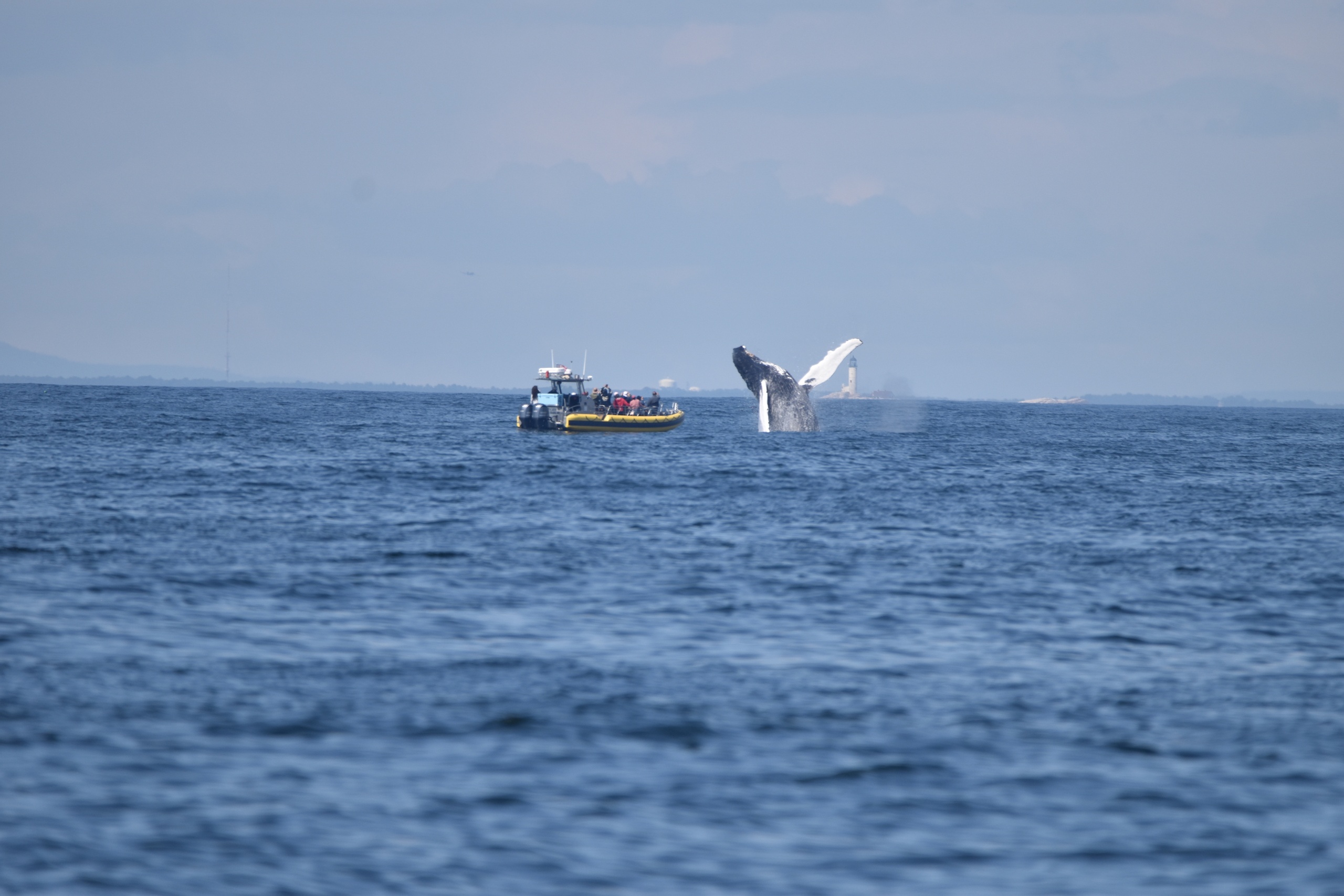
Whale Watching Near Durham, New Hampshire
Durham is a quiet collegiate town with surprisingly quick access to some of New England’s richest marine waters. From here you can reach Portsmouth and nearby harbors where boat-based whale watches depart into the productive Gulf of Maine. Trips put you into a living landscape of humpbacks, minkes, seals, and terns—framed by rocky islands, tidal channels, and the low-slung coastline that defines New Hampshire’s short but wildlife-rich seaboard.
Top Whale Watch Trips in Durham
6 trips • Book with confidence • Instant confirmation
Why Durham Is a Useful Base for Whale Watching
There’s a compact magic to whale watching out of Durham: a short drive through northern New England woods drops you into a maritime world where the sea sings a different weather. The town itself sits on the edge of Great Bay, an estuarine system that funnels nutrients and life toward the Gulf of Maine. Most whale-watch departures leave from Portsmouth and nearby coastal towns—a 15–30 minute drive from Durham—so you get small-town lodging and quiet evenings on campus before boarding a morning boat. The trips that head offshore cross a biologically productive shelf where tides, upwelling, and seasonal baitfish congregations attract feeding whales and flocks of seabirds.
On a successful day you’ll witness the measured grandeur of a humpback rolling, the subtle speed of a minke slipping through slick water, and the incidental theater of seals and gannets diving in the same chute. The scene is less about a single cinematic breach and more about a living system: tides that sculpt the shoreline, islands that funnel schools of fish, and currents that can change the behavior you witness from hour to hour. This is whale watching that rewards patience and a sense of place—where the highlight is sometimes the two-way lesson between animal and observer: you learn the tactics whales use to find food, and the animals learn that passing boats often mean the sea is rich.
From a practical traveler's point of view, Durham is an excellent staging area. You’ll find the essentials—fuel, grocery stores, and a compact but varied dining scene—within a brief drive, and a single morning or afternoon on the water fits easily into a weekend itinerary that also includes estuary paddling, tidepool walks, and coastal hiking. The region’s maritime history threads through the modern experience: lighthouses, salt marshes, and fishing piers recall an economy once reliant on whales and now allied with conservation and tourism. That backstory matters because modern whale watching is not spectacle alone; it’s also a living classroom about ocean health. The Gulf of Maine is warming faster than most U.S. coastal waters, shifting prey and changing where whales feed. Local guides often weave those ecological threads into narration—helpful context that turns every sighting into a moment of attentive learning.
Seasonally, plan your trip for late spring through early fall when whales are most reliably present in nearshore feeding grounds, and when weather is more forgiving for open-water excursions. Even then, tides and weather will shape the trip: early mornings can be glassy, afternoons choppier; fog can deepen the atmosphere and make every distant blow feel sudden and intimate. Whether you prioritize the comfort of larger vessels or the nimble feel of smaller boats, Durham’s proximity to multiple departure points gives you options. Pair a whale watch with a shoreline walk at Odiorne Point or a kayak on the estuary for a fuller sense of the coastal ecosystem—both amplify the main event and deepen appreciation for the fragile productivity that sustains whales in the Gulf of Maine.
Durham's position near Portsmouth places you minutes from multiple departure harbors—so a whale-watch morning is an easy, low-logistics addition to a weekend in the Seacoast region.
The Gulf of Maine’s productivity and changing oceanography make local whale-watching both rich and ecologically meaningful; guides use sightings to discuss climate-driven shifts and conservation.
Complementary activities—estuary kayaking, seabirding, tidepool exploration, and coastal trails—turn a single whale-watch into a multi-sensory coastal itinerary.
Best Time to Visit
Best Months
Weather Notes
Late spring and summer mornings tend to be calmer and clearer; afternoons can build wind and chop. Fog is common on cooler mornings in May and June. Fall offers crisp air and often excellent feeding activity but cooler sea temperatures.
Peak Season
June–September (higher frequency of trips and fuller vessels on weekends).
Off-Season Opportunities
Winter and early spring offer shore-based wildlife watching—seal haul-outs and wintering seabirds—and quieter town services. Few if any whale-watch operators run full offshore seasons outside late spring–fall.
Frequently Asked Questions
Do I need to book whale-watch trips in advance?
Yes—popular weekends and peak summer months often sell out. Book at least a few days ahead for weekend departures; last-minute seats may be available midweek.
Can operators guarantee whale sightings?
No responsible operator guarantees sightings. Guides increase your odds through timing, experience, and local knowledge, but marine wildlife is wild and sightings depend on many factors.
Are whale-watch trips family-friendly?
Many trips are suitable for children; operators often welcome families. Consider trip length, vessel size, and your child’s comfort with motion and exposure to wind and spray.
What about accessibility?
Accessibility varies by vessel and pier. Larger vessels with ramps or stair alternatives are more accessible, but many departure points have fixed docks and ladders—contact operators in advance to discuss needs.
Will I get seasick?
Motion sickness is common on open-water trips. If you’re prone to it, take preventative medication before boarding, choose larger boats if possible, and aim for morning departures when seas are calmer.
Choose Your Experience Level
Beginner
Shore-based viewing and short harbor cruises that introduce marine wildlife without long exposures to open water.
- Harbor cruise from Portsmouth with narrated coastal highlights
- Tidepool walks and shoreline seabird watching at nearby state parks
- Short seal- and seabird-focused boat trips
Intermediate
Half-day offshore trips that travel to feeding grounds—good for those comfortable on a boat for several hours and eager for higher sighting chances.
- Half-day whale-watch to nearshore feeding areas
- Combined seabird-and-whale wildlife cruises
- Estuary kayak trips followed by a short harbor wildlife cruise
Advanced
Full-day pelagic excursions or multi-day sea trips requiring longer time at sea and preparation for variable weather and swell—best for seasoned boat travelers.
- Full-day offshore pelagic trips seeking deeper-water species
- Multi-discipline field trips combining whale science briefings and extended watches
- Self-guided sea-kayak coastal expeditions paired with licensed offshore charter
Insider Tips & Local Knowledge
Confirm departure times, boarding locations, luggage limits, and seasickness policies with your operator before arrival.
Aim for the first departures of the day—mornings are often calmer and more predictable. Weather can change quickly near the Gulf of Maine; bring windproof layers even on warm days. If you’re prone to motion sickness, take preventive medication at least an hour before boarding and choose a larger vessel when possible. Binoculars and a zoom lens make distant blows more thrilling; keep a low profile on decks so you don’t block sightlines for others. Pair your whale watch with shore activities—estuary paddling, birding, or a lighthouse visit—to round out the coastal context. Finally, support operators that prioritize responsible wildlife viewing: listen for distance guidelines, avoid crowding animals, and ask guides about conservation programs and how sightings relate to regional ocean health.
What to Bring
Essential
- Layered clothing (it’s often cooler on the water than on land)
- Waterproof wind/rain shell
- Motion-sickness medication or patches, taken in advance as directed
- Binoculars and a camera with a zoom lens
- ID, cash/cards, and any booking confirmation
Recommended
- Warm hat and gloves for early-morning or foggy trips
- Sunglasses with a retainer strap
- Reusable water bottle and snacks (check operator policies)
- Small daypack secured to your body
Optional
- Waterproof phone pouch or dry bag
- Light binocular harness for long viewing periods
- Sea-sickness wristbands as an alternative to medication
Ready for Your Whale Watch Adventure?
Browse 6 verified trips in Durham with instant booking
Explore Top 15 Durham, New Hampshire Adventures →