Grand Teton National Park provides some of the darkest, clearest skies ideal for celestial viewing. Discover the best times, trails, and practical tips to catch the stars dancing over towering peaks and serene lakes.
Choose Moonless Nights
Plan your visit around the new moon phase to maximize darkness and star visibility. This increases contrast, making fainter stars and the Milky Way easier to see.
Pack Layers for Cold
Temperatures can drop significantly after sunset, even in summer. Dressing in layers helps you stay warm without overheating during the hike or while stationary at viewing spots.
Hydrate at Elevation
Grand Teton’s elevation can dry you out faster than expected. Drink plenty of water before and during your excursion to avoid fatigue.
Use Red Light Headlamps
Preserve your night vision by using red light instead of white. It allows you to navigate trails while keeping your eyes adjusted to the dark.
Chasing Stars: Optimal Conditions for Celestial Viewing in Grand Teton

Stargazing Tour - Grand Teton National Park
4 Hours • All ages • Maximum per vehicle: 6-8 guests • Season: May - Oct.
Discover the night sky over Grand Teton National Park on a guided stargazing tour. Experience celestial wonders through powerful telescopes, guided by expert astronomers, in the stunning wilderness of Wyoming’s iconic landscape. Perfect for nighttime adventurers and stargazers alike, this tour offers a memorable look at the cosmos in one of the country's most scenic parks.
Grand Teton National Park stands as a prime stage for celestial viewing, where the dark night sky unfolds in a vast, unbroken canvas. To experience the cosmos at its finest here, timing and location matter as much as the equipment you carry. Aim for clear, moonless nights between late spring and early fall when the park favors sky watchers with minimal atmospheric interference and warmer temps suitable for overnight stays.
The best vantage points often lie above 6,000 feet, where the air thins and the city glow fades to a distant memory. Locations like Signal Mountain Summit or the Leigh Lake shoreline offer broad horizons and open sightlines, allowing constellations and planets to spill overhead without obstruction. These spots demand a moderate hike; Signal Mountain, for instance, covers about 6.5 miles round trip with a 700-foot elevation gain, winding through forested trails that rhythmically rise and fall before opening into clearing views as night deepens.
Hydration is key, especially because the elevation can sneak up on you, dehydrating without much notice. Footwear should be sturdy enough for uneven trails but flexible for quiet movement—no need to stomp when the night calls for silence and attentiveness. Start your ascent in late afternoon to claim your spot, scout the horizon, and watch the landscape transition under a falling sun.
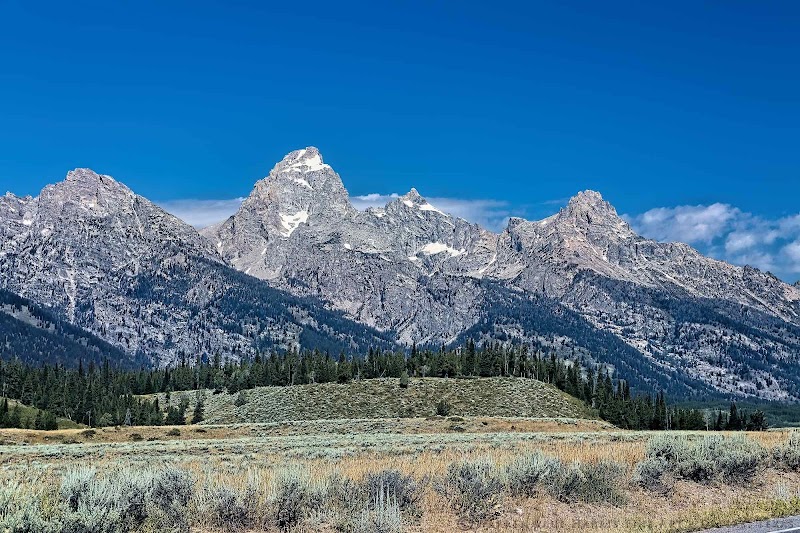
Keep an eye on weather forecasts; sudden winds can stir the treetops into restless dancers while shifting clouds may blot out stars in moments. The Grand Tetons themselves hold their ancient watch, standing fiercely still and silent, a steady frame against the flickering stellar show. Respect the environment by adhering to Leave No Trace principles—minimize light pollution by dialing back artificial sources, keeping the night as pure as possible.
For those equipped with telescopes or binoculars, a stable tripod is indispensable to steady your gaze on Jupiter's bands or the glimmer of distant galaxies. Whether you’re a casual stargazer or a seasoned night adventurer, Grand Teton’s celestial theater offers both challenge and reward—a dialogue between earthbound effort and the infinite expanse that insists on being seen.
Nearby Trips
All Adventures
Boat Charters
Water Activities
Adventures near Jackson
Discover the unique and memorable adventures that make Jackson special.
Frequently Asked Questions
What are the darkest spots in Grand Teton for star gazing?
Signal Mountain Summit and the shorelines of Leigh Lake are some of the darkest spots. Both places sit above 6,000 feet, minimizing light pollution and offering clear, wide-open skies.
Is it safe to hike at night in Grand Teton?
While hiking at night is feasible, it requires preparation—proper lighting, familiarity with the trail, and awareness of wildlife activity. Avoid going alone and inform someone of your plans.
What wildlife might I encounter during night hikes?
You may see or hear elk or deer moving through forested areas, and predators like owls are active. Coyotes often call at dusk but usually avoid humans.
When is the best time of year for clear skies in the park?
Late spring through early fall generally offers the clearest skies, with summer nights bringing warmth and fall providing crisp, dark conditions perfect for stargazing.
Are telescopes and binoculars allowed in the park?
Absolutely. Telescopes and binoculars are encouraged for enhancing your viewing experience, but set them up carefully to avoid disturbing other visitors or wildlife.
How does elevation affect stargazing conditions?
Higher elevation means thinner air, reducing haze and atmospheric distortion, which makes stars appear sharper and clearer compared to lower altitudes.
Recommended Gear
Headlamp with Red Light Mode
Provides illumination while preserving night vision needed for stargazing.
Hiking Boots
Offers ankle support and traction on varied trail conditions, including rocky surfaces.
Layered Clothing
Helps manage temperatures shifting from warm day to cold night efficiently.
Water Bottle or Hydration Pack
Maintains hydration vital at higher elevations and during nighttime exercise.
Local Insights
Hidden Gems
- "Schwabacher Landing offers reflective water views perfect for star reflections."
- "Taggart Lake trailhead has less crowded night access and clear horizons."
Wildlife
- "Elk and mule deer often roam in twilight hours."
- "Great horned owls hunt actively at night within the forest edges."
History
"The park was established in 1929 and its dark skies have long attracted astronomers; the area's indigenous peoples revered the mountains as sacred, weaving the stars into their cultural stories."