
Wanchese adventure guide
Find your way into Wanchese.
Tucked on the sheltered side of Roanoke Island, Wanchese is where working waterfronts meet a playground of water activities. The town’s quiet docks and boatyards are an access point to boat tours and boat rentals that thread between sound and sea; surf breaks and scuba sites sit a short drive across the barrier islands; and eco tours, kayaking, and dolphin watches make wildlife encounters routine. This guide stitches together the best of boating, fishing, sailing, and soft-adventure culture so you can plan everything from a dawn kayak to a chartered deep-sea day.
Three ways into the city
Pick a landscape. Build a day around it.
Wanchese is less a single destination than a collection of neighboring worlds. Start with the version of the city that matches your pace, then use the ranked guide below to fill in the details.
Begin where the city meets the sea.
Surf breaks, sheltered harbors, whale routes, and long beach paths make the coast LA’s most immediate outdoor playground.
Explore water activities →
Let a local connect the landmarks.
Use a guided city, walking, or sightseeing tour to turn LA’s sprawl into a coherent story.
Explore boat tour →
Ride the coast and the city.
Beach paths, river corridors, e-bikes, and ridge climbs reveal a more connected Los Angeles.
Explore wildlife →Choose your way into Wanchese
The top 15 Wanchese adventures.
Ranked by the number of currently listed trips. Each panel opens the complete local activity collection.
Water Activities
Wanchese is a compact harbor town where salt, wind, and working boats shape a day on the water. From sheltered sound paddles through oyster bars to deep-sea charters leaving from the fishing docks, this guide focuses on the water-sourced experiences that define the town: kayaking, paddleboarding, inshore and offshore fishing, birding by boat, and seasonal scalloping and surf trips nearby.
Explore water activities →2Boat Tour
Wanchese sits at the tidal threshold of Roanoke Island and the wide inland seascape of Pamlico and Croatan sounds. Boat tours here are less about high-speed thrills and more about proximity — to working waterfronts, marsh-fringed waterways, shallow flats where birds gather, and oyster racks that mark a living coastal economy. Choose a sunrise wildlife cruise, a hands-on crab-and-oyster excursion, a shallow-water trawl for surf fish, or a sunset run that frames Manteo and the Outer Banks in golden light. These tours are an approachable entry point to the region's ecology and culture: comfortable, instructive, and shaped by local captains who read tides like a language.
Explore boat tour → 3
3Surf
Wanchese sits where the sound meets the sea — a working fishing village at the western edge of the Outer Banks whose surf is shaped equally by inlets, shifting shoals, and the wind. For surfers, the draw is variety: mellow beach breaks for beginners, fast shorebreaks on wind-whipped days, and nearby inlet-driven waves when a southerly swell lines up with outgoing tides. This guide zeroes in on surfable stretches around Wanchese, offering practical route-finding, seasonality, and local know-how to turn a day-trip into a meaningful coastal adventure.
Explore surf →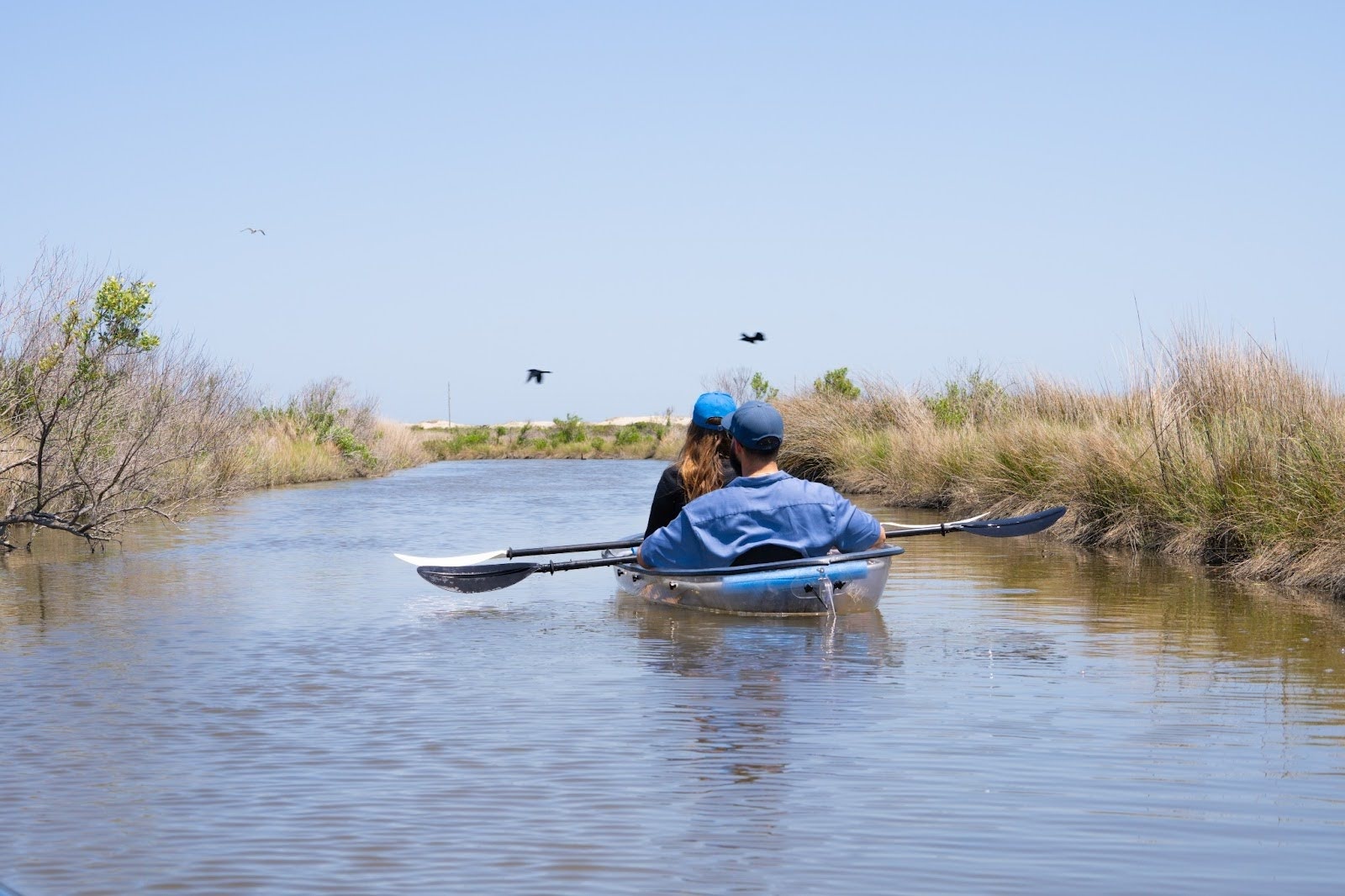 4
4Kayak
Wanchese is where the sound meets the story: a working fishing village on Roanoke Island that serves as one of the most intimate gateways to Pamlico Sound. Kayaking here is a lesson in coastal patience—paddling narrow tidal creeks fringed with spartina grass, threading between oyster bars at low tide, and drifting into wide sky reflected on glassy flats. Routes favor calm, shallow water with choices for sheltered beginners and wind-tested intermediate paddlers. Expect abundant waterbird life, a constant maritime hum from commercial boats, and a strong cultural link to North Carolina’s watermen traditions.
Explore kayak → 5
5Eco Tour
Wanchese sits at the tidal edge where the wide Albemarle and Croatan sounds meet a mosaic of marsh, shallow flats, and estuarine channels — a place defined as much by water as by land. Eco tours here are intimate affairs: low-profile skiffs and kayaks threading reeds, naturalists pointing out wintering waterfowl, and fisheries-focused cruises that link local livelihoods to the rhythm of the tides. This guide focuses on hands-on, interpretive outings that reveal the living systems behind the Outer Banks postcard — migratory birds, blue-crab seasons, seagrass beds, and the coastal communities that steward them.
Explore eco tour → 6
6Boat Rental
Wanchese sits where barrier-island winds meet wide, shallow sounds—one of the most accessible launch points on North Carolina’s Outer Banks for self-drive rentals, skiffs, and pontoon cruises. This guide zeroes in on boat rental options: practical comparisons, seasonal conditions, and the best trips to take from local marinas, whether you’re aiming for calm estuary fishing, bird-rich marsh runs, or a soul-soothing sunset across the sound.
Explore boat rental → 7
7Sailing
Wanchese is a sailor’s gateway to shallow-sound cruising, tidal marshes, and wind-carved inlets. From low-draft day sails across Pamlico Sound to technical nearshore runs along the Atlantic approach, this compact village combines working-fishing heritage with direct water access to some of the most navigationally interesting waters on the North Carolina coast. This guide focuses on sailing-specific experiences—charters, lessons, coastal hops, and eco-sails—framed by local seamanship, tidal rhythms, and practical planning advice.
Explore sailing → 8
8Sightseeing Tour
Wanchese is a compact fishing village with a wide-open view of maritime life—tide-swept flats, working docks, and salt-scented sky. Sightseeing tours here are intimate by design: short boat trips that point out bird rookeries and shallow-water oyster beds, narrated drives that thread through historic neighborhoods, and guided paddles that bring you close to marsh ecology. This guide distills the best ways to see Wanchese from the water and the shore, what to expect from operators, and how to fit a short coastal immersion into a broader Outer Banks itinerary.
Explore sightseeing tour → 9
9Scuba
Wanchese is a gateway to an often-overlooked chapter of East Coast diving: shallow wrecks, oyster-reef edges, and sound-to-shelf transitions that reward divers with a mix of history and abundant sea life. Local operators run short boat runs to protected wrecks in the Pamlico-Albemarle complex and longer trips that follow the continental shelf for pelagic encounters. Conditions vary dramatically between the quiet, brackish sounds and the Atlantic-facing shelf—making site selection a skill. This guide focuses on scuba-specific terrain, access, seasonality, and planning so you can choose the right trips, understand safety considerations, and pair dives with other Outer Banks pursuits like fishing, paddleboarding, and wildlife watching.
Explore scuba →10Wildlife
Where sound meets salt marsh, Wanchese is a quietly magnetic place for wildlife watching. From low-tide mudflats alive with shorebirds to pods of Atlantic bottlenose dolphins that ride the inlets, this coastal village threads together fishing culture, protected refuges, and boat-based access to rich estuarine ecosystems. This guide focuses on how to experience birds, marine mammals, and coastal wildlife responsibly and well—on foot, by kayak, and from a small boat.
Explore wildlife → 11
11Fishing
Wanchese is where working-waterfront grit meets some of the most productive inshore and nearshore fishing on the East Coast. Tucked on the southern shore of Roanoke Island and opening into the vast Pamlico Sound, this village is a hub for charter captains, flats guides, and anglers chasing speckled trout, red drum, flounder, and cobia. Whether you cast from a quiet marsh edge at dawn, drift the sound for schooling fish, or head offshore for bait-steeped structure, Wanchese delivers a fishing day that’s equal parts trade-craft and coastal poetry.
Explore fishing →Dolphin
Set on the sheltered waters behind the Outer Banks, Wanchese is a quietly ideal launch point for dolphin-focused excursions. From shallow sound cruises that trace the edges of marsh and oyster beds to paddle-based tours that slip into narrow channels, dolphin experiences here are intimate, framed by working waterfronts and a living maritime landscape. This guide focuses on how to see and understand dolphins responsibly in and around Wanchese—what to expect on trips, how the tidal sounds shape encounters, and practical tips to plan a fulfilling wildlife day on the water.
Explore dolphin → 13
13Golf
Wanchese is a small, salt-scented portal to coastal golf where wind is as much an opponent as the bunkers. On this stretch of the Outer Banks, fairways bend around marshes and soundfront vistas, and every round has the feel of a maritime expedition—tidal light, migratory birds, and an honest dose of breeze that humbles scorecards. These four golf experiences focus on that interplay of sea and turf: thoughtful, encounter-driven rounds that pair well with fishing charters, wildlife watching, and a slow afternoon on the island.
Explore golf → 14
14Parasail
Float above a working harbor and wide salt marshes with parasail launches that turn Wanchese’s calm sounds and shifting tides into a slow-motion aerial playground. Whether you crave a quick tandem lift off a boat or a longer scenic flight that tracks the shoreline, Wanchese pairs intimate coastal culture with steady onshore winds and big sky views—perfect for first-timers and photographers alike.
Explore parasail → 15
15E-Bike
Wanchese is a low‑lying, wind‑shaped corner of Roanoke Island where soundside lanes, salt marshes, and working fishing docks set the stage for some of the Outer Banks’ most pleasurable e‑bike days. Smooth paved causeways, quiet residential roads, and sweeping vistas over Roanoke Sound make it ideal for riders who want long views, wildlife encounters, and a generous helping of coastal culture without steep climbs.
Explore e-bike →The city and the sea
Why Wanchese Belongs on Your Adventure Shortlist
Variety without surrendering the day to long transfers.
The first thing you notice in Wanchese is the language of boats: the scrape of lines, the low rumble of diesels, the soft slap of wakes against pilings. It’s a working waterfront that doubles as a gateway to the Outer Banks’ most accessible marine adventures. You can be launched on a morning boat tour that threads through marsh channels and oyster beds, listen for the rumble of distant surf, and return midday to a kayak launch where the sound is mirror-flat and dotted with foraging birds. That juxtaposition—industry and intimate nature—gives Wanchese its particular flavor. It’s not the loud, surf-bro scene of some OBX strips; it’s a place where eco tours and fishing charters share a slip, where dolphin sightings are as likely as rigging checks, and where the local rhythm is measured in tides rather than traffic lights. For travelers who come for activity variety, Wanchese is compact genius. Want to try surf for a morning and trade your board for a dive later in the week? The barrier islands and sound-side launches make it simple to stack experiences: surf sessions on nearby breaks, guided scuba off accessible reefs, and evenings on sail charters that watch the sun sink behind the same horizon you paddled at dawn. Kayak tours slip quietly between marsh islets and ghost crab beaches; parasail rides and sight-seeing tours let you survey the same seascape from above. Even if your checklist skews practical—rent a boat for a family outing, book a fishing charter, or take an e-bike loop around Roanoke Island’s quiet roads—Wanchese delivers options with low overhead and high reward. Culturally, the town wears its maritime history lightly. Local outfitters and captains know the sound’s moods—tide lines, wind corridors, and bird concentrations—and they translate that knowing into safer, more productive outings. That makes Wanchese a forgiving base for beginners while still offering complexity for experienced adventurers: strong surf days reward practiced paddlers, deeper wreck and reef dives require planning and a boat, and sport-fishing trips demand patience and weather sense. Practically speaking, the scale is a gift: short drives between launch points, convenient rentals for kayaks, boats, and e-bikes, and a small but reliable service economy that includes bait shops, guide services, and fish houses to celebrate a day on the water. Finally, seasonality matters here. Late spring through early fall is when water activities hum—dolphin watches, sailing, and boat tours dominate calendars—but shoulder seasons offer birding and quieter beaches for travelers who prize solitude. Packed into a single, small town is a coastal activity portfolio: water activities, boat tours, surf, kayak outings, eco tours, sailing, scuba, wildlife viewing, fishing, parasail rides, and easy e-bike exploration. Each choice feels like another way to read the landscape: from the sound’s hush to the Atlantic’s roar, Wanchese allows you to curate a coastal itinerary that’s distinctly Outer Banks without the crowds.
Access is immediate: short launches into Croatan Sound mean fewer logistics and more time on the water. Outfitters in town will point you to local surf breaks, seadive sites, and sheltered channels for confident or cautious paddles.
The best days are arranged by tide and wind. Early morning glass on the sound is perfect for kayak and wildlife outings; afternoon sea breezes open sailing and parasail windows; calm evenings suit an easy sightseeing tour or sunset cruise.
Conditions shape the day
The best time to visit Wanchese.
Summers are warm and humid with steady sea breezes—ideal for sailing, parasail, and dolphin tours. Spring and fall bring lower crowds and good conditions for kayaking and wildlife viewing. Offshore conditions vary quickly; check local surf and wind reports.
Best all-around window
Spring + fall
Comfortable mixed-itinerary weather, thinner crowds at beaches and lookouts, and more room to improvise.
Beach season
Summer (June–August) sees the highest demand for boat tours, rentals, and charters—reserve well in advance.
Surf + whales
Late fall through early spring offers quieter beaches, migratory birding at Pea Island, lower lodging rates, and clearer diving visibility on calm days; some outfitters reduce schedules, so confirm availability.
Coast to inland
Cool marine mornings often give way to warmer inland afternoons and breezy evenings.
Beginner
Short, guided outings that require little gear or experience—ideal for first-time paddlers, families, and casual wildlife watchers.
- Half-day boat tour through marsh channels
- Guided kayak tour in protected sound waters
- Dolphin-watching sightseeing tour
Intermediate
Longer paddles, wind-influenced sailing days, and surf lessons that require basic skills and an understanding of tides and currents.
- Stand-up paddle or kayak crossings on exposed sound sections
- Surf lesson at a nearby Atlantic beach
- Half-day sailing or charter fishing trip
Advanced
Ventures that demand strong boat handling, navigation, or technical skills—best undertaken with experienced guides or as part of a prepared team.
- Scuba dives to reefs and wrecks requiring certification
- Offshore or deep-sea sport fishing charters
- Windy-day surf or downwind paddles along the barrier islands
Field kit
What to bring.
Pack for sun, salt water, walking, and a meaningful temperature swing between coast and inland Wanchese.
Essential
Start here
- Reef-safe sunscreen and sun hat
- Light layers and a windbreaker for changing coastal conditions
- Water shoes or sandals with good traction
- Dry bag for phone, keys, and layers
- Personal flotation device if you have one; otherwise confirm rentals include them
Water days
Keep it dry
- Motion-sickness meds for boat trips in choppy conditions
- Binoculars for birding and dolphin watching
- Map or app with local tide times and launch points
- Waterproof phone pouch and spare battery
Long days
Stay flexible
- Wetsuit or spring suit for cooler-season surfing or scuba
- Underwater camera or snorkel gear for reef exploration
- Compact rod and tackle if you plan to fish from shore or a hired boat
Insider note
Start early, then keep the geography tight.
Plan activities around tide tables and wind forecasts; the sound calms at low wind for glassy paddles and wakes up midday for better sailing and parasail windows. Book charters and boat rentals early in summer; many operators run staggered schedules in shoulder seasons. For wildlife viewing, aim for early morning or late afternoon light—Pea Island and nearby marshes draw shorebirds and foraging dolphins. Respect private docks and working areas in the harbor: use marked public launches and follow posted signage. If you’re diving or snorkeling, verify local regulations and protected zones. Finally, support local outfitters and fish houses—charter captains will not only get you to the best spots, they’ll share the practical knowledge that makes a coastal adventure safe and memorable.
Good to know
Frequently asked questions.
Can I rent a boat or kayak in Wanchese on the same day?
Yes during shoulder seasons and weekdays many outfitters offer same-day rentals, but peak summer weekends often sell out—reserve in advance, especially for multi-person boats or guided trips.
Are dolphin tours and wildlife cruises family-friendly?
Yes. Dolphin and sightseeing tours are popular with families and generally operate from calm sound waters, but bring sun protection and dress in layers for breezy conditions.
Is surfing accessible from Wanchese or do I need to drive to the ocean side?
Wanchese is sound-side; most surf breaks are on the ocean-facing beaches of the Outer Banks. It’s a short drive to surf access points—local outfitters and surf schools can recommend the best breaks based on skill level and conditions.
Ready when you are
Find the trip that fits your Wanchese day.
Compare bookable experiences across the coast, city, and mountains—then save the ones that belong in your plan.
Explore all Wanchese adventures ↗