THE ADVENTURE COLLECTIVE® · Independent discovery and booking for outdoor travel

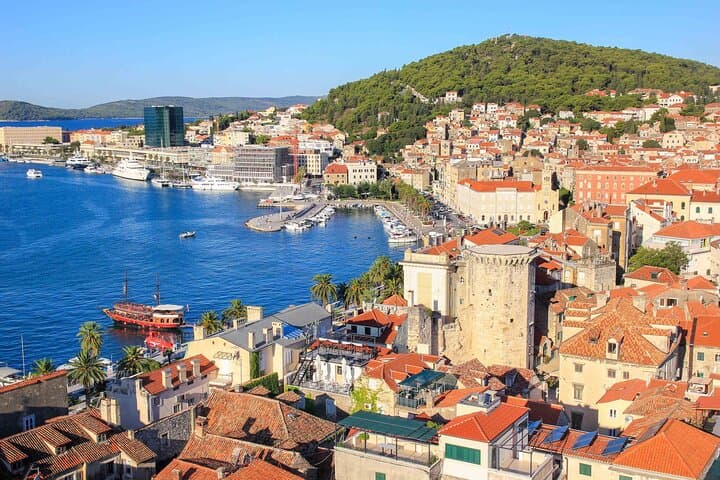
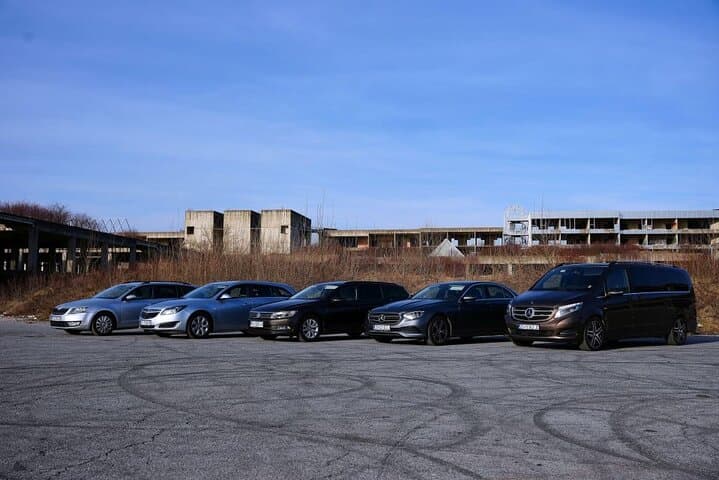
This private transfer stitches Zagreb and Split together with a two‑hour self‑guided window into Plitvice Lakes National Park — a concise way to see Croatia’s famous turquoise basins, wooden boardwalks and cascading falls without the logistics. Ideal for travelers who want nature, flexibility and a smooth ride between cities.
This private transfer stitches Zagreb and Split together with a two‑hour self‑guided window into Plitvice Lakes National Park — a concise way to see Croatia’s famous turquoise basins, wooden boardwalks and cascading falls without the logistics. Ideal for travelers who want nature, flexibility and a smooth ride between cities.
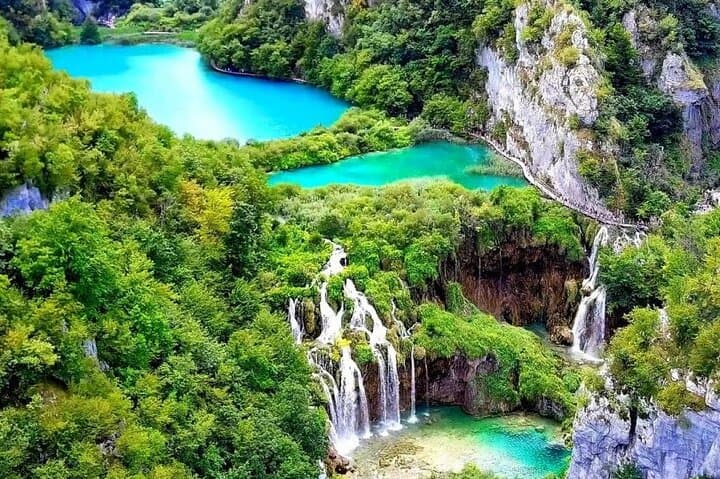
You step out of an air-conditioned van where the road finally slows and the forest exhales. Mist hangs low above a string of turquoise basins; wooden boardwalks trace the water like a well-laid thread. For many travelers the visit to Plitvice Lakes is the day’s high point — a concentrated lesson in geology, hydrology and human modesty before three hundred kilometres of Croatian highway swallow you toward Split.
Verified experiences and guided adventures in the surrounding area.
Operated by GreetGo Tours&Pickups · Plitvička Jezera, Lika-Senj County
You step out of an air-conditioned van where the road finally slows and the forest exhales. Mist hangs low above a string of turquoise basins; wooden boardwalks trace the water like a well-laid thread. For many travelers the visit to Plitvice Lakes is the day’s high point — a concentrated lesson in geology, hydrology and human modesty before three hundred kilometres of Croatian highway swallow you toward Split.
Plitvice’s lakes formed where travertine — a porous, rapidly forming limestone — builds natural dams. Over millennia calcium carbonate deposited by mineral-rich streams sculpted terraces and cascades that continue to grow. The park was set aside in 1949 and gained UNESCO status in 1979; those protections keep the water startlingly clear and the walking routes deliberately close to the shores so the landscape can renew itself.
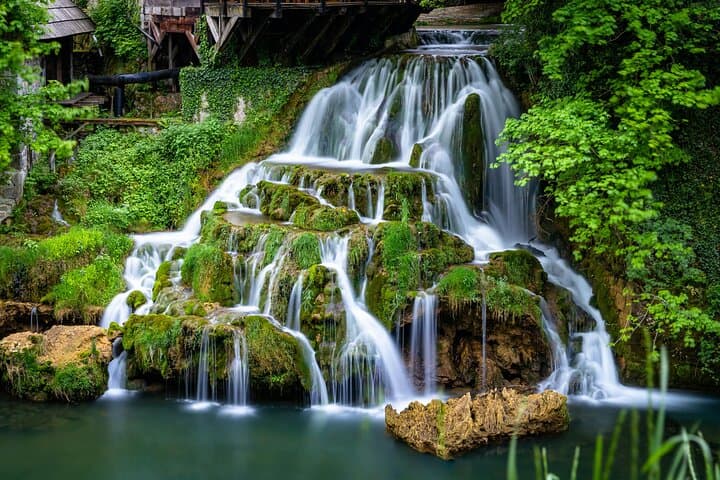
Culture threads through the route. If you add a short stop in Rastoke — sometimes called Little Plitvice — you’ll find wooden mills and houses clinging to the confluence of the Slunjčica and Korana rivers: the same pragmatic relationship between people and water that shaped local livelihoods for centuries. Drivers on private transfers often supply practical history as you travel, but the time in the park is self-guided, meant for quiet observation and unhurried photographs.
Practicalities matter on a long private transfer. This trip generally runs 6–12 hours depending on traffic, optional stops and how long you linger on the boardwalks. The standard package includes Plitvice entrance fees, bottled water, onboard Wi‑Fi and hotel pickup and drop-off, plus the flexibility to extend your park time for an hourly fee. Expect a mix of paved drives and short walking segments with steps, uneven planks and occasional crowds in peak season.
For the visit itself, aim for early morning light or late afternoon when the park thins and the lakes cast the best colours. Wear grippy shoes and bring a waterproof layer — spray and mist are part of the mood. Respect the rules: stay on marked paths, don’t feed wildlife, and don’t swim. If you want Rastoke, ask the driver in advance; it’s usually an extra stop charged by the hour.
On balance, the private transfer is a practical way to stitch two Croatian cities together with one of the country’s most cinematic landscapes in between. It saves navigation and timing headaches, gives you control over short detours, and places a pristine national park on your itinerary without the logistics. The water will still be waiting — daring you to slow down and watch it work.
moderate.
6–12 hours.
Moderate—able to walk 2+ hours on uneven boardwalks and endure several hours of driving.
Yes—entrance tickets for the park are included in the trip price for the standard two‑hour visit.
The self‑guided window is two hours by default, covering boardwalks and short climbs; plan on moderate walking with some steps and uneven surfaces.
Yes—Rastoke can be added for an additional hourly fee arranged directly with the driver, typically around €20–€25 per hour.
Children are welcome; child seats are mandatory and must be requested when booking. The park paths are stroller‑unfriendly in places.
You can request additional hours from the driver on the day at the stated hourly rate; confirm availability in advance when possible.
Yes—facilities and small cafes are located near major entrances and boat docks, but bring snacks if you have limited park time.
Plitvice Lakes National Park was designated in 1949 and became a UNESCO World Heritage Site in 1979, protecting its dynamic travertine formations.
Strict park rules limit off‑trail access and prohibit swimming; stay on marked routes and pack out waste to protect the fragile travertine systems.
GreetGo Tours&Pickups operates guided outdoor trips and adventures with an emphasis on safety, stewardship, and memorable experiences.
You step out of an air-conditioned van where the road finally slows and the forest exhales. Mist hangs low above a string of turquoise basins; wooden boardwalks trace the water like a well-laid thread. For many travelers the visit to Plitvice Lakes is the day’s high point — a concentrated lesson in geology, hydrology and human modesty before three hundred kilometres of Croatian highway swallow you toward Split.
You step out of an air-conditioned van where the road finally slows and the forest exhales. Mist hangs low above a string of turquoise basins; wooden boardwalks trace the water like a well-laid thread. For many travelers the visit to Plitvice Lakes is the day’s high point — a concentrated lesson in geology, hydrology and human modesty before three hundred kilometres of Croatian highway swallow you toward Split.
Plitvice’s lakes formed where travertine — a porous, rapidly forming limestone — builds natural dams. Over millennia calcium carbonate deposited by mineral-rich streams sculpted terraces and cascades that continue to grow. The park was set aside in 1949 and gained UNESCO status in 1979; those protections keep the water startlingly clear and the walking routes deliberately close to the shores so the landscape can renew itself.
Culture threads through the route. If you add a short stop in Rastoke — sometimes called Little Plitvice — you’ll find wooden mills and houses clinging to the confluence of the Slunjčica and Korana rivers: the same pragmatic relationship between people and water that shaped local livelihoods for centuries. Drivers on private transfers often supply practical history as you travel, but the time in the park is self-guided, meant for quiet observation and unhurried photographs.
Practicalities matter on a long private transfer. This trip generally runs 6–12 hours depending on traffic, optional stops and how long you linger on the boardwalks. The standard package includes Plitvice entrance fees, bottled water, onboard Wi‑Fi and hotel pickup and drop-off, plus the flexibility to extend your park time for an hourly fee. Expect a mix of paved drives and short walking segments with steps, uneven planks and occasional crowds in peak season.
For the visit itself, aim for early morning light or late afternoon when the park thins and the lakes cast the best colours. Wear grippy shoes and bring a waterproof layer — spray and mist are part of the mood. Respect the rules: stay on marked paths, don’t feed wildlife, and don’t swim. If you want Rastoke, ask the driver in advance; it’s usually an extra stop charged by the hour.
On balance, the private transfer is a practical way to stitch two Croatian cities together with one of the country’s most cinematic landscapes in between. It saves navigation and timing headaches, gives you control over short detours, and places a pristine national park on your itinerary without the logistics. The water will still be waiting — daring you to slow down and watch it work.