THE ADVENTURE COLLECTIVE® · Independent discovery and booking for outdoor travel

A door-to-door private transfer from Zagreb to Split that stitches together Rastoke’s watermills and Plitvice Lakes’ world-class travertine cascades into a single, immersive day. Practical tips on timing, tickets, and what to pack make this ideal for travelers who want a high-return day without the logistics hassle.
A door-to-door private transfer from Zagreb to Split that stitches together Rastoke’s watermills and Plitvice Lakes’ world-class travertine cascades into a single, immersive day. Practical tips on timing, tickets, and what to pack make this ideal for travelers who want a high-return day without the logistics hassle.
You step into the van at sunrise in Zagreb and the city windows blur into rolling karst as the driver eases onto the highway. The first stretch is a slow unwinding — olive groves give way to oak and beech, and the air tightens with the scent of damp earth. Thirty minutes before Plitvice, you pull into Rastoke, where a cluster of traditional watermills perches on the Korana’s rapids. Coffee steams in your hands while small waterfalls chatter against old stone; the village feels like a hinge between human craft and a river that refuses to be tamed.
Verified experiences and guided adventures in the surrounding area.
Operated by Wanderer · Plitvička Jezera, Lika-Senj County
You step into the van at sunrise in Zagreb and the city windows blur into rolling karst as the driver eases onto the highway. The first stretch is a slow unwinding — olive groves give way to oak and beech, and the air tightens with the scent of damp earth. Thirty minutes before Plitvice, you pull into Rastoke, where a cluster of traditional watermills perches on the Korana’s rapids. Coffee steams in your hands while small waterfalls chatter against old stone; the village feels like a hinge between human craft and a river that refuses to be tamed.
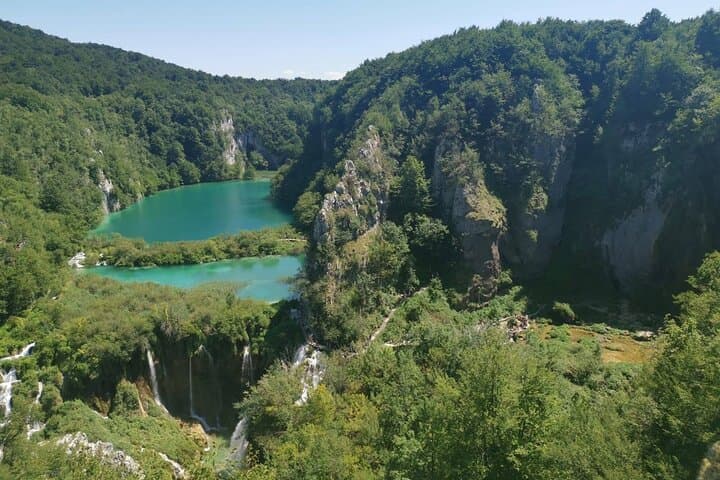
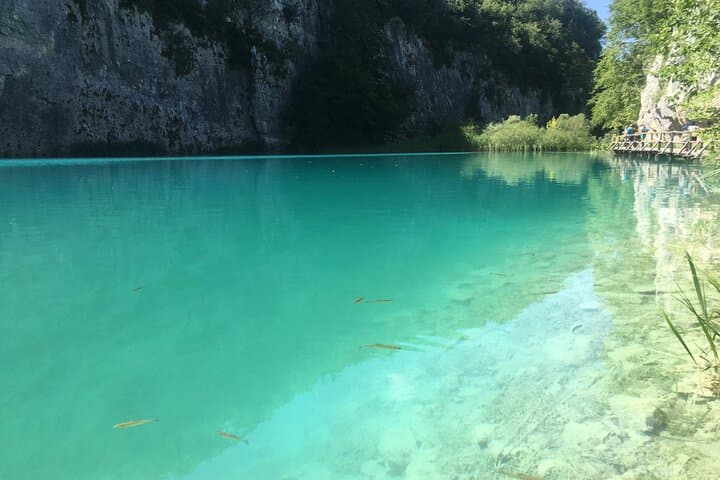
An hour later you arrive at Plitvice Lakes National Park, a UNESCO site defined by water that does the heavy lifting. Sixteen lakes, arrayed as upper and lower basins, are held in place by travertine dams — living limestone that grows when minerals precipitate out of moving water. Boardwalks thread across mirror-flat pools and over cascades; on cloudy days the reflections pull the forest into the water so completely you lose the horizon. Geologically, the park sits where dolomite and limestone interact, which explains the change in lake color and the stepped arrangement of falls.
Plitvice’s human story is quieter but just as layered. The area has been inhabited since at least the 17th century; Rastoke served as a milling center and micro-economy dependent on the river’s force. The modern Park balances tourism with protection — a visitor center, clear signage, and defined trails help keep foot traffic off sensitive travertine formations.
Practical guide: this private transfer runs roughly 11 hours door-to-door and includes about four hours of self-guided time inside Plitvice. Buy your Park ticket in advance during high season — lines at the entrance can cost you precious time. Wear sturdy footwear; boardwalks are wooden and can be slippery after rain. If you want quieter photos, aim for early morning routes or the late-afternoon descent toward the lower lakes when buses reverse direction and crowds thin.
Expect a mix of easy uphill paths and long, flat boardwalk sections. Bring layered clothing — mountain shadows make mornings cool even in summer — and a refillable water bottle; there are kiosks but limited services on some routes. Cameras and phones fill frames with waterfalls and karst reflections, but the best keepsake is the slow walk; Plitvice asks you to slow down and match its rhythm.
Logistics: pickups in Zagreb are door-to-door (with restrictions in traffic-limited zones), and drop-off is in Split. Park admission is not included; plan for seasonal pricing and bring an ID for discounts. For a seamless day, confirm pickup time the night before and leave space in your itinerary for a relaxed lunch in Rastoke or a quick boat across Kozjak Lake.
moderate.
11 hours.
Suitable for travelers who can walk 2–4 hours over uneven and sometimes wet boardwalks; not strenuous but requires mobility.
No—park tickets are not included; prices vary by season and age and should be purchased on the official National Park website.
This itinerary provides about four hours of self-guided time in Plitvice Lakes National Park, which covers major boardwalk routes but not exhaustive exploration.
Carry an ID for ticket validation and potential discounts; you will not cross international borders on this route.
Yes—the van can stop in Rastoke and at roadside restaurants, but plan for a short lunch to stay on schedule.
Yes—infant seats are available and the trip is rated physically easy, though supervise children on boardwalks near water.
The operator may cancel or reschedule the tour in severe weather; check the cancellation policy (full refund if canceled 24+ hours in advance).
Rastoke developed around watermills from the 17th century; Plitvice was protected as a national park in 1949 and became a UNESCO World Heritage Site in 1979.
Travertine formations are fragile—stay on boardwalks and obey signage; visitor limits and defined trails help protect the park’s limestone growth and endemic vegetation.
Wanderer operates guided outdoor trips and adventures with an emphasis on safety, stewardship, and memorable experiences.
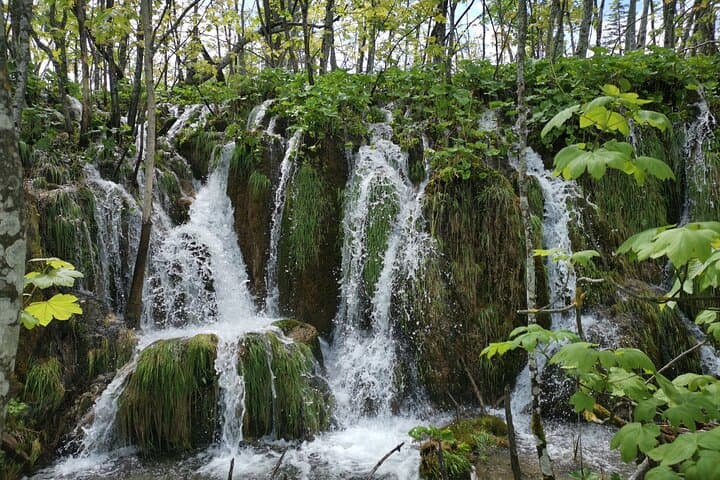
You step into the van at sunrise in Zagreb and the city windows blur into rolling karst as the driver eases onto the highway. The first stretch is a slow unwinding — olive groves give way to oak and beech, and the air tightens with the scent of damp earth. Thirty minutes before Plitvice, you pull into Rastoke, where a cluster of traditional watermills perches on the Korana’s rapids. Coffee steams in your hands while small waterfalls chatter against old stone; the village feels like a hinge between human craft and a river that refuses to be tamed.
You step into the van at sunrise in Zagreb and the city windows blur into rolling karst as the driver eases onto the highway. The first stretch is a slow unwinding — olive groves give way to oak and beech, and the air tightens with the scent of damp earth. Thirty minutes before Plitvice, you pull into Rastoke, where a cluster of traditional watermills perches on the Korana’s rapids. Coffee steams in your hands while small waterfalls chatter against old stone; the village feels like a hinge between human craft and a river that refuses to be tamed.
An hour later you arrive at Plitvice Lakes National Park, a UNESCO site defined by water that does the heavy lifting. Sixteen lakes, arrayed as upper and lower basins, are held in place by travertine dams — living limestone that grows when minerals precipitate out of moving water. Boardwalks thread across mirror-flat pools and over cascades; on cloudy days the reflections pull the forest into the water so completely you lose the horizon. Geologically, the park sits where dolomite and limestone interact, which explains the change in lake color and the stepped arrangement of falls.
Plitvice’s human story is quieter but just as layered. The area has been inhabited since at least the 17th century; Rastoke served as a milling center and micro-economy dependent on the river’s force. The modern Park balances tourism with protection — a visitor center, clear signage, and defined trails help keep foot traffic off sensitive travertine formations.
Practical guide: this private transfer runs roughly 11 hours door-to-door and includes about four hours of self-guided time inside Plitvice. Buy your Park ticket in advance during high season — lines at the entrance can cost you precious time. Wear sturdy footwear; boardwalks are wooden and can be slippery after rain. If you want quieter photos, aim for early morning routes or the late-afternoon descent toward the lower lakes when buses reverse direction and crowds thin.
Expect a mix of easy uphill paths and long, flat boardwalk sections. Bring layered clothing — mountain shadows make mornings cool even in summer — and a refillable water bottle; there are kiosks but limited services on some routes. Cameras and phones fill frames with waterfalls and karst reflections, but the best keepsake is the slow walk; Plitvice asks you to slow down and match its rhythm.
Logistics: pickups in Zagreb are door-to-door (with restrictions in traffic-limited zones), and drop-off is in Split. Park admission is not included; plan for seasonal pricing and bring an ID for discounts. For a seamless day, confirm pickup time the night before and leave space in your itinerary for a relaxed lunch in Rastoke or a quick boat across Kozjak Lake.