THE ADVENTURE COLLECTIVE® · Independent discovery and booking for outdoor travel

Leave the city behind and spend two days experiencing Yosemite at its quietest: frozen falls, snow-lined granite, and short guided excursions that free you to explore. This semi-guided winter tour pairs narrated drives with free time to hike, snowshoe, or simply watch the valley breathe.
Leave the city behind and spend two days experiencing Yosemite at its quietest: frozen falls, snow-lined granite, and short guided excursions that free you to explore. This semi-guided winter tour pairs narrated drives with free time to hike, snowshoe, or simply watch the valley breathe.
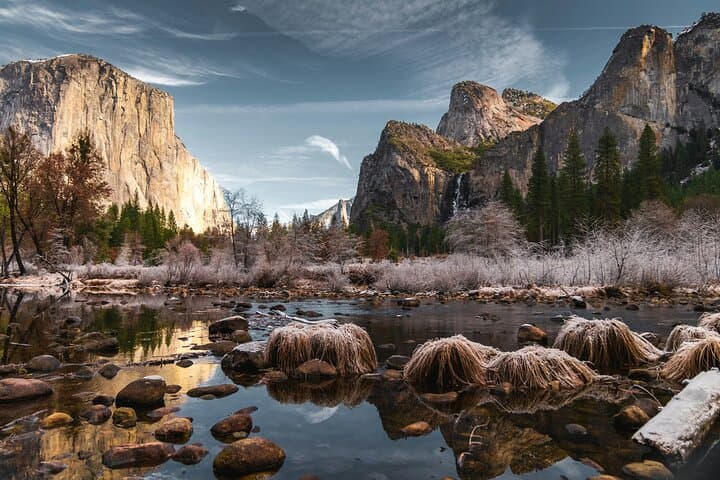
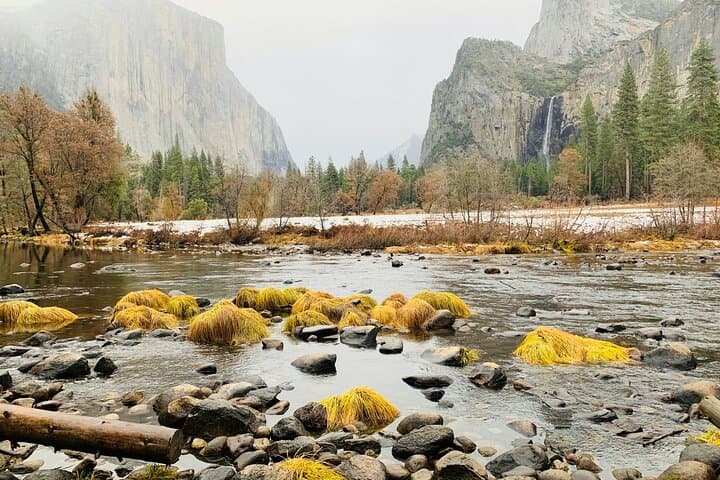
The van pulls off Highway 140 and the world compresses into a single frame: El Capitan's granite face shining with a dusting of snow, Yosemite Falls hanging like a pale ribbon that the cold has slowed. Breath fogs in the air as the guide calls out Tunnel View; cameras lift and a hush falls over the group. This is Yosemite in winter—less crowded, louder in its quiet, and brutally honest about weather and scale.
Verified experiences and guided adventures in the surrounding area.
Operated by Incredible Adventures · Yosemite Valley, California
The van pulls off Highway 140 and the world compresses into a single frame: El Capitan's granite face shining with a dusting of snow, Yosemite Falls hanging like a pale ribbon that the cold has slowed. Breath fogs in the air as the guide calls out Tunnel View; cameras lift and a hush falls over the group. This is Yosemite in winter—less crowded, louder in its quiet, and brutally honest about weather and scale.
For two days you trade the urban glare of San Francisco for a valley carved by ice. Glaciers scoured this landscape, leaving sheer cliffs and broad, flat floors; Yosemite Falls and Bridalveil Fall are not just places to see but geological lines you can read. Cultural echoes are present too: the Ahwahnechee people occupied these meadows long before park status, and Ansel Adams’ black-and-white photographs from the mid-20th century helped shape how the outside world sees this place.
The itinerary balances guided context and independent time. After a narrated 1.5-hour coach tour through the valley you’ll have a block of free time to pace the valley floor, take a ranger talk, or rent snowshoes at Curry Village. Nights are simple and warm—Yosemite Valley Lodge rooms or heated tent cabins—places that put you at the base of Yosemite Falls and within walking distance of the Valley Shuttle.
Practical realities matter here. The valley floor sits around 4,000 feet; winter temperatures commonly run from low 20s to mid-40s °F. Roads and Tioga Pass may be closed—expect shorter daylight and the possibility of chains or tire restrictions for private vehicles. The tour includes pickup in San Francisco and handling of permits, park entrance fees, and lodging, but it runs on demand and requires a minimum number of passengers to depart.
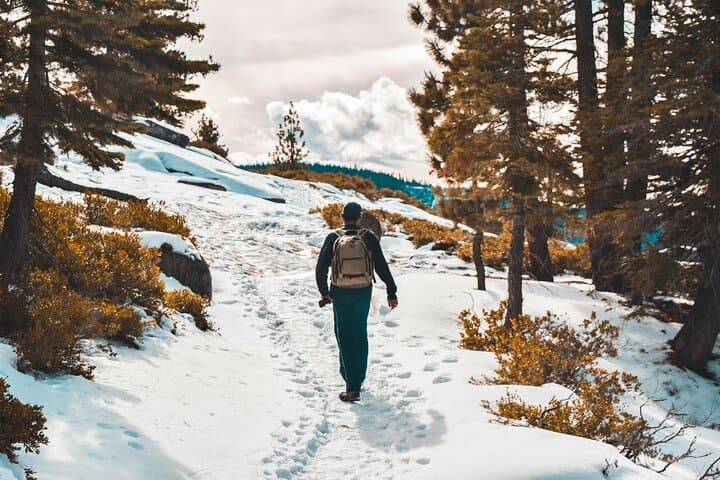
Plan for layers, grippy boots, and the flexibility to swap plans if a trail is closed. Short valley walks range from 1–4 miles and are generally flat, but icy patches can make them slow. Hydrate and bring snacks from the Central Valley stop—where guides pause—since on-mountain options are limited. If you want a quiet moment, walk into Cook’s Meadow at dawn; the place tends to hold frost longer and softens the light for photographs.
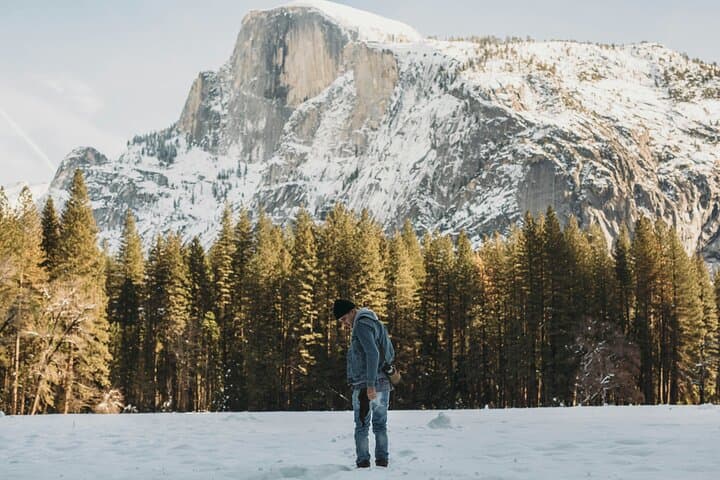
This tour is ideal for travelers who want the drama of Yosemite’s winter landscape without the logistics—people who prefer a curated pace with windows of exploration. It’s a low-impact, high-reward way to see the park’s biggest features lit by winter’s crisp air.
Whether you carve time for snowshoeing, a fireside talk at the Ahwahnee, or a slow walk beneath a frozen cascade, this two-day visit gives you enough structure to feel safe and enough freedom to feel like you found the park on your own terms.
easy.
2 days.
Suitable for most fitness levels; expect short walks of 1–4 miles on mostly flat terrain but with potential icy conditions.
Basic winter gear—warm layers, waterproof boots, and traction devices—are recommended; snowshoes can be rented in the park if you want deeper-snow excursions.
Transport from San Francisco, one night lodging (Yosemite Valley Lodge or heated tent cabin), narrated coach tour, and park entrance fee are included; meals and rental equipment are typically extra.
Tioga Road is usually closed in winter; valley roads are open but can require tire chains during heavy snow—tour operators handle driving and will update you if road access changes.
Much of the trip is vehicle-based with short guided stops; free time includes flat valley walks from 1–4 miles depending on your plan and conditions.
Yes—it's advertised as suitable for all fitness levels; however, be prepared for cold temperatures and bring appropriate gear for infants or seniors.
Tours are arranged on demand and require a minimum number of travelers; if the minimum isn’t met you’ll be offered an alternative date or a full refund per the cancellation policy.
Yosemite Valley was inhabited by the Ahwahnechee people for generations; later, photographers like Ansel Adams and conservationists helped shape its national profile.
Winter visitation reduces summer crowding but still impacts fragile meadows and vegetation—stay on trails, pack out waste, and follow park advisories.
Incredible Adventures operates guided outdoor trips and adventures with an emphasis on safety, stewardship, and memorable experiences.
The van pulls off Highway 140 and the world compresses into a single frame: El Capitan's granite face shining with a dusting of snow, Yosemite Falls hanging like a pale ribbon that the cold has slowed. Breath fogs in the air as the guide calls out Tunnel View; cameras lift and a hush falls over the group. This is Yosemite in winter—less crowded, louder in its quiet, and brutally honest about weather and scale.
The van pulls off Highway 140 and the world compresses into a single frame: El Capitan's granite face shining with a dusting of snow, Yosemite Falls hanging like a pale ribbon that the cold has slowed. Breath fogs in the air as the guide calls out Tunnel View; cameras lift and a hush falls over the group. This is Yosemite in winter—less crowded, louder in its quiet, and brutally honest about weather and scale.
For two days you trade the urban glare of San Francisco for a valley carved by ice. Glaciers scoured this landscape, leaving sheer cliffs and broad, flat floors; Yosemite Falls and Bridalveil Fall are not just places to see but geological lines you can read. Cultural echoes are present too: the Ahwahnechee people occupied these meadows long before park status, and Ansel Adams’ black-and-white photographs from the mid-20th century helped shape how the outside world sees this place.
The itinerary balances guided context and independent time. After a narrated 1.5-hour coach tour through the valley you’ll have a block of free time to pace the valley floor, take a ranger talk, or rent snowshoes at Curry Village. Nights are simple and warm—Yosemite Valley Lodge rooms or heated tent cabins—places that put you at the base of Yosemite Falls and within walking distance of the Valley Shuttle.
Practical realities matter here. The valley floor sits around 4,000 feet; winter temperatures commonly run from low 20s to mid-40s °F. Roads and Tioga Pass may be closed—expect shorter daylight and the possibility of chains or tire restrictions for private vehicles. The tour includes pickup in San Francisco and handling of permits, park entrance fees, and lodging, but it runs on demand and requires a minimum number of passengers to depart.
Plan for layers, grippy boots, and the flexibility to swap plans if a trail is closed. Short valley walks range from 1–4 miles and are generally flat, but icy patches can make them slow. Hydrate and bring snacks from the Central Valley stop—where guides pause—since on-mountain options are limited. If you want a quiet moment, walk into Cook’s Meadow at dawn; the place tends to hold frost longer and softens the light for photographs.
This tour is ideal for travelers who want the drama of Yosemite’s winter landscape without the logistics—people who prefer a curated pace with windows of exploration. It’s a low-impact, high-reward way to see the park’s biggest features lit by winter’s crisp air.
Whether you carve time for snowshoeing, a fireside talk at the Ahwahnee, or a slow walk beneath a frozen cascade, this two-day visit gives you enough structure to feel safe and enough freedom to feel like you found the park on your own terms.