
Yellowstone Zipline EcoTour at the Ranch — Soar Over Stermitz Ranch Near Gardiner, MT
Launch from the ridges above Stermitz Ranch and glide across riparian gulches and open meadows on the Yellowstone Zipline EcoTour. This three-hour guided aerial route pairs panoramic views with local natural-history narration—perfect for travelers comfortable with heights who want a quick, interpretive overview of northern Yellowstone country.
An Adventure In Gardiner.
Launch from the ridges above Stermitz Ranch and glide across riparian gulches and open meadows on the Yellowstone Zipline EcoTour. This three-hour guided aerial route pairs panoramic views with local natural-history narration—perfect for travelers comfortable with heights who want a quick, interpretive overview of northern Yellowstone country.
Read the full experience
You step off the dusty pickup and the mountain air takes a different pitch: thinner, pine-scented, and full of distant river sound. Ahead, a series of cables cut across a bowl of sagebrush and lodgepole pines on the Stermitz Ranch, a working property that presses up against the northern boundary of Yellowstone National Park. Guides clip harnesses with practiced calm; the creek below seems eager, pulling at boulders and daring you to move faster.
You step off the dusty pickup and the mountain air takes a different pitch: thinner, pine-scented, and full of distant river sound. Ahead, a series of cables cut across a bowl of sagebrush and lodgepole pines on the Stermitz Ranch, a working property that presses up against the northern boundary of Yellowstone National Park. Guides clip harnesses with practiced calm; the creek below seems eager, pulling at boulders and daring you to move faster.
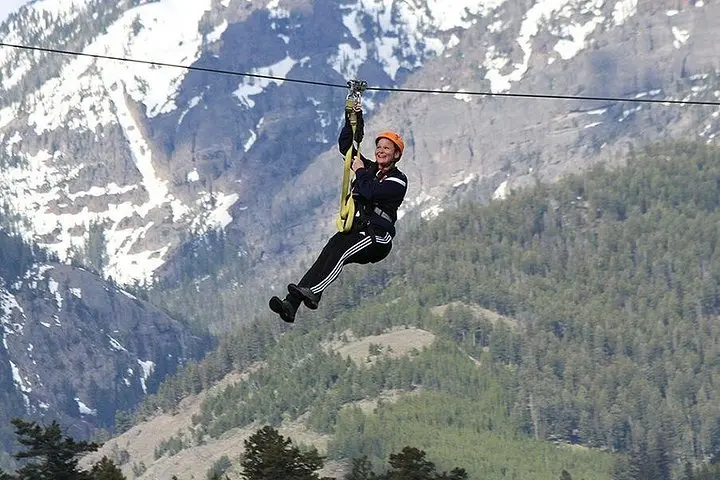
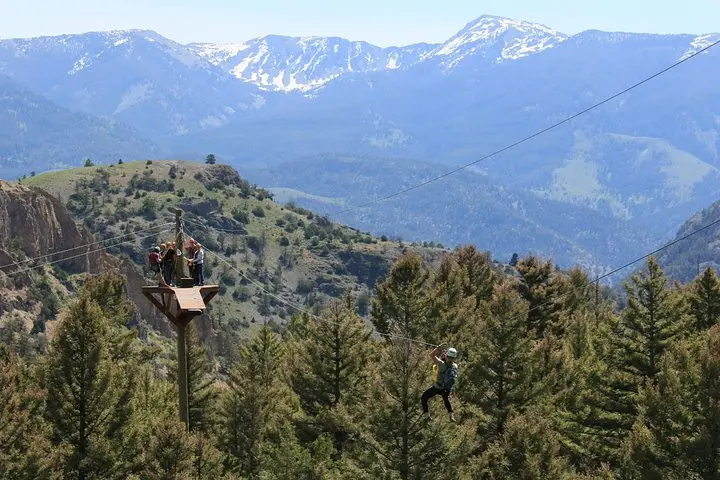
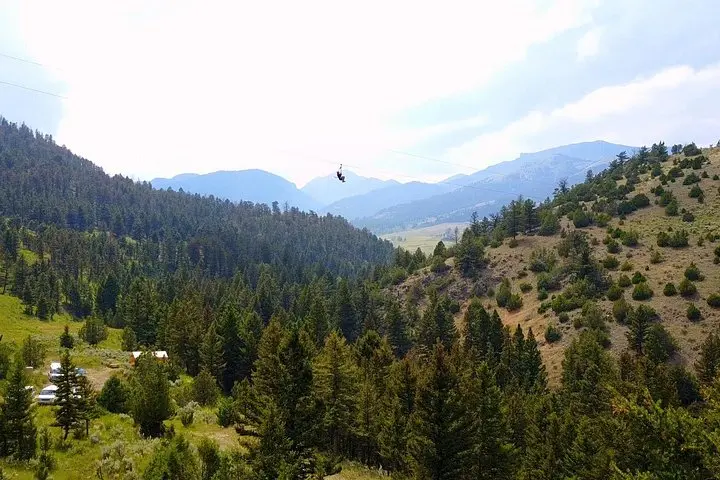
This is not a theme-park zipline. The EcoTour threads together three to four ziplines and two “adventure elements” (think sky-bridges or rappels) over roughly 0.5–1 mile of cable with a cumulative descent on the order of a few hundred feet. The route uses the ranch’s natural contours — a mix of open ridgelines, riparian corridors, and scattered conifer groves — so each landing feels like stepping into a new room of the landscape. On clear days you can see the rim of the Yellowstone Plateau; on quiet mornings elk graze near the marshes and raptors quarter the air.
The Stermitz Ranch sits on land shaped by glacial sculpting and volcanic aftershocks. Rocks that once formed part of the Yellowstone uplands slope into creek-carved gullies here, and the ranching history is visible in fenced pastures and weathered corrals. Gardiner, the nearest town, grew as a gateway to Yellowstone a century ago; today visitors come for both access to the park and the raw, less-traveled landscapes that surround it.
Local culture still moves at ranch pace: practical, outdoors-first, and respectful of wildlife corridors. Guides on the EcoTour are typically licensed locals who blend safety with natural-history narration—pointing out lynx tracks one moment and explaining how beaver activity rewires a stream the next.
Practical guidance: tours run about three hours total from the Gardiner meeting point (near Ridley Grocery). Expect some short dirt walks, a few uneven steps, and standing time in harness. There’s a strict 260 lb weight limit and staff weigh each participant before zipping; plan accordingly. Dress in closed-toe shoes, layered clothing for mountain temps, and bring 1–2 liters of water. Cameras are allowed on a wrist strap or chest mount; guides will often pause at scenic overlooks for photos.
Safety is built in—equipment is inspected, and guides brief every rider—but the tour is best for anyone comfortable with heights and basic mobility rather than expert climbers. Book early in summer and shoulder seasons to avoid crowds; mornings offer the best light and quieter wildlife viewing.
If you want a short, sky-high way to read northern Yellowstone’s landscape, this is it: an aerial, interpretive snapshot that puts the region’s geology, ranching past, and animal life directly under your feet.
Frequently asked questions
Maximum per participant is 260 lbs; each rider is weighed before the tour and must meet the limit to participate.
The experience is about three hours total, including safety briefings, transit between zips, and photo stops.
Meet in Gardiner on the river side of Main Street near Ridley Grocery (near the Super 8 Motel); guides will have signs.
Age requirements can vary—contact the operator when booking; children must meet weight and safety criteria and be able to follow guide instructions.
If you’re uncomfortable with exposure or being harnessed above open terrain, this tour may be challenging; discuss concerns with staff—some elements can be skipped.
For a full refund cancel at least 24 hours before departure; tours may be canceled for bad weather.
About This Experience
Montana Whitewater Rafting and Yellowstone ZipLine operates guided outdoor trips and adventures with an emphasis on safety, stewardship, and memorable experiences.
Adventure tips
Recommended gear
- Closed-toe hiking shoes: Provide traction and protect feet during short hikes and landing platforms.
- Reusable water bottle (1–2 L): Keeps you hydrated during the three-hour tour and in dry mountain air.
- Windproof mid-layer: A light jacket cuts the chill at higher elevations and during breezy zipline crossings.
- Sun hat and sunscreen: Open ridgelines offer little shade—protect skin and eyes during midday runs.
Photos of the experience
Related adventures & guides
Read the full experience
You step off the dusty pickup and the mountain air takes a different pitch: thinner, pine-scented, and full of distant river sound. Ahead, a series of cables cut across a bowl of sagebrush and lodgepole pines on the Stermitz Ranch, a working property that presses up against the northern boundary of Yellowstone National Park. Guides clip harnesses with practiced calm; the creek below seems eager, pulling at boulders and daring you to move faster.
You step off the dusty pickup and the mountain air takes a different pitch: thinner, pine-scented, and full of distant river sound. Ahead, a series of cables cut across a bowl of sagebrush and lodgepole pines on the Stermitz Ranch, a working property that presses up against the northern boundary of Yellowstone National Park. Guides clip harnesses with practiced calm; the creek below seems eager, pulling at boulders and daring you to move faster.
This is not a theme-park zipline. The EcoTour threads together three to four ziplines and two “adventure elements” (think sky-bridges or rappels) over roughly 0.5–1 mile of cable with a cumulative descent on the order of a few hundred feet. The route uses the ranch’s natural contours — a mix of open ridgelines, riparian corridors, and scattered conifer groves — so each landing feels like stepping into a new room of the landscape. On clear days you can see the rim of the Yellowstone Plateau; on quiet mornings elk graze near the marshes and raptors quarter the air.
The Stermitz Ranch sits on land shaped by glacial sculpting and volcanic aftershocks. Rocks that once formed part of the Yellowstone uplands slope into creek-carved gullies here, and the ranching history is visible in fenced pastures and weathered corrals. Gardiner, the nearest town, grew as a gateway to Yellowstone a century ago; today visitors come for both access to the park and the raw, less-traveled landscapes that surround it.
Local culture still moves at ranch pace: practical, outdoors-first, and respectful of wildlife corridors. Guides on the EcoTour are typically licensed locals who blend safety with natural-history narration—pointing out lynx tracks one moment and explaining how beaver activity rewires a stream the next.
Practical guidance: tours run about three hours total from the Gardiner meeting point (near Ridley Grocery). Expect some short dirt walks, a few uneven steps, and standing time in harness. There’s a strict 260 lb weight limit and staff weigh each participant before zipping; plan accordingly. Dress in closed-toe shoes, layered clothing for mountain temps, and bring 1–2 liters of water. Cameras are allowed on a wrist strap or chest mount; guides will often pause at scenic overlooks for photos.
Safety is built in—equipment is inspected, and guides brief every rider—but the tour is best for anyone comfortable with heights and basic mobility rather than expert climbers. Book early in summer and shoulder seasons to avoid crowds; mornings offer the best light and quieter wildlife viewing.
If you want a short, sky-high way to read northern Yellowstone’s landscape, this is it: an aerial, interpretive snapshot that puts the region’s geology, ranching past, and animal life directly under your feet.
Make a day of it nearby.
Verified experiences and guided adventures in the surrounding area.