THE ADVENTURE COLLECTIVE® · Independent discovery and booking for outdoor travel

Experience Yellowstone’s rarely accessible Northern Range in winter on a full-day wildlife safari from Gardiner, Montana. Track bison, wolves, and elk amid snowy valleys and steaming geothermal features on a tour designed for immersive exploration with expert guides.
Experience Yellowstone’s rarely accessible Northern Range in winter on a full-day wildlife safari from Gardiner, Montana. Track bison, wolves, and elk amid snowy valleys and steaming geothermal features on a tour designed for immersive exploration with expert guides.
As dawn breaks over the frosted contours of the Greater Yellowstone Ecosystem, a silent panorama unfolds beneath a slate-gray sky. The biting cold sharpens the senses as your winter safari departs from Gardiner, Montana, venturing into a land where snow blankets the earth and wildlife imprints the pristine white canvas.
Verified experiences and guided adventures in the surrounding area.
Operated by Yellowstone Safari Co. · Gardiner, Montana
As dawn breaks over the frosted contours of the Greater Yellowstone Ecosystem, a silent panorama unfolds beneath a slate-gray sky. The biting cold sharpens the senses as your winter safari departs from Gardiner, Montana, venturing into a land where snow blankets the earth and wildlife imprints the pristine white canvas.
This season narrows access to Yellowstone’s 300 miles of road, leaving only 50 miles open to vehicles, carving out an exclusive gateway to the park’s northern reaches. The Yellowstone Winter Wildlife Safari focuses on this raw frontier — the Northern Range stretching from Mammoth Hot Springs to Cooke City, Montana. Here, the ecosystem pulses with life despite the deep freeze, offering some of the continent’s most remarkable winter wildlife encounters.
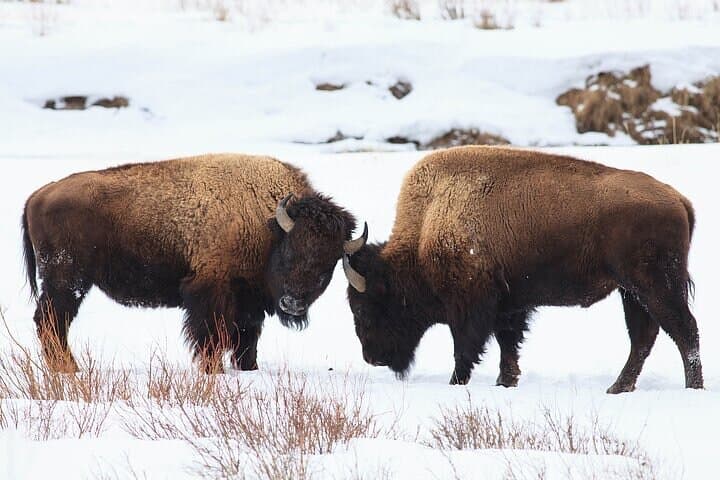
The safari carves paths beside the Yellowstone River, which cuts through the park with steady determination, its currents defying winter’s grasp. Stops at this aquatic artery reveal clusters of elk and bison enduring the cold, their breath fogging the crisp air. The journey moves into the renowned Lamar Valley, famously called "the Serengeti of North America," where herds graze amid sweeping vistas and elusive gray wolves track their movements with calculated patience.
History looms quietly alongside the natural spectacle. The Roosevelt Arch, erected from dark basalt in 1903, stands as a reminder of Yellowstone’s pioneering status as the world’s first national park. Nearby, the Albright Visitor Center offers a glimpse into the park's past guardians — cavalry troops entrusted with its protection before the National Park Service was born.
Mammoth Hot Springs punctuates the route with its steaming terraces, the mineral-stained pools hosting hardy algae that paint the slopes in earthy reds and browns. Beyond these geothermal wonders, the Absaroka Range stretches eastward, jagged and relentless, a subrange of the Rockies that shelters mountain goats and bighorn sheep surviving the harsh winter.
Practically, the tour lasts six to seven hours, covering roadways that test winter conditions. Dress in layers—thermal base layers topped with insulated outerwear are essential. Footwear should be waterproof with good traction for icy patches. The chill means hydration matters; warm beverages provided on the tour help, but bringing a thermos is wise.
Guides equip travelers with UHD binoculars and spotting scopes, transforming distant shadows into vivid wildlife portraits. Children eight and older can join, making this a family-friendly chance to witness Yellowstone's winter wildness safely.
For those seeking a deep winter immersion with both ease and reward, this safari promises a balanced encounter with Yellowstone’s elemental spirit — where every ridge and river dares you closer to nature’s fiercest, quietest moments.
easy.
6–7 hours.
Suitable for all fitness levels; most of the experience is seated touring with short stops for observation and walking on flat terrain.
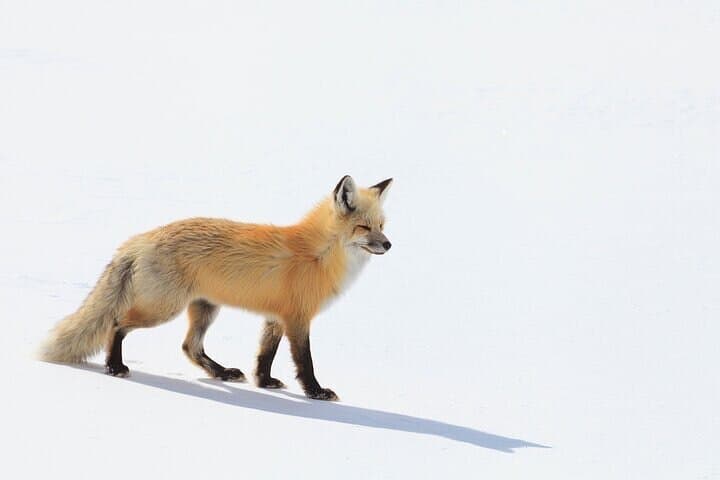
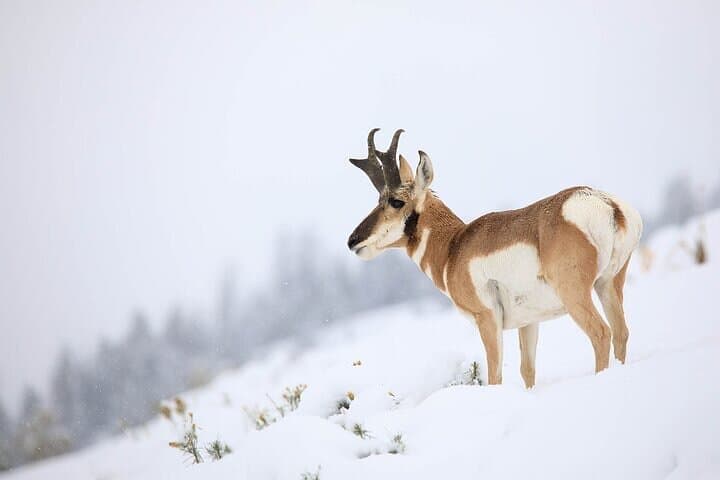
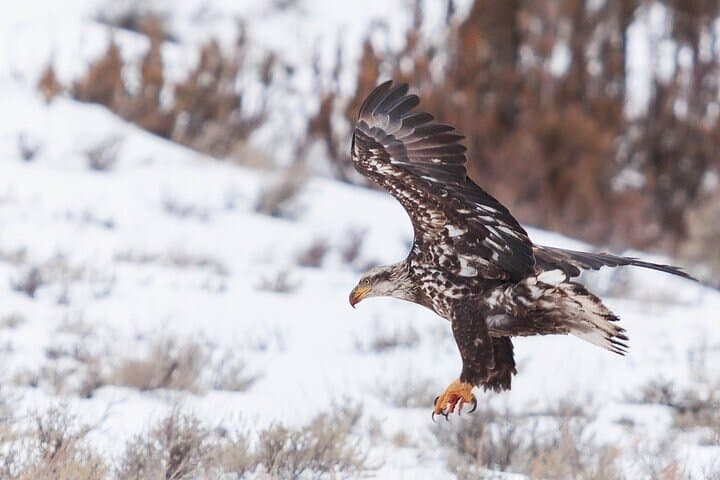
You’ll likely see bison, elk, mule deer, gray wolves, moose, bighorn sheep, and occasionally mountain goats along with birds adapted to winter conditions.
Yes, children aged eight and older are welcome but should be prepared for cold temperatures and extended periods outdoors.
Temperatures often fall below freezing, sometimes dramatically so, and wind chill can increase the cold; dressing warmly is essential.
A picnic lunch featuring locally sourced, seasonal ingredients is provided, along with organic snacks and non-alcoholic beverages.
No, the tour includes transportation in a vehicle operated by a professional guide familiar with winter road conditions and wildlife hotspots.
No, gratuity and park fees are not included and should be planned for separately.
The Roosevelt Arch, completed in 1903, serves as a dramatic gateway to Yellowstone’s Northern Range and symbolizes the creation of the world's first national park.
Tour operators emphasize minimal impact practices, educating visitors on respecting habitats and supporting local conservation in this fragile winter ecosystem.
Yellowstone Safari Co. operates guided outdoor trips and adventures with an emphasis on safety, stewardship, and memorable experiences.
As dawn breaks over the frosted contours of the Greater Yellowstone Ecosystem, a silent panorama unfolds beneath a slate-gray sky. The biting cold sharpens the senses as your winter safari departs from Gardiner, Montana, venturing into a land where snow blankets the earth and wildlife imprints the pristine white canvas.
As dawn breaks over the frosted contours of the Greater Yellowstone Ecosystem, a silent panorama unfolds beneath a slate-gray sky. The biting cold sharpens the senses as your winter safari departs from Gardiner, Montana, venturing into a land where snow blankets the earth and wildlife imprints the pristine white canvas.
This season narrows access to Yellowstone’s 300 miles of road, leaving only 50 miles open to vehicles, carving out an exclusive gateway to the park’s northern reaches. The Yellowstone Winter Wildlife Safari focuses on this raw frontier — the Northern Range stretching from Mammoth Hot Springs to Cooke City, Montana. Here, the ecosystem pulses with life despite the deep freeze, offering some of the continent’s most remarkable winter wildlife encounters.
The safari carves paths beside the Yellowstone River, which cuts through the park with steady determination, its currents defying winter’s grasp. Stops at this aquatic artery reveal clusters of elk and bison enduring the cold, their breath fogging the crisp air. The journey moves into the renowned Lamar Valley, famously called "the Serengeti of North America," where herds graze amid sweeping vistas and elusive gray wolves track their movements with calculated patience.
History looms quietly alongside the natural spectacle. The Roosevelt Arch, erected from dark basalt in 1903, stands as a reminder of Yellowstone’s pioneering status as the world’s first national park. Nearby, the Albright Visitor Center offers a glimpse into the park's past guardians — cavalry troops entrusted with its protection before the National Park Service was born.
Mammoth Hot Springs punctuates the route with its steaming terraces, the mineral-stained pools hosting hardy algae that paint the slopes in earthy reds and browns. Beyond these geothermal wonders, the Absaroka Range stretches eastward, jagged and relentless, a subrange of the Rockies that shelters mountain goats and bighorn sheep surviving the harsh winter.
Practically, the tour lasts six to seven hours, covering roadways that test winter conditions. Dress in layers—thermal base layers topped with insulated outerwear are essential. Footwear should be waterproof with good traction for icy patches. The chill means hydration matters; warm beverages provided on the tour help, but bringing a thermos is wise.
Guides equip travelers with UHD binoculars and spotting scopes, transforming distant shadows into vivid wildlife portraits. Children eight and older can join, making this a family-friendly chance to witness Yellowstone's winter wildness safely.
For those seeking a deep winter immersion with both ease and reward, this safari promises a balanced encounter with Yellowstone’s elemental spirit — where every ridge and river dares you closer to nature’s fiercest, quietest moments.