THE ADVENTURE COLLECTIVE® · Independent discovery and booking for outdoor travel

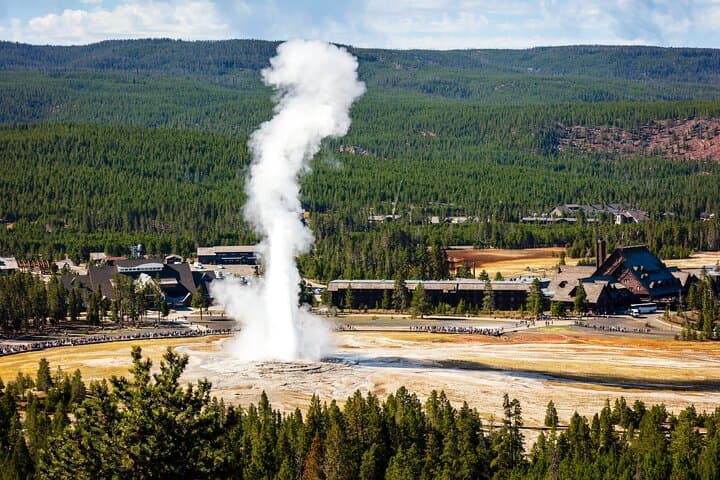
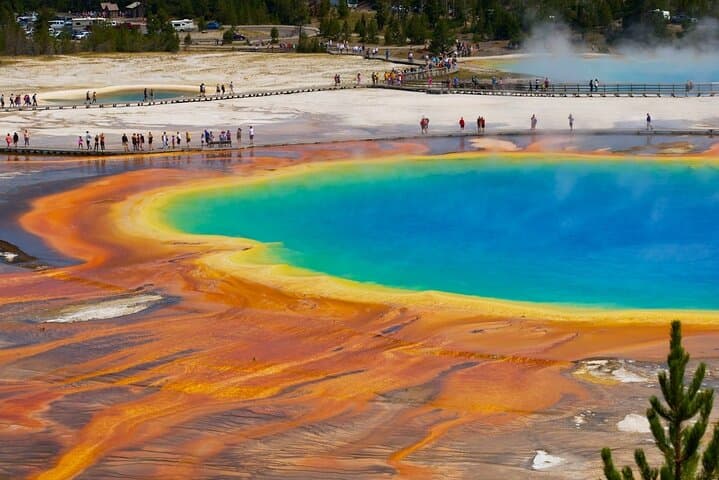
Spend a long day chasing geysers, waterfalls and wildlife with a private guide who knows where to find bison, bears, and hidden overlooks. This practical, driven itinerary hits Old Faithful, Grand Prismatic, the Grand Canyon of the Yellowstone, and a Madison River picnic.
Spend a long day chasing geysers, waterfalls and wildlife with a private guide who knows where to find bison, bears, and hidden overlooks. This practical, driven itinerary hits Old Faithful, Grand Prismatic, the Grand Canyon of the Yellowstone, and a Madison River picnic.
You pull out of Jackson before sunrise and the Tetons slide away behind you while the guide lays out the plan: Old Faithful’s plume, the Grand Prismatic’s impossible colors, the thunder of the Lower Falls, and a picnic by the Madison River. The van hums along scenic highways; through the window the landscape shifts from sagebrush flats to lodgepole forest and then to the alien geometry of thermal basins. Binoculars are passed around and the guide narrows their voice: a bison herd just over the ridge.
Verified experiences and guided adventures in the surrounding area.
Operated by Tours In Color · Yellowstone National Park, Wyoming
You pull out of Jackson before sunrise and the Tetons slide away behind you while the guide lays out the plan: Old Faithful’s plume, the Grand Prismatic’s impossible colors, the thunder of the Lower Falls, and a picnic by the Madison River. The van hums along scenic highways; through the window the landscape shifts from sagebrush flats to lodgepole forest and then to the alien geometry of thermal basins. Binoculars are passed around and the guide narrows their voice: a bison herd just over the ridge.
Yellowstone is a park of extremes. Geologically it sits atop a volcanic hotspot—heat and mineral-rich water sculpt travertine terraces, acid pools and steam vents. Humans have been moving through this place for millennia, and the park’s 1872 founding marked an influential chapter in conservation history; the roads you travel now trace routes prospected by early explorers and later by park builders who learned to balance access with protection.
Culture here is quietly practical: rangers who study thermal features, outfitters who track migrations, and visitor centers that teach how to read a landscape of steam and rock. Expect to learn the language of the park—caldera, sinter, supervolcano—and how fragile many of its features are. The smell of sulfur at Mud Volcano, the sibilant hiss of fumaroles, the deliberate stomp of a bison on the road—nature here acts with agency.
The tour stitches together short, interpretive walks rather than long hikes. Boardwalks at Grand Prismatic are roughly 0.5 miles round-trip with flat, wooden surfaces; viewing Old Faithful requires 5–10 minutes of walking from the parking area and a short uphill to the viewing circle. Artist Point overlooks the Grand Canyon of the Yellowstone with a 0–0.2 mile approach across paved viewpoints. These are low-elevation, low-gain walks—accessible but often uneven and crowded.
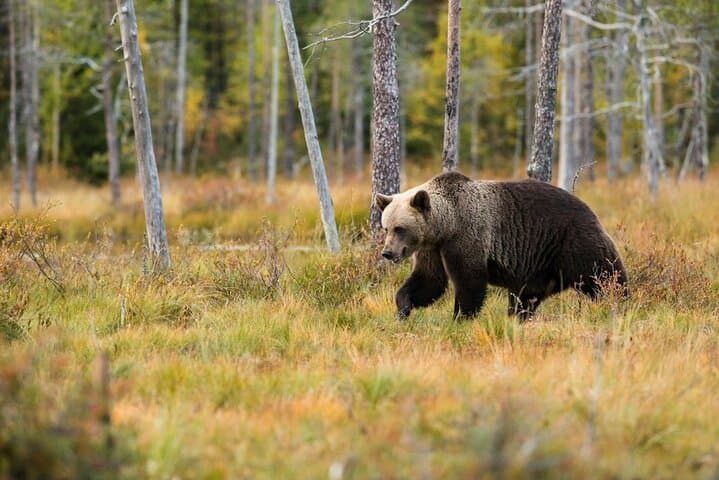
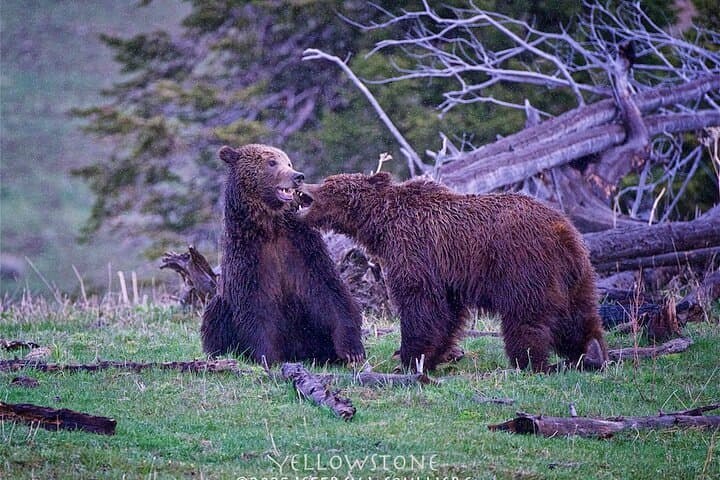
Practicalities matter: bring layered clothing (the park can swing from cold to hot in an hour), closed-toe shoes for boardwalks, and a reusable water bottle. Wildlife viewing rewards patience—stay silent near pullouts, follow the guide’s distance rules around animals, and let the spotting scope and binoculars do the close work.
By day’s end you’ll have seen steaming vents and glassy lakes, watched Old Faithful’s predictable fury, and likely caught a bison glance that stops the van in its tracks. This is not just a checklist of icons; it’s an efficient, guided way to read Yellowstone’s geology and wildlife rhythms in a single, long day.
easy.
9–12 hours.
Suitable for most fitness levels; plan for multiple short walks (0.2–0.6 miles) on boardwalks and paved viewpoints and long periods seated in private transport.
The tour runs approximately 9 to 12 hours (540–720 minutes), depending on wildlife sightings and traffic inside the park.
Yes—Yellowstone entrance fees are included in the tour price.
Guides search actively for wildlife and use optics to improve sightings, but wildlife is wild—sightings are common but never guaranteed.
Yes—infants and small children can use strollers and infant seats are available; notify the operator when booking.
Yes—breakfast and picnic lunch can be tailored for diets such as vegan, vegetarian, gluten-free, kosher, or halal with advance notice.
No—this is primarily a driving tour with short, easy walks on boardwalks and paved viewpoints; no technical hiking skills required.
Yellowstone became the world’s first national park in 1872; early access roads and lodges shaped the routes modern tours follow.
Visitors must remain on boardwalks to protect fragile thermal features and follow park rules for wildlife distances; the tour operator emphasizes low-impact viewing and leave-no-trace practices.
Tours In Color operates guided outdoor trips and adventures with an emphasis on safety, stewardship, and memorable experiences.
You pull out of Jackson before sunrise and the Tetons slide away behind you while the guide lays out the plan: Old Faithful’s plume, the Grand Prismatic’s impossible colors, the thunder of the Lower Falls, and a picnic by the Madison River. The van hums along scenic highways; through the window the landscape shifts from sagebrush flats to lodgepole forest and then to the alien geometry of thermal basins. Binoculars are passed around and the guide narrows their voice: a bison herd just over the ridge.
You pull out of Jackson before sunrise and the Tetons slide away behind you while the guide lays out the plan: Old Faithful’s plume, the Grand Prismatic’s impossible colors, the thunder of the Lower Falls, and a picnic by the Madison River. The van hums along scenic highways; through the window the landscape shifts from sagebrush flats to lodgepole forest and then to the alien geometry of thermal basins. Binoculars are passed around and the guide narrows their voice: a bison herd just over the ridge.
Yellowstone is a park of extremes. Geologically it sits atop a volcanic hotspot—heat and mineral-rich water sculpt travertine terraces, acid pools and steam vents. Humans have been moving through this place for millennia, and the park’s 1872 founding marked an influential chapter in conservation history; the roads you travel now trace routes prospected by early explorers and later by park builders who learned to balance access with protection.
Culture here is quietly practical: rangers who study thermal features, outfitters who track migrations, and visitor centers that teach how to read a landscape of steam and rock. Expect to learn the language of the park—caldera, sinter, supervolcano—and how fragile many of its features are. The smell of sulfur at Mud Volcano, the sibilant hiss of fumaroles, the deliberate stomp of a bison on the road—nature here acts with agency.
The tour stitches together short, interpretive walks rather than long hikes. Boardwalks at Grand Prismatic are roughly 0.5 miles round-trip with flat, wooden surfaces; viewing Old Faithful requires 5–10 minutes of walking from the parking area and a short uphill to the viewing circle. Artist Point overlooks the Grand Canyon of the Yellowstone with a 0–0.2 mile approach across paved viewpoints. These are low-elevation, low-gain walks—accessible but often uneven and crowded.
Practicalities matter: bring layered clothing (the park can swing from cold to hot in an hour), closed-toe shoes for boardwalks, and a reusable water bottle. Wildlife viewing rewards patience—stay silent near pullouts, follow the guide’s distance rules around animals, and let the spotting scope and binoculars do the close work.
By day’s end you’ll have seen steaming vents and glassy lakes, watched Old Faithful’s predictable fury, and likely caught a bison glance that stops the van in its tracks. This is not just a checklist of icons; it’s an efficient, guided way to read Yellowstone’s geology and wildlife rhythms in a single, long day.