THE ADVENTURE COLLECTIVE® · Independent discovery and booking for outdoor travel

An eight-hour loop from Windermere that threads the dramatic Wrynose and Hardknott passes, pauses at Wastwater, and drops you into Muncaster Castle for lunch and a renowned bird-of-prey display. Expect steep roads, sweeping fell views, and strong local history.
An eight-hour loop from Windermere that threads the dramatic Wrynose and Hardknott passes, pauses at Wastwater, and drops you into Muncaster Castle for lunch and a renowned bird-of-prey display. Expect steep roads, sweeping fell views, and strong local history.
The tour begins before most of the valley has woken: a small mini-coach slips out of Windermere and eases into the long shoulder of the Langdale Valley. Stone walls and green fields slide past the windows; at Blea Tarn the driver calls a photo stop and the tarn sits like a dark mirror, reeds trembling as the wind tests the calm.
Verified experiences and guided adventures in the surrounding area.
Operated by Mountain Goat Tours · Windermere, Cumbria
The tour begins before most of the valley has woken: a small mini-coach slips out of Windermere and eases into the long shoulder of the Langdale Valley. Stone walls and green fields slide past the windows; at Blea Tarn the driver calls a photo stop and the tarn sits like a dark mirror, reeds trembling as the wind tests the calm.
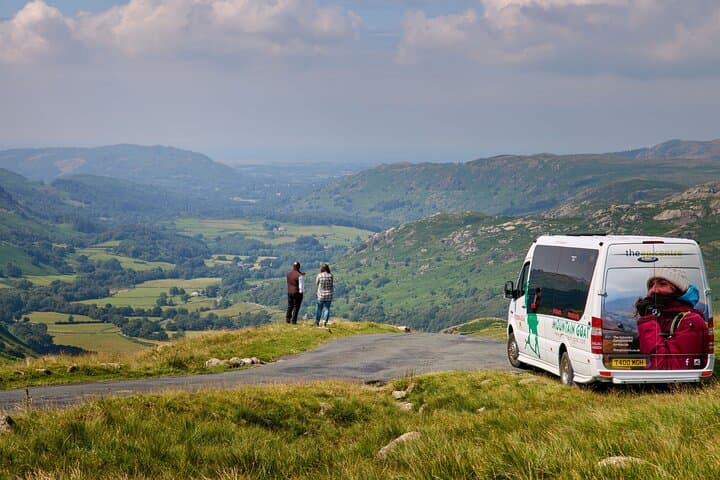
From there the road narrows and the landscape takes on a more abrupt temper. Wrynose Pass leans into you—steep bends and sudden drop-offs that make the coach feel like a careful animal threading a needle. Hardknott Pass is more exacting: hairpins that were carved out of slate and stubborn earth, once trampled by Roman feet. The road dares you to look, and the view replies with ridges and corries shaped by glaciers and centuries of weather.
The geology here is blunt and readable—glacial troughs, moraines and crags that explain why the Lake District has long been a field for headstrong walkers and curious geologists. Wastwater, England’s deepest lake, sits in a bowl of scree and fell, its surface often gunmetal under cloud. The light is variable; marine mist can roll in from the west and rearrange the whole scene in minutes.
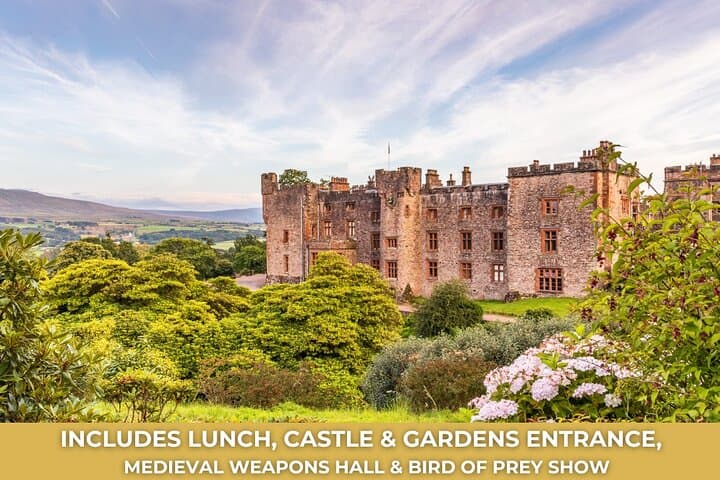
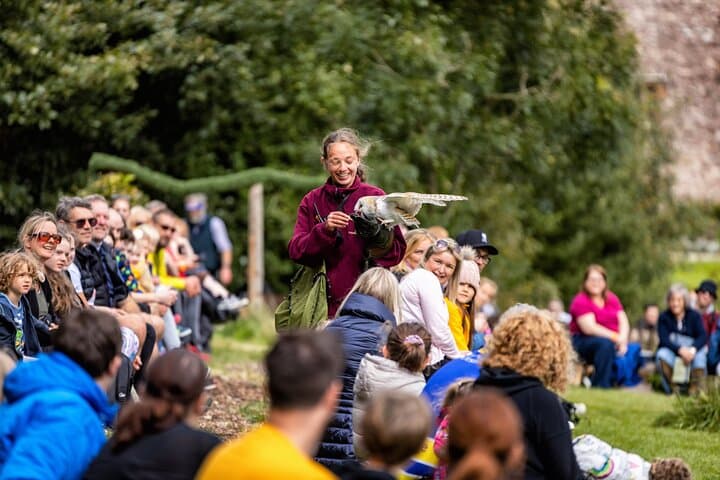
Muncaster Castle is the day’s cultural anchor. The castle’s core dates back to the 13th century, its state rooms and tapestry room layered with later Georgian and Victorian alterations. The estate’s Hawk and Owl Centre blends spectacle with conservation education—falcons, owls and even vultures are presented with a focus on species care and rehabilitation. The castle gardens, redesigned in the 18th century, offer a calmer counterpoint to the raw uplands you left behind.
Practicalities are straightforward: the full loop is an eight-hour outing with on-board English commentary, minimal walking and roughly three hours on site at Muncaster for lunch and the flying demonstration. Pass closures do happen—note that the operator reroutes through Duddon Valley if Hardknott and Wrynose are shut—so check dates before you travel. Wear sturdy shoes and a waterproof—mountain weather turns quickly—and bring a small daypack for layers, water and a camera.
Expect narrow roads and tight parking; motion-prone travelers should sit near the front. The tour is family-friendly (children five and older) but vehicles are not wheelchair accessible. Booking ahead secures seats on a limited-capacity mini-coach and guarantees access to the included castle lunch and the 2pm flying display.
This is less a hike than a condensed education in Lake District relief, history and birdwork: a day that stitches dramatic mountain driving to a medieval house with live raptors, leaving you with a stronger sense of how geology, people and wildlife continue to shape this corner of Cumbria.
easy.
8 hours.
Suitable for most fitness levels—minimal walking, mostly seated travel with short on-site exploration.
Usually yes, but Hardknott and Wrynose can close for safety; in those cases the tour reroutes through the Duddon Valley—check your departure date.
Only short, gentle walking around gardens and the castle; some uneven paths and steps in parts of the castle and grounds.
Children aged five and over are welcome; family-friendly activities include the weapons hall and the bird flying display.
Yes—the tour includes a locally sourced lunch at Muncaster Castle as part of the ticket.
The vehicles are not wheelchair accessible and some castle areas have steps; contact the venue for specific accessibility needs.
Sit near the front, look out at the horizon, avoid heavy meals beforehand and consider travel sickness medication if you are prone to symptoms.
The passes cut through land shaped by Roman roads and later drovers’ routes; Muncaster Castle’s core dates from the 13th century with layers of Georgian and Victorian landscaping.
The Hawk and Owl Centre focuses on rehabilitation and education; visitors are encouraged to follow paths, minimize disturbance to nesting birds and support local conservation efforts.
Mountain Goat Tours operates guided outdoor trips and adventures with an emphasis on safety, stewardship, and memorable experiences.
The tour begins before most of the valley has woken: a small mini-coach slips out of Windermere and eases into the long shoulder of the Langdale Valley. Stone walls and green fields slide past the windows; at Blea Tarn the driver calls a photo stop and the tarn sits like a dark mirror, reeds trembling as the wind tests the calm.
The tour begins before most of the valley has woken: a small mini-coach slips out of Windermere and eases into the long shoulder of the Langdale Valley. Stone walls and green fields slide past the windows; at Blea Tarn the driver calls a photo stop and the tarn sits like a dark mirror, reeds trembling as the wind tests the calm.
From there the road narrows and the landscape takes on a more abrupt temper. Wrynose Pass leans into you—steep bends and sudden drop-offs that make the coach feel like a careful animal threading a needle. Hardknott Pass is more exacting: hairpins that were carved out of slate and stubborn earth, once trampled by Roman feet. The road dares you to look, and the view replies with ridges and corries shaped by glaciers and centuries of weather.
The geology here is blunt and readable—glacial troughs, moraines and crags that explain why the Lake District has long been a field for headstrong walkers and curious geologists. Wastwater, England’s deepest lake, sits in a bowl of scree and fell, its surface often gunmetal under cloud. The light is variable; marine mist can roll in from the west and rearrange the whole scene in minutes.
Muncaster Castle is the day’s cultural anchor. The castle’s core dates back to the 13th century, its state rooms and tapestry room layered with later Georgian and Victorian alterations. The estate’s Hawk and Owl Centre blends spectacle with conservation education—falcons, owls and even vultures are presented with a focus on species care and rehabilitation. The castle gardens, redesigned in the 18th century, offer a calmer counterpoint to the raw uplands you left behind.
Practicalities are straightforward: the full loop is an eight-hour outing with on-board English commentary, minimal walking and roughly three hours on site at Muncaster for lunch and the flying demonstration. Pass closures do happen—note that the operator reroutes through Duddon Valley if Hardknott and Wrynose are shut—so check dates before you travel. Wear sturdy shoes and a waterproof—mountain weather turns quickly—and bring a small daypack for layers, water and a camera.
Expect narrow roads and tight parking; motion-prone travelers should sit near the front. The tour is family-friendly (children five and older) but vehicles are not wheelchair accessible. Booking ahead secures seats on a limited-capacity mini-coach and guarantees access to the included castle lunch and the 2pm flying display.
This is less a hike than a condensed education in Lake District relief, history and birdwork: a day that stitches dramatic mountain driving to a medieval house with live raptors, leaving you with a stronger sense of how geology, people and wildlife continue to shape this corner of Cumbria.