THE ADVENTURE COLLECTIVE® · Independent discovery and booking for outdoor travel

Spend four hours moving from Yogmaya Temple to the soaring Qutub Minar, through Mehrauli Archaeological Park and ending at the expansive Chhatarpur Temple. This guided walk pairs compact logistics with deep historical context for a concentrated look at Delhi’s layered past.
Spend four hours moving from Yogmaya Temple to the soaring Qutub Minar, through Mehrauli Archaeological Park and ending at the expansive Chhatarpur Temple. This guided walk pairs compact logistics with deep historical context for a concentrated look at Delhi’s layered past.
The tour begins on a warm Delhi morning with stone underfoot and the city’s bustle receding as you enter quiet courtyards.
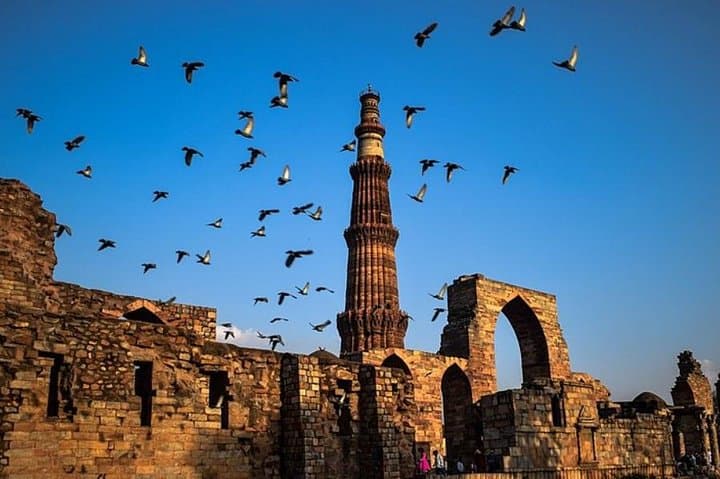
You arrive first at Yogmaya Temple — its carved pillars and painted flags frame stories from the Mahabharata — then move toward Qutub Minar, where bands of red sandstone and marble spiral skyward and an ancient iron pillar stands like a quiet riddle in the mosque courtyard.
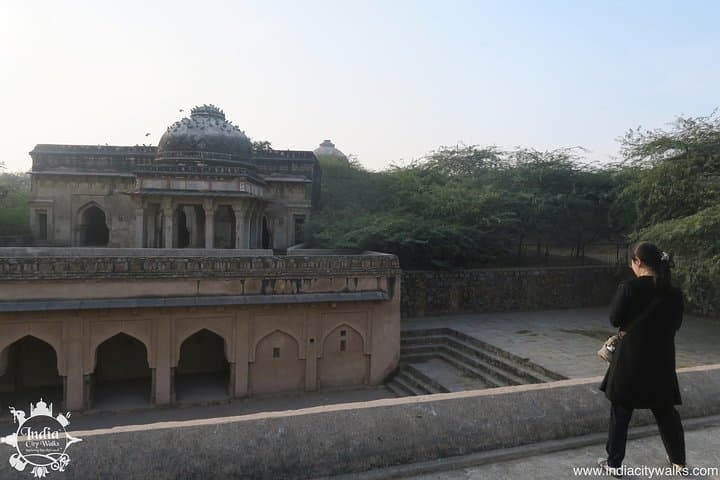
A short 10–15 minute walk brings you into Mehrauli Archaeological Park, where low-lying ruins, tombs and vaults from the 13th–19th centuries press close to the Ridge. The stones here speak of Sultanate and Mughal eras; weathered carvings and collapsed arches give the park a lived-in, layered quality.
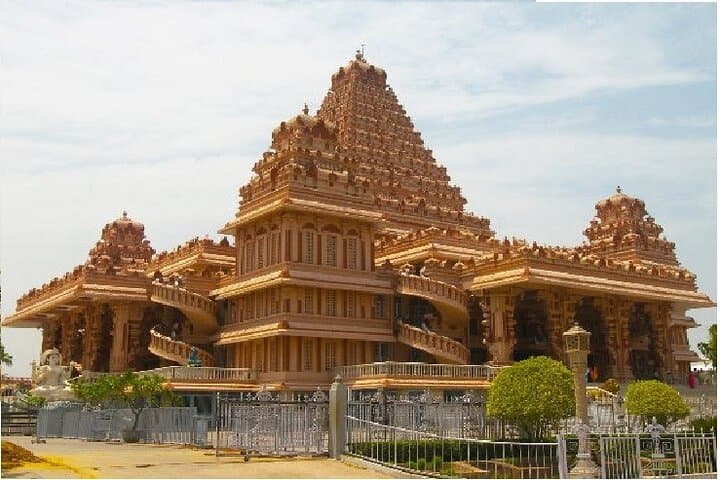
The final stop, Chhatarpur Temple, contrasts with northern styles: marble facades and South-Indian influenced gopurams create a roomy complex that invites slow exploration and prayerful observation.
History is everywhere — from an iron pillar cast in the 4th century to the 12th-century minaret built under Qutb-ud-din Aibak — and the experience is as much about moving between eras as covering ground.
Practical notes: expect about four hours of activity with moderate walking on uneven paths; dress respectfully (shoulders and knees covered) for temple access; carry water, sun protection and comfortable shoes. Mornings bring cooler temperatures and softer light for photography, while afternoons can be hot and crowded. The tour includes AC transfers and a local guide to contextualize the sites, making it a compact, walk-forward way to read Delhi’s history in stone.
Verified experiences and guided adventures in the surrounding area.
Operated by SITA World Tours · New Delhi, Delhi
The tour begins on a warm Delhi morning with stone underfoot and the city’s bustle receding as you enter quiet courtyards.
You arrive first at Yogmaya Temple — its carved pillars and painted flags frame stories from the Mahabharata — then move toward Qutub Minar, where bands of red sandstone and marble spiral skyward and an ancient iron pillar stands like a quiet riddle in the mosque courtyard.
A short 10–15 minute walk brings you into Mehrauli Archaeological Park, where low-lying ruins, tombs and vaults from the 13th–19th centuries press close to the Ridge. The stones here speak of Sultanate and Mughal eras; weathered carvings and collapsed arches give the park a lived-in, layered quality.
The final stop, Chhatarpur Temple, contrasts with northern styles: marble facades and South-Indian influenced gopurams create a roomy complex that invites slow exploration and prayerful observation.
History is everywhere — from an iron pillar cast in the 4th century to the 12th-century minaret built under Qutb-ud-din Aibak — and the experience is as much about moving between eras as covering ground.
Practical notes: expect about four hours of activity with moderate walking on uneven paths; dress respectfully (shoulders and knees covered) for temple access; carry water, sun protection and comfortable shoes. Mornings bring cooler temperatures and softer light for photography, while afternoons can be hot and crowded. The tour includes AC transfers and a local guide to contextualize the sites, making it a compact, walk-forward way to read Delhi’s history in stone.
moderate.
3–4 hours.
Moderate fitness; able to walk on uneven ground and climb short flights of steps repeatedly.
Entry policies vary by operator; some tours include admission to certain sites like Qutub Minar—confirm on booking or expect modest ticket fees at gates.
Minimum age is typically 12 for this tour and children under 15 should be accompanied by an adult; walking and some stairs are involved.
Yes—this private tour includes hotel pick-up and drop-off in an air-conditioned vehicle within Delhi city limits; confirm your pickup point when booking.
Accessibility is limited: Qutub Minar and Mehrauli Park have uneven surfaces and steps; those with mobility issues should check specific site access before booking.
The area stitches together eras: Yogmaya links to legends of the Mahabharata, Qutub Minar dates to the 12th-century Sultanate, and Mehrauli contains monuments spanning the Delhi Sultanate to late Mughal periods.
Many monuments are under archaeological conservation; stick to marked paths, avoid touching fragile carvings and don't feed wildlife to reduce human–animal conflict.
SITA World Tours operates guided outdoor trips and adventures with an emphasis on safety, stewardship, and memorable experiences.
The tour begins on a warm Delhi morning with stone underfoot and the city’s bustle receding as you enter quiet courtyards.
You arrive first at Yogmaya Temple — its carved pillars and painted flags frame stories from the Mahabharata — then move toward Qutub Minar, where bands of red sandstone and marble spiral skyward and an ancient iron pillar stands like a quiet riddle in the mosque courtyard.
A short 10–15 minute walk brings you into Mehrauli Archaeological Park, where low-lying ruins, tombs and vaults from the 13th–19th centuries press close to the Ridge. The stones here speak of Sultanate and Mughal eras; weathered carvings and collapsed arches give the park a lived-in, layered quality.
The final stop, Chhatarpur Temple, contrasts with northern styles: marble facades and South-Indian influenced gopurams create a roomy complex that invites slow exploration and prayerful observation.
History is everywhere — from an iron pillar cast in the 4th century to the 12th-century minaret built under Qutb-ud-din Aibak — and the experience is as much about moving between eras as covering ground.
Practical notes: expect about four hours of activity with moderate walking on uneven paths; dress respectfully (shoulders and knees covered) for temple access; carry water, sun protection and comfortable shoes. Mornings bring cooler temperatures and softer light for photography, while afternoons can be hot and crowded. The tour includes AC transfers and a local guide to contextualize the sites, making it a compact, walk-forward way to read Delhi’s history in stone.
The tour begins on a warm Delhi morning with stone underfoot and the city’s bustle receding as you enter quiet courtyards.
You arrive first at Yogmaya Temple — its carved pillars and painted flags frame stories from the Mahabharata — then move toward Qutub Minar, where bands of red sandstone and marble spiral skyward and an ancient iron pillar stands like a quiet riddle in the mosque courtyard.
A short 10–15 minute walk brings you into Mehrauli Archaeological Park, where low-lying ruins, tombs and vaults from the 13th–19th centuries press close to the Ridge. The stones here speak of Sultanate and Mughal eras; weathered carvings and collapsed arches give the park a lived-in, layered quality.
The final stop, Chhatarpur Temple, contrasts with northern styles: marble facades and South-Indian influenced gopurams create a roomy complex that invites slow exploration and prayerful observation.
History is everywhere — from an iron pillar cast in the 4th century to the 12th-century minaret built under Qutb-ud-din Aibak — and the experience is as much about moving between eras as covering ground.
Practical notes: expect about four hours of activity with moderate walking on uneven paths; dress respectfully (shoulders and knees covered) for temple access; carry water, sun protection and comfortable shoes. Mornings bring cooler temperatures and softer light for photography, while afternoons can be hot and crowded. The tour includes AC transfers and a local guide to contextualize the sites, making it a compact, walk-forward way to read Delhi’s history in stone.