THE ADVENTURE COLLECTIVE® · Independent discovery and booking for outdoor travel

Step into a panoramic helmet and walk the seabed off Lanzarote in a two‑hour Sea Trek experience. It’s a shallow, guided helmet dive ideal for non‑divers, with wetsuit and shoes provided.
Step into a panoramic helmet and walk the seabed off Lanzarote in a two‑hour Sea Trek experience. It’s a shallow, guided helmet dive ideal for non‑divers, with wetsuit and shoes provided.
The boat rocks once, a warm wind pressing the ocean flat, and then you crouch under a glass-fronted helmet and step down into a light that feels like suspended air. The seabed opens in grays and ochres; fish thread between volcanic boulders while bubbles climb the hose to the surface. Sea Trek puts a panoramic helmet over your shoulders and feeds air from a small surface boat so you can walk on the seabed — breathing normally, feet on real sand, the current occasionally nudging you like a curious companion.
Verified experiences and guided adventures in the surrounding area.
Operated by Native Diving Lanzarote · Puerto del Carmen, Canary Islands
The boat rocks once, a warm wind pressing the ocean flat, and then you crouch under a glass-fronted helmet and step down into a light that feels like suspended air. The seabed opens in grays and ochres; fish thread between volcanic boulders while bubbles climb the hose to the surface. Sea Trek puts a panoramic helmet over your shoulders and feeds air from a small surface boat so you can walk on the seabed — breathing normally, feet on real sand, the current occasionally nudging you like a curious companion.
Lanzarote’s shores are volcanic: hardened lava flows slope into clear Atlantic water, forming rocky reefs that support grouper, parrotfish and shoals of amber-striped baitfish. The Canary Islands have a long maritime culture shaped by trade and fishing; modern helmet-diving is a 20th‑century recreational innovation adapted here by operators using rigid-helmet systems for shallow, accessible dives.
Practically, Sea Trek is an easy, low‑stress aquatic activity — typically conducted at 3–5 meters (10–16 ft) depth and lasting about two hours including briefing and boat transfer. Operators provide wetsuit, shoes and helmet; minimum age is 8. Health exclusions apply for pregnancy and serious heart conditions; seasickness and boat-transfer logistics are the most common inconveniences.
Plan for sun protection between briefings, a light snack beforehand, and secure storage for phones (underwater photography is restricted). Arrive with swimwear, a towel and any motion‑sickness meds you need. The experience is ideal for non‑divers who want a close, stable encounter with marine life without learning SCUBA — the Atlantic here will hold you up and show its colors on your walk beneath the waves.
easy.
2 hours.
Suitable for most fitness levels; participants should be able to walk short distances on uneven sandy or rocky seabed
No. Sea Trek uses a surface‑supplied helmet system so no SCUBA training or certification is required.
The experience typically takes place at 3–5 meters (10–16 ft) depth—shallow enough for normal breathing in the helmet and easy ascent if needed.
Yes: the operator supplies the panoramic helmet, wetsuit and shoes; bring swimwear and personal items as needed.
Underwater photography is usually restricted for safety and equipment reasons; check with the operator for permitted camera options or shore‑based photos.
Lanzarote’s coastline is shaped by relatively recent volcanic flows (18th–20th centuries) that created rocky reefs and clear basins used today for diving and snorkeling.
Operators typically follow low‑impact guidelines—avoid touching reef or disturbing animals, and use reef‑safe sunscreen to protect local marine habitats.
Native Diving Lanzarote operates guided outdoor trips and adventures with an emphasis on safety, stewardship, and memorable experiences.
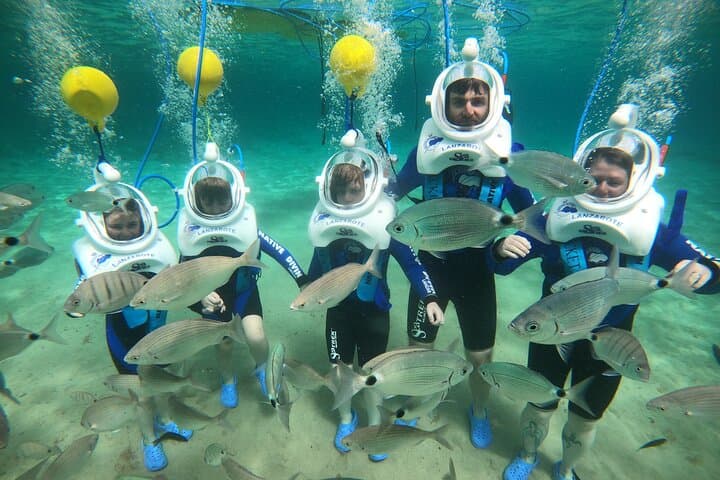
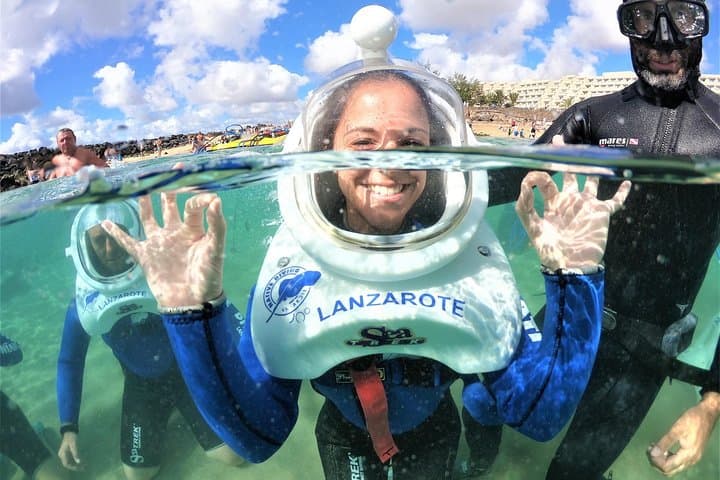
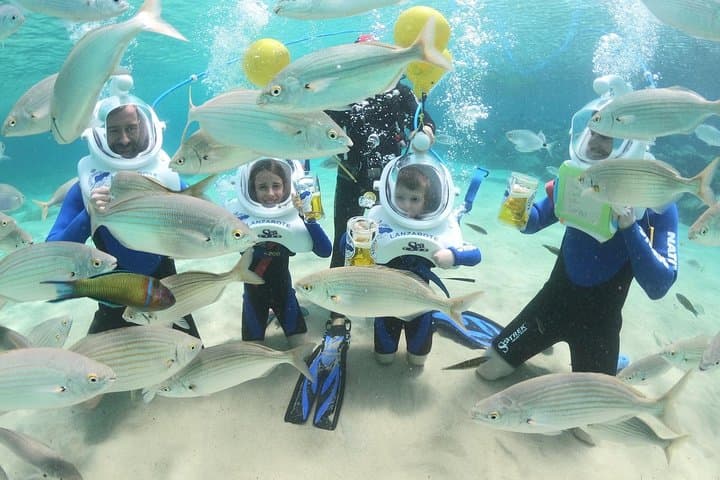
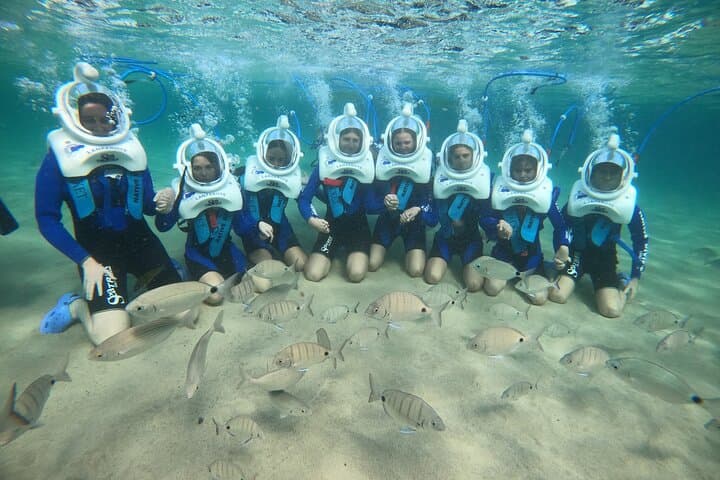
The boat rocks once, a warm wind pressing the ocean flat, and then you crouch under a glass-fronted helmet and step down into a light that feels like suspended air. The seabed opens in grays and ochres; fish thread between volcanic boulders while bubbles climb the hose to the surface. Sea Trek puts a panoramic helmet over your shoulders and feeds air from a small surface boat so you can walk on the seabed — breathing normally, feet on real sand, the current occasionally nudging you like a curious companion.
The boat rocks once, a warm wind pressing the ocean flat, and then you crouch under a glass-fronted helmet and step down into a light that feels like suspended air. The seabed opens in grays and ochres; fish thread between volcanic boulders while bubbles climb the hose to the surface. Sea Trek puts a panoramic helmet over your shoulders and feeds air from a small surface boat so you can walk on the seabed — breathing normally, feet on real sand, the current occasionally nudging you like a curious companion.
Lanzarote’s shores are volcanic: hardened lava flows slope into clear Atlantic water, forming rocky reefs that support grouper, parrotfish and shoals of amber-striped baitfish. The Canary Islands have a long maritime culture shaped by trade and fishing; modern helmet-diving is a 20th‑century recreational innovation adapted here by operators using rigid-helmet systems for shallow, accessible dives.
Practically, Sea Trek is an easy, low‑stress aquatic activity — typically conducted at 3–5 meters (10–16 ft) depth and lasting about two hours including briefing and boat transfer. Operators provide wetsuit, shoes and helmet; minimum age is 8. Health exclusions apply for pregnancy and serious heart conditions; seasickness and boat-transfer logistics are the most common inconveniences.
Plan for sun protection between briefings, a light snack beforehand, and secure storage for phones (underwater photography is restricted). Arrive with swimwear, a towel and any motion‑sickness meds you need. The experience is ideal for non‑divers who want a close, stable encounter with marine life without learning SCUBA — the Atlantic here will hold you up and show its colors on your walk beneath the waves.