THE ADVENTURE COLLECTIVE® · Independent discovery and booking for outdoor travel

Trace Oman’s coast from Muscat to Wadi Shab’s swim-through cave, the emerald bowl of Bimmah Sinkhole, and the white-stone sweep of Fins Beach—all in one seamless private day. Expect a moderate canyon walk, refreshing swims, and big sea views powered by geology and Omani hospitality.
Trace Oman’s coast from Muscat to Wadi Shab’s swim-through cave, the emerald bowl of Bimmah Sinkhole, and the white-stone sweep of Fins Beach—all in one seamless private day. Expect a moderate canyon walk, refreshing swims, and big sea views powered by geology and Omani hospitality.
Morning light slips over the Hajar Mountains as the coast road unfurls east of Muscat, cliffs falling to a bright Arabian Sea. Your guide steers toward Tiwi, where the canyon of Wadi Shab cuts inland—date palms lining a ribbon of water that refuses to stop, even in the dry. A short boat hop ferries you across the mouth of the wadi. The rock path ahead is honest about its intent: uneven, warm underfoot, and eager to slow you down so you actually look—at falaj channels carving past gardens, at swifts claiming the sky, at turquoise pockets that dare you to jump in.
Verified experiences and guided adventures in the surrounding area.
Operated by Get Your Omani Guide · Tiwi, Ash Sharqiyah South
Morning light slips over the Hajar Mountains as the coast road unfurls east of Muscat, cliffs falling to a bright Arabian Sea. Your guide steers toward Tiwi, where the canyon of Wadi Shab cuts inland—date palms lining a ribbon of water that refuses to stop, even in the dry. A short boat hop ferries you across the mouth of the wadi. The rock path ahead is honest about its intent: uneven, warm underfoot, and eager to slow you down so you actually look—at falaj channels carving past gardens, at swifts claiming the sky, at turquoise pockets that dare you to jump in.
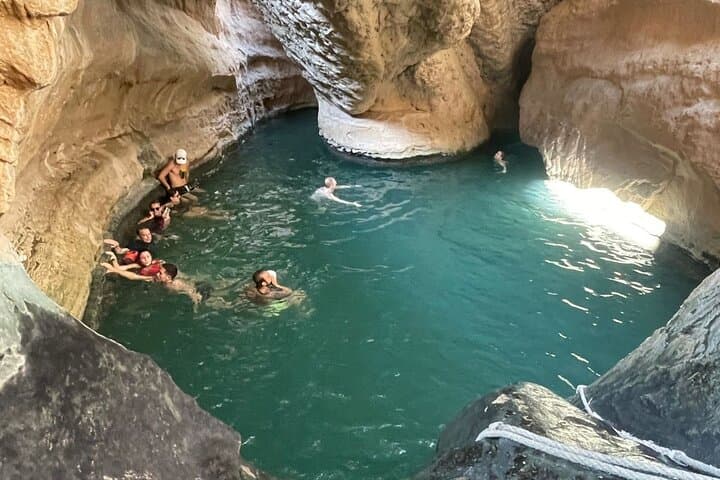
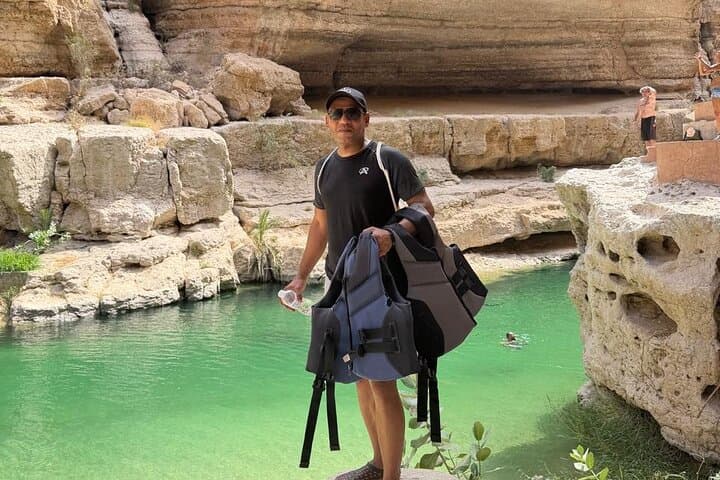
Wadi Shab is classic Oman—limestone sculpted by flash floods into ledges and bowls, a walk that becomes a swim. About 3 km in (40–60 minutes each way), the path yields to pools. Here the wadi changes the rules: stash your pack in a dry bag, wade, then swim through a narrow slot that opens to a hidden cavern where a waterfall thunders against its own echo. It’s intimate, otherworldly, and pure relief on a warm day.
Back on the coast, the land gives another surprise. Hawiyat Najm—Bimmah Sinkhole—yawns behind a low wall of parkland, a near-perfect circle blown open in pale Eocene limestone. Geologists call it a collapse doline; locals still tell meteor stories. Either way, the water glows a surreal blue-green at midday, fed by a mix of seawater and groundwater. It invites you in, but the limestone reminds you to tread carefully.
The finale: Fins Beach, known for its white stone and glass-clear shallows. Here the sea pushes forward with playful energy; surf can be punchy and currents shift, so most visitors roam the pebbled shore, climb low bluffs for views, or cool off at the edges. On clear days, the cliffs to the south burn gold at sunset.
This private full-day tour keeps logistics tight: hotel pickup in Muscat, 4x4 transport, an English-speaking Omani guide, water, and the Wadi Shab boat crossing included. Expect 8–9 hours including scenic drive time. The hike is moderate—rock-hopping and a few short scrambles with minimal elevation, but heat amplifies the effort. Wear sturdy water shoes, carry at least 2 liters, and start early. Avoid wadis during rain; floods arrive fast. Dress modestly through villages and save swimwear for canyons and beaches. Weekends (Friday–Saturday) are busier; mornings are quieter for both photos and solitude.
Between the geology lesson and the swim, it’s easy to miss the broader story: watchtowers above Tiwi, once guarding trade routes; gardens still watered by ancient falaj channels. This coast remembers, and it leaves room for you to move through it—one pool, one cove, one sun-struck ridge at a time.
moderate.
8–9 hours.
Comfortable walking 6–8 km round-trip on uneven rock with short scrambles and swimming sections.
Plan on 40–60 minutes each way (about 3 km) over rocky, uneven terrain before reaching the swimming pools.
Yes. The short boat ride across the wadi mouth is included in this private tour.
Yes, you can enjoy the walk and lower pools without entering deep water. The cave swim is optional and for confident swimmers only.
There are basic toilets and small shops near the Wadi Shab trailhead and facilities at Bimmah Sinkhole Park; lunch is taken at a local restaurant.
Active kids comfortable on uneven terrain can join with supervision. It’s not recommended for travelers with back issues, heart conditions, or during pregnancy.
October–April offers cooler hiking conditions. Summer is possible with very early starts, extra water, and frequent swim breaks.
Watchtowers once guarded Tiwi’s trade routes linking coastal dhows with mountain villages. Locals call Bimmah Hawiyat Najm—“Fallen Star”—a nod to the old meteor tale for a very real limestone collapse.
Pack out all trash, stay on established paths, and avoid cliff jumping. Use mineral or reef-safe sunscreen to keep the wadi and sinkhole waters clear.
Get Your Omani Guide operates guided outdoor trips and adventures with an emphasis on safety, stewardship, and memorable experiences.
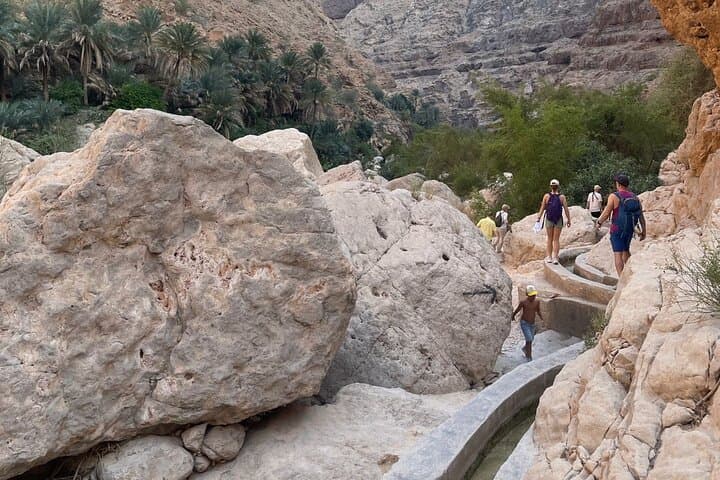
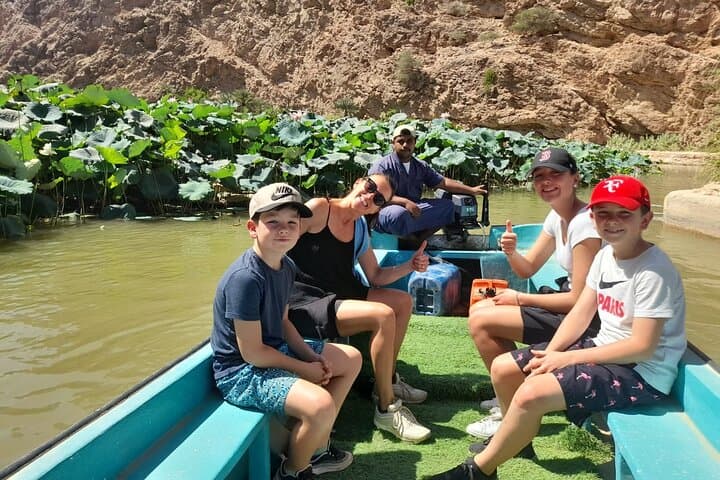
Morning light slips over the Hajar Mountains as the coast road unfurls east of Muscat, cliffs falling to a bright Arabian Sea. Your guide steers toward Tiwi, where the canyon of Wadi Shab cuts inland—date palms lining a ribbon of water that refuses to stop, even in the dry. A short boat hop ferries you across the mouth of the wadi. The rock path ahead is honest about its intent: uneven, warm underfoot, and eager to slow you down so you actually look—at falaj channels carving past gardens, at swifts claiming the sky, at turquoise pockets that dare you to jump in.
Morning light slips over the Hajar Mountains as the coast road unfurls east of Muscat, cliffs falling to a bright Arabian Sea. Your guide steers toward Tiwi, where the canyon of Wadi Shab cuts inland—date palms lining a ribbon of water that refuses to stop, even in the dry. A short boat hop ferries you across the mouth of the wadi. The rock path ahead is honest about its intent: uneven, warm underfoot, and eager to slow you down so you actually look—at falaj channels carving past gardens, at swifts claiming the sky, at turquoise pockets that dare you to jump in.
Wadi Shab is classic Oman—limestone sculpted by flash floods into ledges and bowls, a walk that becomes a swim. About 3 km in (40–60 minutes each way), the path yields to pools. Here the wadi changes the rules: stash your pack in a dry bag, wade, then swim through a narrow slot that opens to a hidden cavern where a waterfall thunders against its own echo. It’s intimate, otherworldly, and pure relief on a warm day.
Back on the coast, the land gives another surprise. Hawiyat Najm—Bimmah Sinkhole—yawns behind a low wall of parkland, a near-perfect circle blown open in pale Eocene limestone. Geologists call it a collapse doline; locals still tell meteor stories. Either way, the water glows a surreal blue-green at midday, fed by a mix of seawater and groundwater. It invites you in, but the limestone reminds you to tread carefully.
The finale: Fins Beach, known for its white stone and glass-clear shallows. Here the sea pushes forward with playful energy; surf can be punchy and currents shift, so most visitors roam the pebbled shore, climb low bluffs for views, or cool off at the edges. On clear days, the cliffs to the south burn gold at sunset.
This private full-day tour keeps logistics tight: hotel pickup in Muscat, 4x4 transport, an English-speaking Omani guide, water, and the Wadi Shab boat crossing included. Expect 8–9 hours including scenic drive time. The hike is moderate—rock-hopping and a few short scrambles with minimal elevation, but heat amplifies the effort. Wear sturdy water shoes, carry at least 2 liters, and start early. Avoid wadis during rain; floods arrive fast. Dress modestly through villages and save swimwear for canyons and beaches. Weekends (Friday–Saturday) are busier; mornings are quieter for both photos and solitude.
Between the geology lesson and the swim, it’s easy to miss the broader story: watchtowers above Tiwi, once guarding trade routes; gardens still watered by ancient falaj channels. This coast remembers, and it leaves room for you to move through it—one pool, one cove, one sun-struck ridge at a time.