THE ADVENTURE COLLECTIVE® · Independent discovery and booking for outdoor travel

Cover dunes, canyons and rock arches in a compact jeep circuit through Wadi Rum. This half-day tour mixes Bedouin storytelling, Nabatean inscriptions and sunset-ready viewpoints for travelers short on time but hungry for desert terrain.
Cover dunes, canyons and rock arches in a compact jeep circuit through Wadi Rum. This half-day tour mixes Bedouin storytelling, Nabatean inscriptions and sunset-ready viewpoints for travelers short on time but hungry for desert terrain.
You feel the jeep before you see it: a low rumble under a wide blue sky, tires whispering over compacted sand as the desert opens and the first red cliffs appear like pages torn from geologic time.
Verified experiences and guided adventures in the surrounding area.
Operated by Wild Wadi Rum Tours · Wadi Rum Village, Ma'an Governorate
You feel the jeep before you see it: a low rumble under a wide blue sky, tires whispering over compacted sand as the desert opens and the first red cliffs appear like pages torn from geologic time.
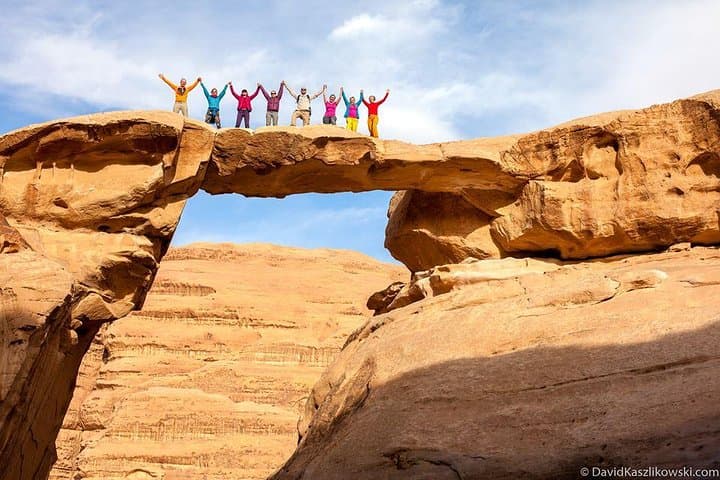
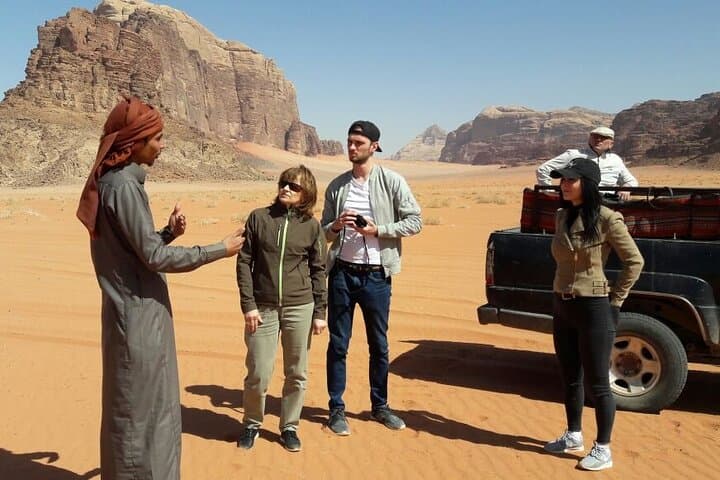
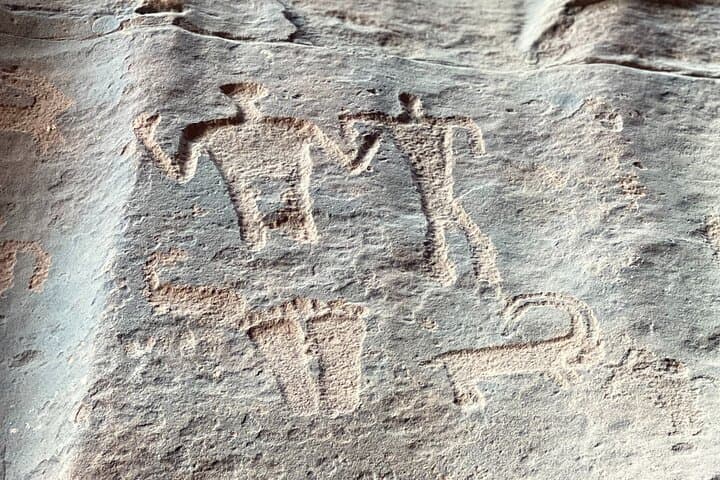
This is Wadi Rum in miniature—granite ribs and sandstone towers rising hundreds of meters, interlaced with red dunes and narrow canyons. On a short jeep tour you move fast enough to cover ground but slow enough to listen: a guide pours sweet Bedouin tea at a family house, points out Nabatean inscriptions at Khazali Canyon, and gestures at the weather-polished arch where a scramble yields a sudden, raw panorama.
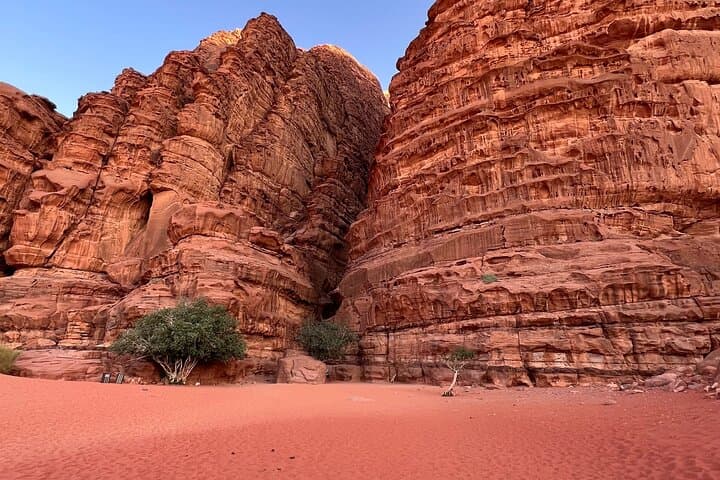
The landscape here is a record of extremes. Layers of sandstone were folded and uplifted by tectonic forces while wind and flash-floods carved deep slots and arches. Long before the jeep tours, Nabatean caravans and Bedouin tribes used these corridors; Lawrence of Arabia’s 1917 passage through the valley later made the region globally famous.
Local culture remains present and practical. Guides are usually Bedouin and narrate place names, water-hole legends and routes carved into rock. The tour’s typical stops—Lawrence’s house, the big red sand dune, Khazali Canyon, Little Rock Arch—offer a mix of photo-ready viewpoints and quieter moments to notice animal tracks, ancient graffiti, and the clean, tannic scent of desert coffee.
Practical edge: short tours run 2–6 hours and are best as an afternoon option if you want sunset light. Vehicles are 4x4 jeeps driven on sandy tracks; expect short hikes of 10–30 minutes at several stops and easy scrambles to reach viewpoints. Guides usually include bottled water and English commentary, and for a small extra you can add sandboarding, a camel ride, or a cooked lunch (approximately 10 JD) after the tour.
Plan around the climate: summer days are hot and bright; spring and autumn have crisp mornings and pleasant afternoons; winter can be chilly after dark. Pack sun protection, a wind layer, sturdy shoes for rocky sections, and at least 1–2 liters of water per person beyond what’s provided if you are sensitive to heat.
Respect the environment: avoid climbing on fragile rock inscriptions, keep to paths where possible, and ask before photographing people. Tours operate from a meeting point near the Visitors Center—operators ask you to call or message 30 minutes prior. With efficient routing, a short tour gives a strong, textured taste of Wadi Rum—fast-moving, tactile, and rooted in both natural drama and living Bedouin history.
moderate.
2–6 hours.
Light to moderate fitness; comfortable walking on sand and short scrambles required
Tours vary between about 2 and 6 hours depending on the option you choose; most half-day tours run 3–4 hours.
No—providers supply the 4x4 jeep; you just need to meet at the start point near the Visitors Center and call 30 minutes before arrival.
Yes; the tour is rated easy for all fitness levels and small children can ride in strollers at certain stops, though some short walks include sand and uneven rock.
Yes—many short tour options include sandboarding or camel rides, or you can add them locally for an additional fee.
Bottled water and Bedouin tea are included; light lunch and cooked chicken-and-rice lunch can be added for approximately 5–10 JD per person.
Visitors pay an entrance fee at the Wadi Rum Visitor Center; most operators handle logistics but it’s best to confirm whether the tour price includes the park fee.
Wadi Rum was a caravan crossroads long before the 20th century; many routes and inscriptions date to Nabatean and pre-Islamic travel networks, later popularized by T.E. Lawrence.
Wadi Rum is a protected area—stay on permitted tracks, avoid disturbing archaeological sites, and support local Bedouin guides who steward the landscape.
Wild Wadi Rum Tours operates guided outdoor trips and adventures with an emphasis on safety, stewardship, and memorable experiences.
You feel the jeep before you see it: a low rumble under a wide blue sky, tires whispering over compacted sand as the desert opens and the first red cliffs appear like pages torn from geologic time.
You feel the jeep before you see it: a low rumble under a wide blue sky, tires whispering over compacted sand as the desert opens and the first red cliffs appear like pages torn from geologic time.
This is Wadi Rum in miniature—granite ribs and sandstone towers rising hundreds of meters, interlaced with red dunes and narrow canyons. On a short jeep tour you move fast enough to cover ground but slow enough to listen: a guide pours sweet Bedouin tea at a family house, points out Nabatean inscriptions at Khazali Canyon, and gestures at the weather-polished arch where a scramble yields a sudden, raw panorama.
The landscape here is a record of extremes. Layers of sandstone were folded and uplifted by tectonic forces while wind and flash-floods carved deep slots and arches. Long before the jeep tours, Nabatean caravans and Bedouin tribes used these corridors; Lawrence of Arabia’s 1917 passage through the valley later made the region globally famous.
Local culture remains present and practical. Guides are usually Bedouin and narrate place names, water-hole legends and routes carved into rock. The tour’s typical stops—Lawrence’s house, the big red sand dune, Khazali Canyon, Little Rock Arch—offer a mix of photo-ready viewpoints and quieter moments to notice animal tracks, ancient graffiti, and the clean, tannic scent of desert coffee.
Practical edge: short tours run 2–6 hours and are best as an afternoon option if you want sunset light. Vehicles are 4x4 jeeps driven on sandy tracks; expect short hikes of 10–30 minutes at several stops and easy scrambles to reach viewpoints. Guides usually include bottled water and English commentary, and for a small extra you can add sandboarding, a camel ride, or a cooked lunch (approximately 10 JD) after the tour.
Plan around the climate: summer days are hot and bright; spring and autumn have crisp mornings and pleasant afternoons; winter can be chilly after dark. Pack sun protection, a wind layer, sturdy shoes for rocky sections, and at least 1–2 liters of water per person beyond what’s provided if you are sensitive to heat.
Respect the environment: avoid climbing on fragile rock inscriptions, keep to paths where possible, and ask before photographing people. Tours operate from a meeting point near the Visitors Center—operators ask you to call or message 30 minutes prior. With efficient routing, a short tour gives a strong, textured taste of Wadi Rum—fast-moving, tactile, and rooted in both natural drama and living Bedouin history.