THE ADVENTURE COLLECTIVE® · Independent discovery and booking for outdoor travel

Spend a full day crossing Wadi Rum by Jeep, explore Nabataean canyons and sand dunes, then sleep under the desert sky in a Bedouin camp. This full-day tour plus overnight pairs geology, history, and local hospitality for an accessible desert immersion.
Spend a full day crossing Wadi Rum by Jeep, explore Nabataean canyons and sand dunes, then sleep under the desert sky in a Bedouin camp. This full-day tour plus overnight pairs geology, history, and local hospitality for an accessible desert immersion.
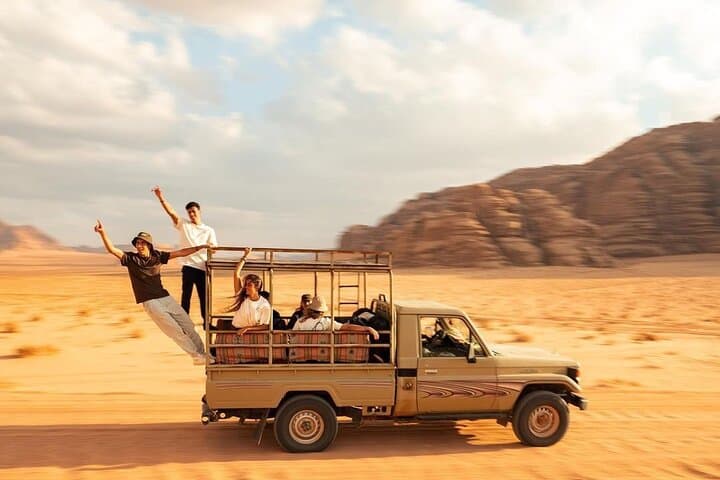
The Jeep drops you onto a skin of glassy sandstone and the wind reads the map. Dunes roll like slow waves, jagged towers of rock rise like islands, and the sky opens so wide it feels like a different element. On a full-day Jeep tour through Wadi Rum, the desert doesn’t wait politely — it pushes you forward, insists you look closer, and gives you room to breathe.
Verified experiences and guided adventures in the surrounding area.
Operated by Wadi Rum Trip · Wadi Rum Village, Ma'an Governorate
The Jeep drops you onto a skin of glassy sandstone and the wind reads the map. Dunes roll like slow waves, jagged towers of rock rise like islands, and the sky opens so wide it feels like a different element. On a full-day Jeep tour through Wadi Rum, the desert doesn’t wait politely — it pushes you forward, insists you look closer, and gives you room to breathe.
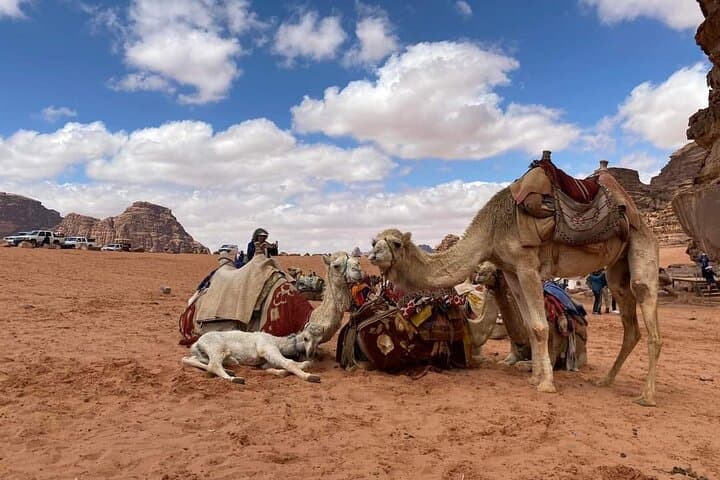
You begin in the tracks of Bedouin guides and travelers for millennia. Wadi Rum is a chapter in Jordan’s long desert story: fluted sandstone and granite carved by wind and time, Nabataean inscriptions scored into narrow canyons, and sites linked with T.E. Lawrence’s wartime routes. The color palette here is simple and relentless — rust, saffron, and the steel-blue of evening — and the forms are geological shorthand for erosion: arches, bridges, and chimney-like towers sculpted over millions of years.
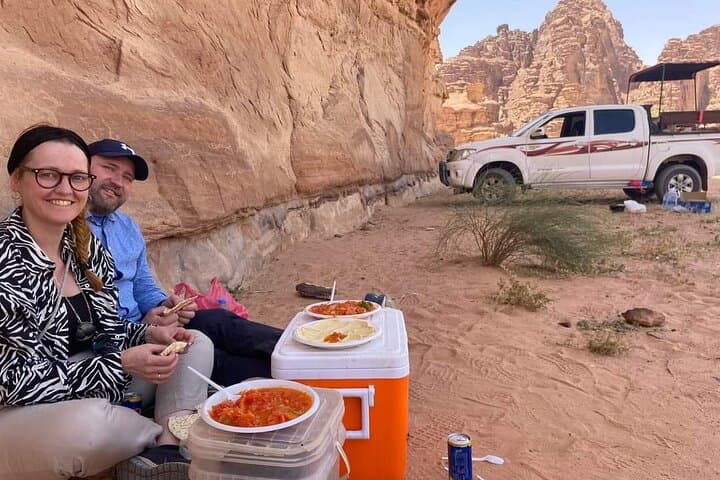
Culturally, this is Bedouin country. Hosts serve up slow-cooked meals — rice, stewed vegetables, and smoky coffee — and the camp becomes an informal classroom in local etiquette and hospitality. Nightfall softens the landscape; the Milky Way unrolls in sharp relief and the bubble tent in your camp frames that sky like a living planetarium.
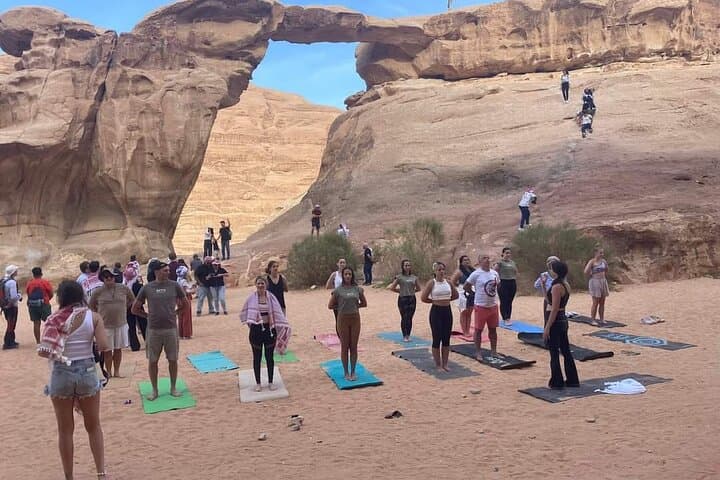
The day’s route mixes easy hikes and vehicle access: a narrow canyon with Nabataean inscriptions, a historic desert spring with panoramic viewpoints, sandboarding down wind-polished dunes, and climbs onto natural bridges for sweeping vistas. Guides steer the Jeep across rocky tracks, stopping at formations and crags where geology and history collide.
Practical edge: this is an accessible adventure. The drives are comfortable but bumpy; short hikes are sandy and may require scrambling on steeper, rocky steps. Bring sun protection, layered clothing for temperature swings, and shoes that handle both sand and rough rock. The operator supplies bottled water and a full traditional dinner and breakfast; still, carry a refillable bottle and snacks for energy between stops.
Timing matters: mornings and late afternoons are when the light sculpts the rocks best and when heat is moderate. Respect private and sacred sites, follow your guide’s instructions in narrow canyons, and keep noise low at night to preserve the camp’s quiet.
For first-time desert travelers, Wadi Rum is both soft introduction and relentless teacher — it rewards curiosity and sensible preparation. The Jeep tour plus overnight in a Bedouin camp makes it possible to experience the sweep of the landscape in one immersive push: geology underfoot, history overhead, and a night that teaches you how big the sky can feel.
easy.
24–26 hours.
Suitable for travelers in basic physical condition; expect short sandy hikes and easy scrambling.
The experience spans roughly 24 hours on-site, combining a full-day Jeep tour with one overnight in a Bedouin-style camp or bubble tent.
Yes; the itinerary is rated easy and suitable for most ages, though those with severe mobility or heart issues should consult the operator.
Yes. Dinner, breakfast, and lunch are included, with traditional Bedouin dishes and vegetarian/vegan options available on request.
No. The camp provides sleeping arrangements and basic bedding; bring personal items like sleepwear and a small towel if you prefer.
Power access is limited; bring a portable power bank if you need to recharge cameras or phones overnight.
Tipping is appreciated; a modest tip for guides (per person) and separate thanks for camp staff is customary.
Wadi Rum contains Nabataean petroglyphs and sites linked to T.E. Lawrence; its routes have been used by desert peoples for millennia.
Stick to marked tracks and avoid climbing fragile rock art sites; local guides promote low-impact camping and waste removal to protect the desert ecosystem.
Wadi Rum Trip operates guided outdoor trips and adventures with an emphasis on safety, stewardship, and memorable experiences.
The Jeep drops you onto a skin of glassy sandstone and the wind reads the map. Dunes roll like slow waves, jagged towers of rock rise like islands, and the sky opens so wide it feels like a different element. On a full-day Jeep tour through Wadi Rum, the desert doesn’t wait politely — it pushes you forward, insists you look closer, and gives you room to breathe.
The Jeep drops you onto a skin of glassy sandstone and the wind reads the map. Dunes roll like slow waves, jagged towers of rock rise like islands, and the sky opens so wide it feels like a different element. On a full-day Jeep tour through Wadi Rum, the desert doesn’t wait politely — it pushes you forward, insists you look closer, and gives you room to breathe.
You begin in the tracks of Bedouin guides and travelers for millennia. Wadi Rum is a chapter in Jordan’s long desert story: fluted sandstone and granite carved by wind and time, Nabataean inscriptions scored into narrow canyons, and sites linked with T.E. Lawrence’s wartime routes. The color palette here is simple and relentless — rust, saffron, and the steel-blue of evening — and the forms are geological shorthand for erosion: arches, bridges, and chimney-like towers sculpted over millions of years.
Culturally, this is Bedouin country. Hosts serve up slow-cooked meals — rice, stewed vegetables, and smoky coffee — and the camp becomes an informal classroom in local etiquette and hospitality. Nightfall softens the landscape; the Milky Way unrolls in sharp relief and the bubble tent in your camp frames that sky like a living planetarium.
The day’s route mixes easy hikes and vehicle access: a narrow canyon with Nabataean inscriptions, a historic desert spring with panoramic viewpoints, sandboarding down wind-polished dunes, and climbs onto natural bridges for sweeping vistas. Guides steer the Jeep across rocky tracks, stopping at formations and crags where geology and history collide.
Practical edge: this is an accessible adventure. The drives are comfortable but bumpy; short hikes are sandy and may require scrambling on steeper, rocky steps. Bring sun protection, layered clothing for temperature swings, and shoes that handle both sand and rough rock. The operator supplies bottled water and a full traditional dinner and breakfast; still, carry a refillable bottle and snacks for energy between stops.
Timing matters: mornings and late afternoons are when the light sculpts the rocks best and when heat is moderate. Respect private and sacred sites, follow your guide’s instructions in narrow canyons, and keep noise low at night to preserve the camp’s quiet.
For first-time desert travelers, Wadi Rum is both soft introduction and relentless teacher — it rewards curiosity and sensible preparation. The Jeep tour plus overnight in a Bedouin camp makes it possible to experience the sweep of the landscape in one immersive push: geology underfoot, history overhead, and a night that teaches you how big the sky can feel.