THE ADVENTURE COLLECTIVE® · Independent discovery and booking for outdoor travel

Drive into Wadi Rum’s rust-red deserts on a focused five-hour jeep tour that packs petroglyph canyons, a natural rock bridge, Lawrence’s Spring and a free sunset stop into one afternoon. Expect short scrambles, sweeping views, and local stories served with tea.
Drive into Wadi Rum’s rust-red deserts on a focused five-hour jeep tour that packs petroglyph canyons, a natural rock bridge, Lawrence’s Spring and a free sunset stop into one afternoon. Expect short scrambles, sweeping views, and local stories served with tea.
Sand ripples under the tire tread and a low wind makes the sandstone towers lean into the day—Wadi Rum arrives not as a panorama but as a series of confrontations: dune against rock, silence against the crack of a guide’s voice. On this five-hour jeep tour, a local 4x4 driver threads through crimson dunes and narrows canyons, pausing where the desert keeps stories—Lawrence’s spring tucked above a cliff, petroglyphs carved into Khazali’s cleft, the fine slope of Al Ramal inviting a barefoot climb.
Verified experiences and guided adventures in the surrounding area.
Operated by Wadi Rum - Day Tours · Wadi Rum Village, Aqaba Governorate
Sand ripples under the tire tread and a low wind makes the sandstone towers lean into the day—Wadi Rum arrives not as a panorama but as a series of confrontations: dune against rock, silence against the crack of a guide’s voice. On this five-hour jeep tour, a local 4x4 driver threads through crimson dunes and narrows canyons, pausing where the desert keeps stories—Lawrence’s spring tucked above a cliff, petroglyphs carved into Khazali’s cleft, the fine slope of Al Ramal inviting a barefoot climb.
The desert is younger than its rock faces suggest but older than most maps. Wadi Rum’s cliffs are primarily sandstone and granite sculpted over millions of years; wind and flash floods have carved bridges, arches, and channels that channel light into narrow bands at sunrise and dusk. Human history here threads through those formations: Thamudic and Nabataean inscriptions in Khazali Canyon, footprints of Bedouin life, and the echo of T.E. Lawrence’s passages that turned this landscape into a chapter of modern legend.
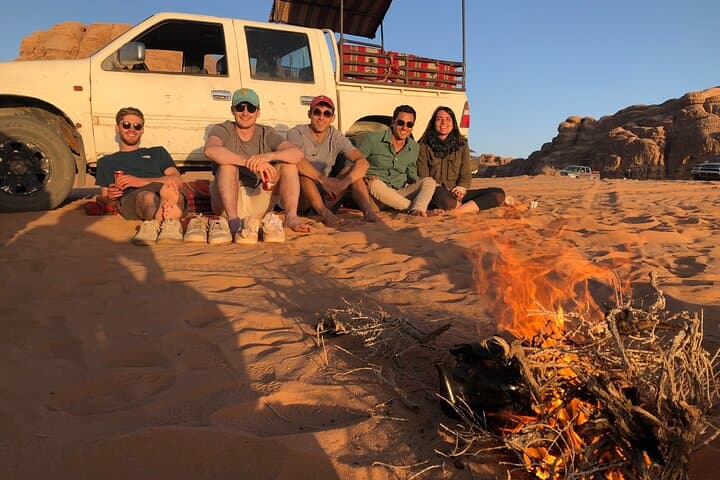
Culture is present in small, tactile ways—tea poured from a thermos beneath a fig tree, a driver’s patient direction up a sandy slope, and the low-profile camps where Bedouin families host visitors. Guides double as storytellers and custodians; they point out carved antelopes and the foot-shaped petroglyphs whose meanings predate written histories.
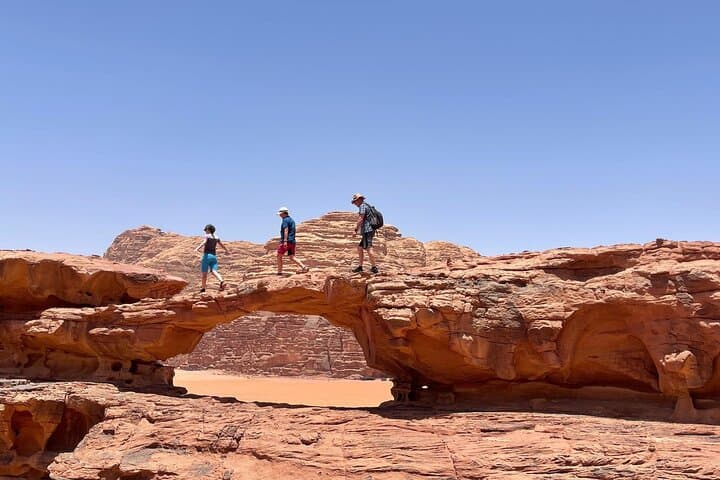
Practically, expect four to six stops spread across rough desert track. Distances between highlights are short in miles but generous in time because the terrain forces you to slow down and look: Lawrence’s Spring sits roughly 2 km south-west of Rum village, Khazali opens into a 100-meter fissure lined with inscriptions, and the Red Sand Dune rises like spilled rust beside a cliff. Little Rock Bridge and a lower rock bridge both offer short, accessible scrambles for wide views.
Wear sturdy shoes—sand gets into everything—and carry at least 1–1.5 liters of water per person for a half-day in heat. Sun protection is non-negotiable: hat, SPF, and lightweight long sleeves. The tour includes bottled water and hot tea, but bring small cash for tips or extra souvenirs. Mobility is moderate: short hikes and easy scrambles are likely, but those with limited mobility should check with the operator before booking.
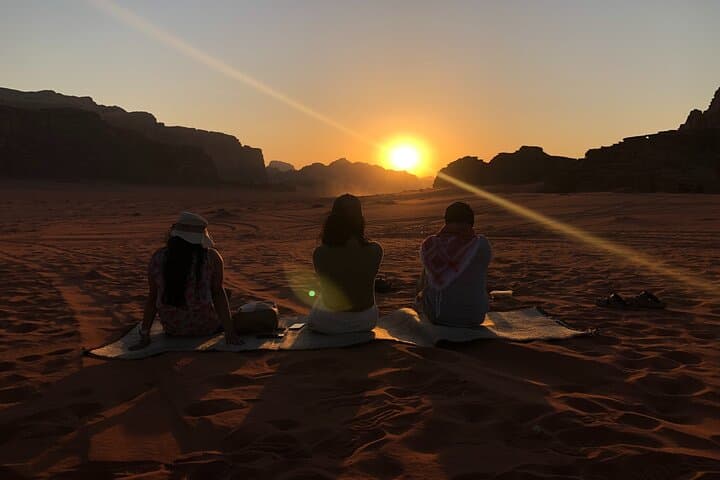
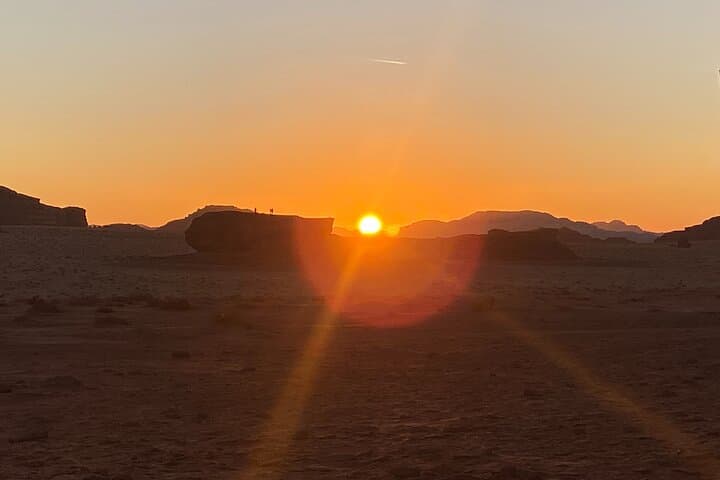
Timing is everything: this itinerary ends as the desert begins to cool and colors deepen, which is why the sunset stop is included free—the last light pulls the red sand into bright flame and flattens the shadows of the mountains into ink.
Respect the landscape: stay on vehicle tracks where directed, don’t climb on fragile petroglyph panels, and pack out rubbish. In return, Wadi Rum gives up views, quiet, and the feeling that for a few hours you’ve stepped into the skin of the desert.
moderate.
5 hours.
Moderate fitness; participants should be able to manage short walks, uneven ground and easy scrambles.
Meet at the public parking lot at the entrance to the village of Wadi Rum, about 6 km after the Wadi Rum Visitor Center.
Yes—many stops involve short, easy scrambles; families often join, but supervise children on narrow rock bridges and uneven terrain.
Confirm with the operator before booking; this tour description lists admission as included for several stops, but policies can change.
The jeep covers most ground, but some stops require short walks and climbing; contact the operator to discuss accessibility options.
Guides commonly speak Arabic and English; ask at booking if you need another language or a specifically trained guide.
Tipping is customary for drivers and guides; small cash tips are appreciated for good service and local economies.
Wadi Rum preserves inscriptions from Thamudic and Nabataean peoples and was a strategic and cultural crossroads; T.E. Lawrence’s accounts in Seven Pillars of Wisdom popularized it in the 20th century.
Wadi Rum is a protected area with visitor regulations to limit impact; follow local guidance, avoid disturbing archaeological sites, and pack out waste.
Wadi Rum - Day Tours operates guided outdoor trips and adventures with an emphasis on safety, stewardship, and memorable experiences.
Sand ripples under the tire tread and a low wind makes the sandstone towers lean into the day—Wadi Rum arrives not as a panorama but as a series of confrontations: dune against rock, silence against the crack of a guide’s voice. On this five-hour jeep tour, a local 4x4 driver threads through crimson dunes and narrows canyons, pausing where the desert keeps stories—Lawrence’s spring tucked above a cliff, petroglyphs carved into Khazali’s cleft, the fine slope of Al Ramal inviting a barefoot climb.
Sand ripples under the tire tread and a low wind makes the sandstone towers lean into the day—Wadi Rum arrives not as a panorama but as a series of confrontations: dune against rock, silence against the crack of a guide’s voice. On this five-hour jeep tour, a local 4x4 driver threads through crimson dunes and narrows canyons, pausing where the desert keeps stories—Lawrence’s spring tucked above a cliff, petroglyphs carved into Khazali’s cleft, the fine slope of Al Ramal inviting a barefoot climb.
The desert is younger than its rock faces suggest but older than most maps. Wadi Rum’s cliffs are primarily sandstone and granite sculpted over millions of years; wind and flash floods have carved bridges, arches, and channels that channel light into narrow bands at sunrise and dusk. Human history here threads through those formations: Thamudic and Nabataean inscriptions in Khazali Canyon, footprints of Bedouin life, and the echo of T.E. Lawrence’s passages that turned this landscape into a chapter of modern legend.
Culture is present in small, tactile ways—tea poured from a thermos beneath a fig tree, a driver’s patient direction up a sandy slope, and the low-profile camps where Bedouin families host visitors. Guides double as storytellers and custodians; they point out carved antelopes and the foot-shaped petroglyphs whose meanings predate written histories.
Practically, expect four to six stops spread across rough desert track. Distances between highlights are short in miles but generous in time because the terrain forces you to slow down and look: Lawrence’s Spring sits roughly 2 km south-west of Rum village, Khazali opens into a 100-meter fissure lined with inscriptions, and the Red Sand Dune rises like spilled rust beside a cliff. Little Rock Bridge and a lower rock bridge both offer short, accessible scrambles for wide views.
Wear sturdy shoes—sand gets into everything—and carry at least 1–1.5 liters of water per person for a half-day in heat. Sun protection is non-negotiable: hat, SPF, and lightweight long sleeves. The tour includes bottled water and hot tea, but bring small cash for tips or extra souvenirs. Mobility is moderate: short hikes and easy scrambles are likely, but those with limited mobility should check with the operator before booking.
Timing is everything: this itinerary ends as the desert begins to cool and colors deepen, which is why the sunset stop is included free—the last light pulls the red sand into bright flame and flattens the shadows of the mountains into ink.
Respect the landscape: stay on vehicle tracks where directed, don’t climb on fragile petroglyph panels, and pack out rubbish. In return, Wadi Rum gives up views, quiet, and the feeling that for a few hours you’ve stepped into the skin of the desert.