THE ADVENTURE COLLECTIVE® · Independent discovery and booking for outdoor travel

Two days in Wadi Rum compress an epoch of desert geology, Bedouin culture, and star-filled nights into a private, all-inclusive trip. Expect off-road tours, a night in camp, and practical travel logistics for those short on time.
Two days in Wadi Rum compress an epoch of desert geology, Bedouin culture, and star-filled nights into a private, all-inclusive trip. Expect off-road tours, a night in camp, and practical travel logistics for those short on time.
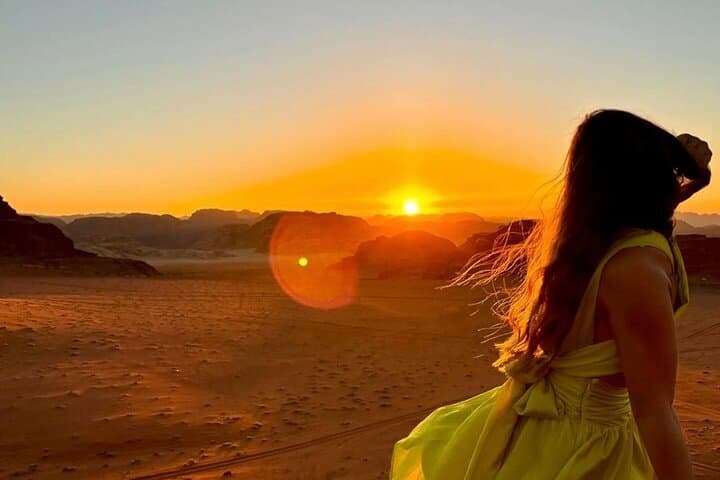
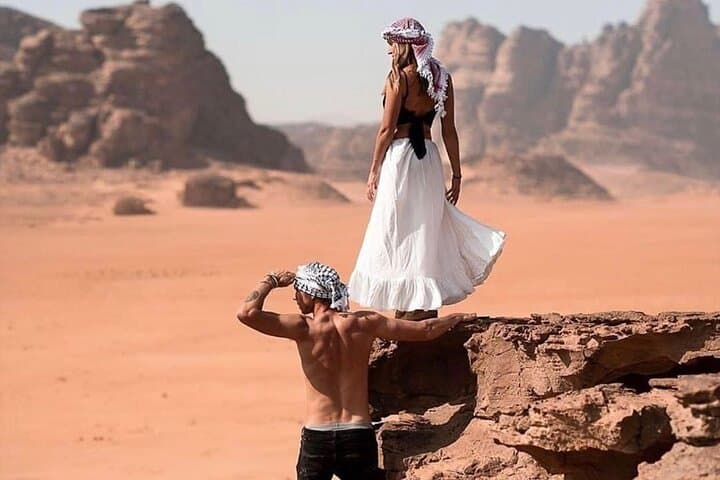
You step out of the air-conditioned vehicle and the desert rearranges your senses: a horizon of ochre sand punctuated by sheer sandstone walls, the air dry and suddenly very loud with silence.
Verified experiences and guided adventures in the surrounding area.
Operated by Tour Experts · Wadi Rum Village, Ma'an Governorate
You step out of the air-conditioned vehicle and the desert rearranges your senses: a horizon of ochre sand punctuated by sheer sandstone walls, the air dry and suddenly very loud with silence.
This two-day private tour turns those first impressions into a tidy but full desert experience—a morning transfer from Amman or Queen Alia International Airport, a day and evening inside Wadi Rum with dinner at a desert camp, and a short morning off-road loop before the return drive. The landscape itself reads like deep time: wind-sculpted cliffs, natural bridges, and broad sandplains carved by seasonal flash floods. Bedouin guides steer jeeps along narrow desert tracks and point out petroglyphs and ancient caravan routes, connecting geology with human history.
Wadi Rum's reputation was sealed in the 20th century by T.E. Lawrence, and more recently by UNESCO, which recognized the area for its combined natural and cultural significance. The stone is sandstone and granite, often layered and honeycombed by erosion; small climbs to viewpoints are usually brief—think short, steep scrambles rather than long ascents—making the terrain accessible even if the sand can sap your energy. Bedouin culture is present and active: many camps are family-run, and evenings center on communal meals, stories, and the startling clarity of the night sky.
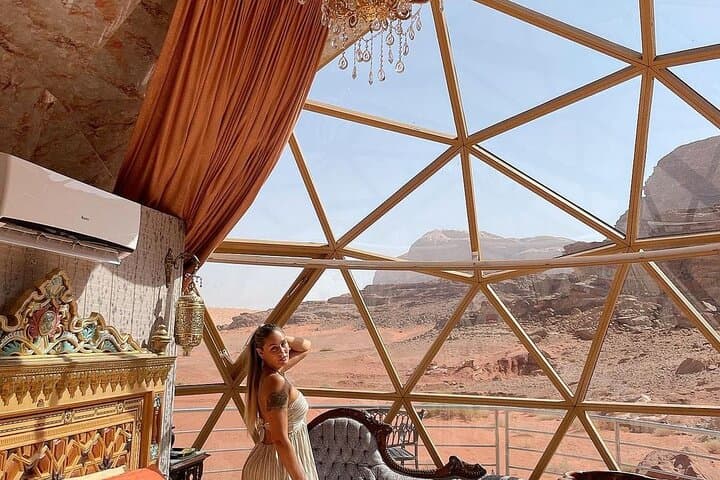
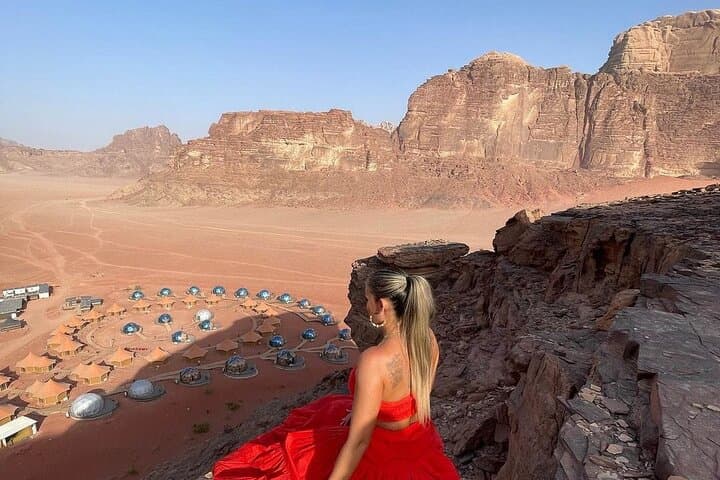
Practically, the tour is straightforward. Expect roughly four hours of travel each way if you're coming from Amman; from Aqaba the drive is closer to 1–1.5 hours. Activities concentrate on a 2‑hour morning tour by 4x4 that hits the highlights—arches, narrow canyons, and dunes—and an easy evening at camp. Camps vary by comfort level from VIP tents to super-luxury options that include private bathroom facilities. Hot-air balloon rides are possible but usually need to be booked in advance and paid for separately.
For planning: bring layered clothing for wide temperature swings, sun protection, at least 2–3 liters of water per person for daytime outings, and shoes that handle both sand and short rocky sections. If you have mobility concerns, note that some operators list wheelchair-accessible options for transfers and camps, but off-road highlights will usually require stepping up and down from vehicles.
This is an efficient way to experience one of Jordan’s most cinematic landscapes without a long itinerary. Travel light, respect local customs, and leave the tracks of your visit on the route map—not on the desert itself.
easy.
2 days.
Suitable for travelers in basic physical condition; some short walks and vehicle transfers require stepping up/down.
No—activities are short and accessible; the tour involves easy walks and boarding 4x4 vehicles, but bring basic mobility for getting in and out of jeeps.
No—balloon flights are optional, must be booked in advance, and are typically an extra cost payable directly to the operator.
Camps range from VIP tents to Super Luxury Martian tents depending on your booking option, with dinner and breakfast included.
Yes—pick-up is available from Queen Alia Airport or hotels in Amman and Aqaba; confirm your pickup point when booking and prepare flight details.
Some transfers and camps advertise wheelchair-accessible options, but off-road tours and certain viewpoints require stepping on and off vehicles and uneven terrain.
Full refund if canceled at least 6 full days before departure; 50% refund between 2–6 days; no refund within 2 days of departure.
Wadi Rum’s rock art and trails record human presence for millennia; T.E. Lawrence’s WWI-era campaigns amplified its global profile and it is now a UNESCO World Heritage site.
The desert’s biological soil crust and archaeological sites are fragile—stick to marked tracks, avoid driving across undisturbed surfaces, and support local Bedouin-run camps where possible.
Tour Experts operates guided outdoor trips and adventures with an emphasis on safety, stewardship, and memorable experiences.
You step out of the air-conditioned vehicle and the desert rearranges your senses: a horizon of ochre sand punctuated by sheer sandstone walls, the air dry and suddenly very loud with silence.
You step out of the air-conditioned vehicle and the desert rearranges your senses: a horizon of ochre sand punctuated by sheer sandstone walls, the air dry and suddenly very loud with silence.
This two-day private tour turns those first impressions into a tidy but full desert experience—a morning transfer from Amman or Queen Alia International Airport, a day and evening inside Wadi Rum with dinner at a desert camp, and a short morning off-road loop before the return drive. The landscape itself reads like deep time: wind-sculpted cliffs, natural bridges, and broad sandplains carved by seasonal flash floods. Bedouin guides steer jeeps along narrow desert tracks and point out petroglyphs and ancient caravan routes, connecting geology with human history.
Wadi Rum's reputation was sealed in the 20th century by T.E. Lawrence, and more recently by UNESCO, which recognized the area for its combined natural and cultural significance. The stone is sandstone and granite, often layered and honeycombed by erosion; small climbs to viewpoints are usually brief—think short, steep scrambles rather than long ascents—making the terrain accessible even if the sand can sap your energy. Bedouin culture is present and active: many camps are family-run, and evenings center on communal meals, stories, and the startling clarity of the night sky.
Practically, the tour is straightforward. Expect roughly four hours of travel each way if you're coming from Amman; from Aqaba the drive is closer to 1–1.5 hours. Activities concentrate on a 2‑hour morning tour by 4x4 that hits the highlights—arches, narrow canyons, and dunes—and an easy evening at camp. Camps vary by comfort level from VIP tents to super-luxury options that include private bathroom facilities. Hot-air balloon rides are possible but usually need to be booked in advance and paid for separately.
For planning: bring layered clothing for wide temperature swings, sun protection, at least 2–3 liters of water per person for daytime outings, and shoes that handle both sand and short rocky sections. If you have mobility concerns, note that some operators list wheelchair-accessible options for transfers and camps, but off-road highlights will usually require stepping up and down from vehicles.
This is an efficient way to experience one of Jordan’s most cinematic landscapes without a long itinerary. Travel light, respect local customs, and leave the tracks of your visit on the route map—not on the desert itself.