THE ADVENTURE COLLECTIVE® · Independent discovery and booking for outdoor travel

Mount up for a two‑hour horseback loop through Wadi Rum’s red dunes, petroglyph canyons and Lawrence‑linked ruins. This guided ride pairs Bedouin hospitality with easy pacing for first‑time riders and photographers.
Mount up for a two‑hour horseback loop through Wadi Rum’s red dunes, petroglyph canyons and Lawrence‑linked ruins. This guided ride pairs Bedouin hospitality with easy pacing for first‑time riders and photographers.
You mount at the Wadi Rum Rest House with hot Bedouin tea still steaming in your palm and the horns of the desert already in view. The horses breathe slow and sure; their hooves whisper on compacted sand as a line of sandstone towers rises from the plain like ancient ships. For the next two hours the desert sets the pace — a soft, steady lope across red dunes and stony plains punctuated by narrow canyons and Nabataean scars in the rock.
Verified experiences and guided adventures in the surrounding area.
Operated by Wadi Rum Bedouin Guide Tours · Wadi Rum Village, Ma'an Governorate
You mount at the Wadi Rum Rest House with hot Bedouin tea still steaming in your palm and the horns of the desert already in view. The horses breathe slow and sure; their hooves whisper on compacted sand as a line of sandstone towers rises from the plain like ancient ships. For the next two hours the desert sets the pace — a soft, steady lope across red dunes and stony plains punctuated by narrow canyons and Nabataean scars in the rock.
This stretch of southern Jordan has been walked, carved and camped in for millennia. Nabataean inscriptions and Thamudic petroglyphs mark Khazali Canyon’s walls; farther out, the ruins called Lawrence’s House sit on older cistern works and keep a story linked to the Arab Revolt and T. E. Lawrence. Geologically, Wadi Rum is a study in erosion — wind and occasional flash-floods chisel the sandstone and granite into arches, bridges and sheer cliffs that throw deep shadows by midafternoon.
Culture here is immediate. Your guide will pause to point out water basins cut into rock, and you’ll feel the Bedouin rhythm in simple gestures: tea served before the saddle, sand-boarding offered after the ride, and an easy, patient way of moving through exposed country. Conservation is a real thread — Wadi Rum is a protected area with fragile groundwater; staying on established routes and packing out waste keeps those ancient springs from drying further.
What to expect on the trail: routes cross soft red dunes (Al Hasany), flat desert pavements and short rocky scrambles to viewpoints like Little Rock Bridge. Distance covered is modest — expect 4–8 km of varied terrain with negligible elevation gain but intermittent rocky patches underfoot. The pace suits riders of mixed experience; guides manage speed and remounts, and brief walks are used through tight canyons such as Khazali.
Practicalities: meet at Wadi Rum Rest House (about 7 km from the Visitor Center) where the guide checks equipment and gives safety notes. Bring a small daypack with water, sun protection and an extra layer — desert temperatures swing fast. Wear closed-toe, sturdy shoes, long sleeves for sun and sand protection, and secure any loose gear on the saddle. Photographers will want a wide lens for dunes and a short telephoto for petroglyphs.
Bookings usually cap shared tours at 15 and include bottled water, tea and an option to try sand-boarding. Cancellation is flexible with a 24-hour full-refund policy. In two hours you’ll have ridden through geological time, touched human history and been held briefly by a desert that both dares and rewards measured curiosity.
easy.
2–3 hours.
Suitable for most fitness levels; riders should be comfortable sitting in a saddle for up to three hours and able to mount/dismount with guidance.
The tour is rated easy and suits beginners; you should be able to sit in a saddle for up to three hours and follow simple guidance from the guide.
Meet at Wadi Rum Rest House in the village (about 7 km from the Visitor Center); most travelers arrive via private transfer from Aqaba or booked shuttle from Petra.
No — guides manage pace and provide a quick briefing; riders with no experience are paired with calm horses.
Closed‑toe shoes, long sleeves, sun protection and a scarf for sand. Temperatures change quickly, so a light layer is useful.
Basic facilities exist at the Rest House; on the trail, shade is sparse — guides plan stops at canyons and viewpoints for brief breaks.
Children can join depending on size and comfort in a saddle; confirm age/weight limits with the operator when booking.
Wadi Rum contains Nabataean inscriptions and Thamudic petroglyphs; the area is also associated with T.E. Lawrence and the Arab Revolt.
Wadi Rum is a protected area; visitors are asked to stay on established routes, limit water use and avoid disturbing archaeological sites.
Wadi Rum Bedouin Guide Tours operates guided outdoor trips and adventures with an emphasis on safety, stewardship, and memorable experiences.
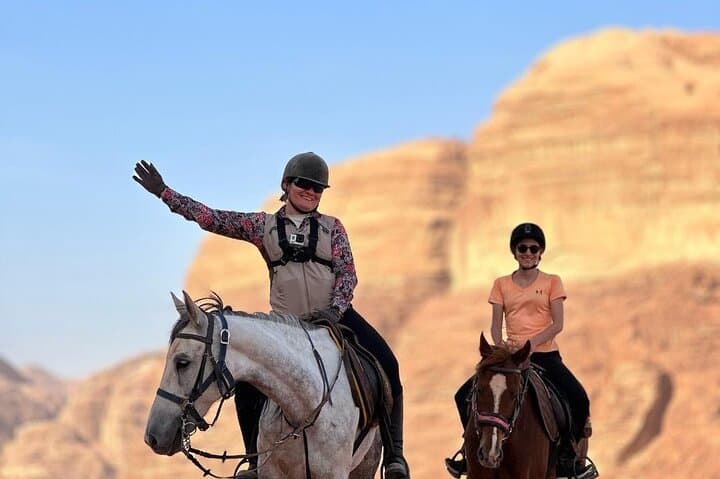
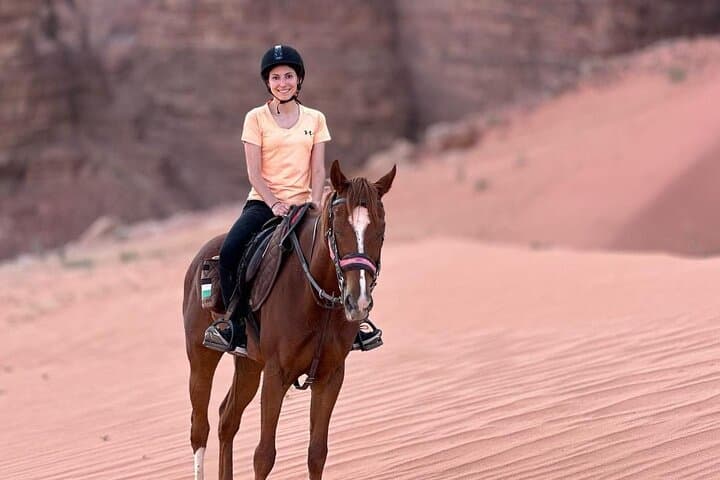
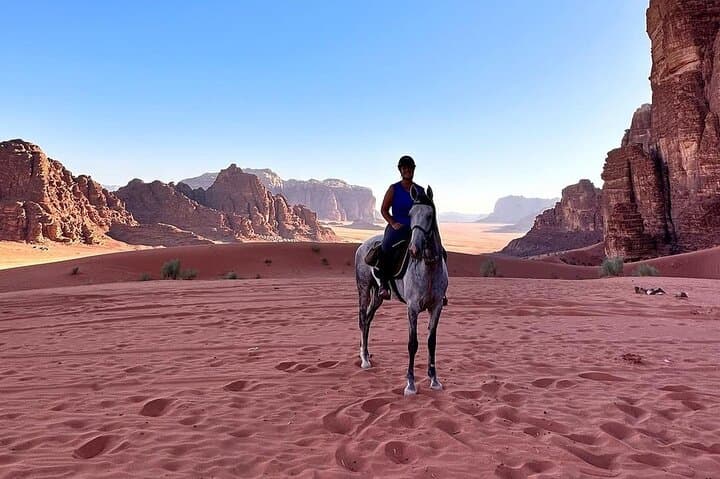
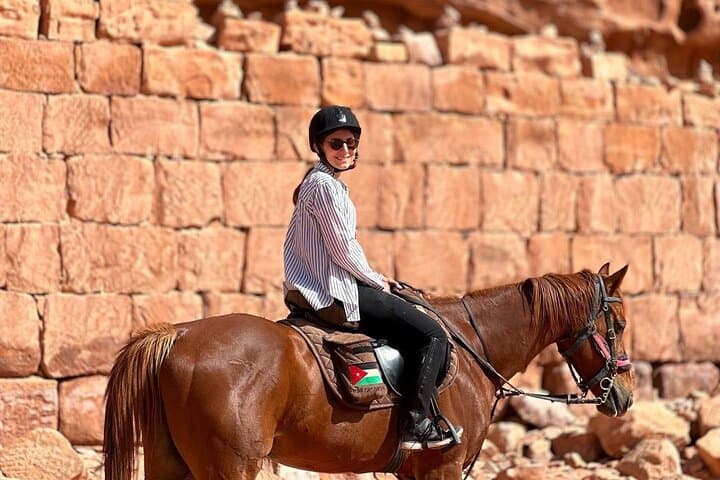
You mount at the Wadi Rum Rest House with hot Bedouin tea still steaming in your palm and the horns of the desert already in view. The horses breathe slow and sure; their hooves whisper on compacted sand as a line of sandstone towers rises from the plain like ancient ships. For the next two hours the desert sets the pace — a soft, steady lope across red dunes and stony plains punctuated by narrow canyons and Nabataean scars in the rock.
You mount at the Wadi Rum Rest House with hot Bedouin tea still steaming in your palm and the horns of the desert already in view. The horses breathe slow and sure; their hooves whisper on compacted sand as a line of sandstone towers rises from the plain like ancient ships. For the next two hours the desert sets the pace — a soft, steady lope across red dunes and stony plains punctuated by narrow canyons and Nabataean scars in the rock.
This stretch of southern Jordan has been walked, carved and camped in for millennia. Nabataean inscriptions and Thamudic petroglyphs mark Khazali Canyon’s walls; farther out, the ruins called Lawrence’s House sit on older cistern works and keep a story linked to the Arab Revolt and T. E. Lawrence. Geologically, Wadi Rum is a study in erosion — wind and occasional flash-floods chisel the sandstone and granite into arches, bridges and sheer cliffs that throw deep shadows by midafternoon.
Culture here is immediate. Your guide will pause to point out water basins cut into rock, and you’ll feel the Bedouin rhythm in simple gestures: tea served before the saddle, sand-boarding offered after the ride, and an easy, patient way of moving through exposed country. Conservation is a real thread — Wadi Rum is a protected area with fragile groundwater; staying on established routes and packing out waste keeps those ancient springs from drying further.
What to expect on the trail: routes cross soft red dunes (Al Hasany), flat desert pavements and short rocky scrambles to viewpoints like Little Rock Bridge. Distance covered is modest — expect 4–8 km of varied terrain with negligible elevation gain but intermittent rocky patches underfoot. The pace suits riders of mixed experience; guides manage speed and remounts, and brief walks are used through tight canyons such as Khazali.
Practicalities: meet at Wadi Rum Rest House (about 7 km from the Visitor Center) where the guide checks equipment and gives safety notes. Bring a small daypack with water, sun protection and an extra layer — desert temperatures swing fast. Wear closed-toe, sturdy shoes, long sleeves for sun and sand protection, and secure any loose gear on the saddle. Photographers will want a wide lens for dunes and a short telephoto for petroglyphs.
Bookings usually cap shared tours at 15 and include bottled water, tea and an option to try sand-boarding. Cancellation is flexible with a 24-hour full-refund policy. In two hours you’ll have ridden through geological time, touched human history and been held briefly by a desert that both dares and rewards measured curiosity.