THE ADVENTURE COLLECTIVE® · Independent discovery and booking for outdoor travel

Spend a half-day in Wadi Rum’s red-angled world—4x4 access takes you to petroglyph-studded canyons, a natural spring tied to Lawrence of Arabia, sweeping red dunes and a 15 m rock bridge. Expect short scrambles, strong light and Bedouin-led insights.
Spend a half-day in Wadi Rum’s red-angled world—4x4 access takes you to petroglyph-studded canyons, a natural spring tied to Lawrence of Arabia, sweeping red dunes and a 15 m rock bridge. Expect short scrambles, strong light and Bedouin-led insights.
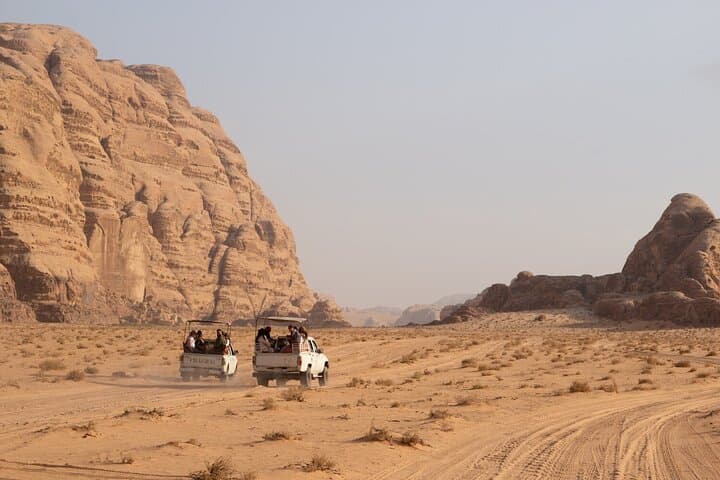
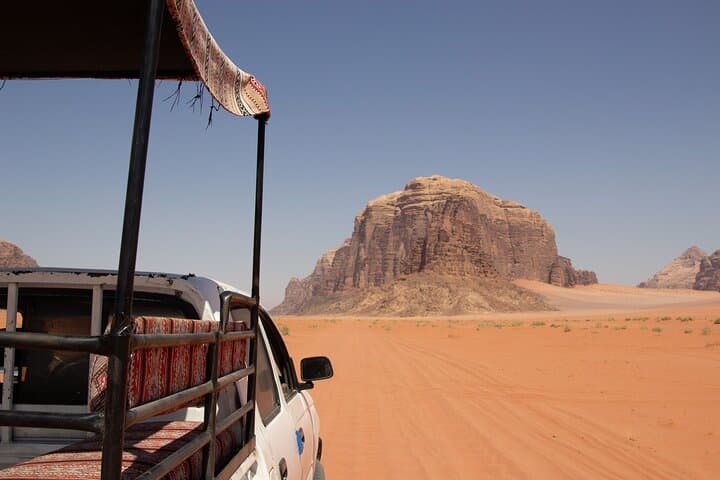
You arrive at the Wadi Rum Rest House before dawn and the desert meets you like a slow inhale: red sands smoothing into distant ridgelines, stone arches cut against a pale sky. The tour’s 4x4 rumbles off the dirt track and the valley opens—plates of sandstone stacked like weathered pages. Wind scours the faces of cliffs; in the gaps, narrow canyons wait to be explored on foot.
Verified experiences and guided adventures in the surrounding area.
Operated by Wadi Rum Desert Eyes · Wadi Rum Village, Ma'an Governorate
You arrive at the Wadi Rum Rest House before dawn and the desert meets you like a slow inhale: red sands smoothing into distant ridgelines, stone arches cut against a pale sky. The tour’s 4x4 rumbles off the dirt track and the valley opens—plates of sandstone stacked like weathered pages. Wind scours the faces of cliffs; in the gaps, narrow canyons wait to be explored on foot.
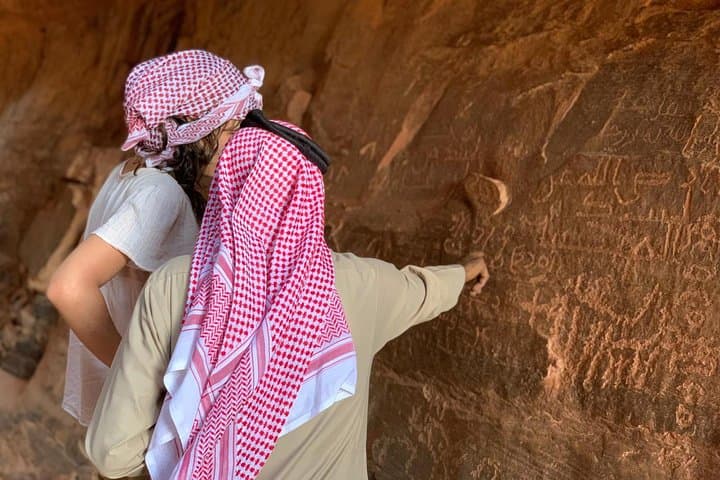
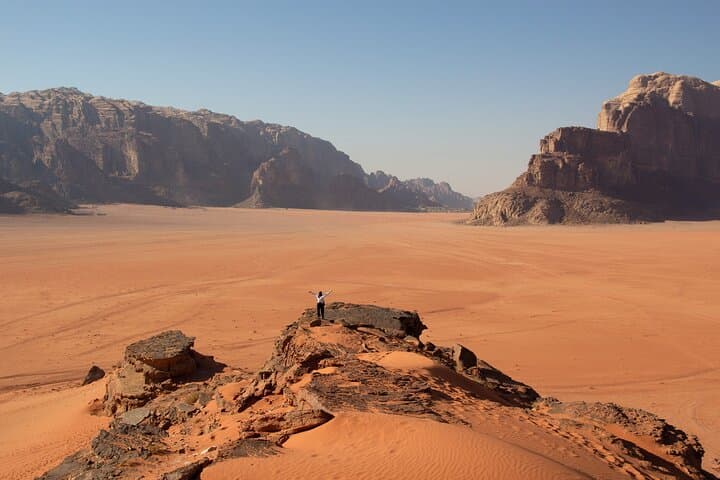
The half-day circuit stitches together Wadi Rum’s signature sites. At Ain Abu Aineh (Lawrence Spring) the vehicle stops and old inscriptions watch from the rock—petroglyphs left by Nabatean and earlier hands, joined later by graffiti attributed to T.E. Lawrence during the Arab Revolt. The Red Sand Dune is a quick climb and a view into how the desert shifts light; Khazali Canyon narrows to a corridor where ancient carvings crowd the walls. Abu Khashaba offers a quiet 20–30 minute walk through sculpted sandstone; the tour closes at Um Fruth, a 15-meter rock bridge that frames the valley below.
Geologically, this landscape is classic sandstone sculpting: wind and occasional flash floods carve fins, bridges and alcoves out of thick red siliciclastic beds. Culturally, Wadi Rum is part landscape and part living Bedouin country—the tours are often run by local drivers who share short stories about tribal life, wells and survival in this arid place. The area is protected; visitors are expected to respect fragile archaeological panels and the seasonal grazing rhythms of local flocks.
Practicalities are straightforward. The tour is private, roughly 4–4.5 hours, starting and ending at Wadi Rum Rest House (about 7 km from the Visitor Centre where you pay the 5 JD entrance fee or show the Jordan Pass). The route requires moderate fitness: you’ll hop in and out of a 4WD, scramble short rock steps and walk across loose sand. Wear sturdy shoes with traction, carry at least 1–1.5 liters of water, and use sun protection—shade is rare.
Timing matters: morning light is cooler and casts deeper shadows across the canyons, while late afternoon gilds the sandstone but raises temperature and wind. Photography is constant—arches and petroglyphs demand different lenses, and a short telephoto helps isolate details.
Limitations: the tour is not recommended for pregnant travelers or those with serious back, heart, or mobility issues, given vehicle access and short climbs. But for those ready to move at a steady pace, this half-day tour condenses Wadi Rum’s red dunes, narrow canyons and living history into a compact, memorable stretch of desert adventure.
moderate.
4–4.5 hours.
Moderate fitness—able to climb short rock sections, walk 20–30 minutes across sand, and get in/out of a 4x4.
The meeting point is Wadi Rum Rest House in Wadi Rum Village, about 7 km from the official Visitor Centre where you pay the entrance fee.
No—entrance (5 JD per person) is paid at the Visitor Centre unless you have a Jordan Pass, which covers it.
Yes, children can join but consider heat exposure and short climbs; supervise near cliffs and rock bridges.
Short approaches are possible, but avoid risky climbs—follow your guide and stick to designated viewpoints for safety.
Yes—Khazali Canyon and Ain Abu Aineh feature visible petroglyphs and inscriptions; do not touch or climb on them.
This tour involves entering/exiting a 4WD and scrambling; it's not recommended for those with serious spinal, heart, or mobility problems.
Wadi Rum has been inhabited for millennia and features Nabatean rock art; it also gained modern fame from T.E. Lawrence and the Arab Revolt in World War I.
Wadi Rum is a protected area; follow trail guidance, avoid disturbing archaeological sites, and minimize single-use plastics to reduce impact.
Wadi Rum Desert Eyes operates guided outdoor trips and adventures with an emphasis on safety, stewardship, and memorable experiences.
You arrive at the Wadi Rum Rest House before dawn and the desert meets you like a slow inhale: red sands smoothing into distant ridgelines, stone arches cut against a pale sky. The tour’s 4x4 rumbles off the dirt track and the valley opens—plates of sandstone stacked like weathered pages. Wind scours the faces of cliffs; in the gaps, narrow canyons wait to be explored on foot.
You arrive at the Wadi Rum Rest House before dawn and the desert meets you like a slow inhale: red sands smoothing into distant ridgelines, stone arches cut against a pale sky. The tour’s 4x4 rumbles off the dirt track and the valley opens—plates of sandstone stacked like weathered pages. Wind scours the faces of cliffs; in the gaps, narrow canyons wait to be explored on foot.
The half-day circuit stitches together Wadi Rum’s signature sites. At Ain Abu Aineh (Lawrence Spring) the vehicle stops and old inscriptions watch from the rock—petroglyphs left by Nabatean and earlier hands, joined later by graffiti attributed to T.E. Lawrence during the Arab Revolt. The Red Sand Dune is a quick climb and a view into how the desert shifts light; Khazali Canyon narrows to a corridor where ancient carvings crowd the walls. Abu Khashaba offers a quiet 20–30 minute walk through sculpted sandstone; the tour closes at Um Fruth, a 15-meter rock bridge that frames the valley below.
Geologically, this landscape is classic sandstone sculpting: wind and occasional flash floods carve fins, bridges and alcoves out of thick red siliciclastic beds. Culturally, Wadi Rum is part landscape and part living Bedouin country—the tours are often run by local drivers who share short stories about tribal life, wells and survival in this arid place. The area is protected; visitors are expected to respect fragile archaeological panels and the seasonal grazing rhythms of local flocks.
Practicalities are straightforward. The tour is private, roughly 4–4.5 hours, starting and ending at Wadi Rum Rest House (about 7 km from the Visitor Centre where you pay the 5 JD entrance fee or show the Jordan Pass). The route requires moderate fitness: you’ll hop in and out of a 4WD, scramble short rock steps and walk across loose sand. Wear sturdy shoes with traction, carry at least 1–1.5 liters of water, and use sun protection—shade is rare.
Timing matters: morning light is cooler and casts deeper shadows across the canyons, while late afternoon gilds the sandstone but raises temperature and wind. Photography is constant—arches and petroglyphs demand different lenses, and a short telephoto helps isolate details.
Limitations: the tour is not recommended for pregnant travelers or those with serious back, heart, or mobility issues, given vehicle access and short climbs. But for those ready to move at a steady pace, this half-day tour condenses Wadi Rum’s red dunes, narrow canyons and living history into a compact, memorable stretch of desert adventure.