THE ADVENTURE COLLECTIVE® · Independent discovery and booking for outdoor travel

Two days of jeep tracks, cinematic rock formations and a sunset scramble up Burdah Rock—then sleep under the stars in a traditional Bedouin tent. This private Wadi Rum tour pairs high-adrenal scrambling with cultural touchpoints and a night at Magic Bedouin Camp.
Two days of jeep tracks, cinematic rock formations and a sunset scramble up Burdah Rock—then sleep under the stars in a traditional Bedouin tent. This private Wadi Rum tour pairs high-adrenal scrambling with cultural touchpoints and a night at Magic Bedouin Camp.
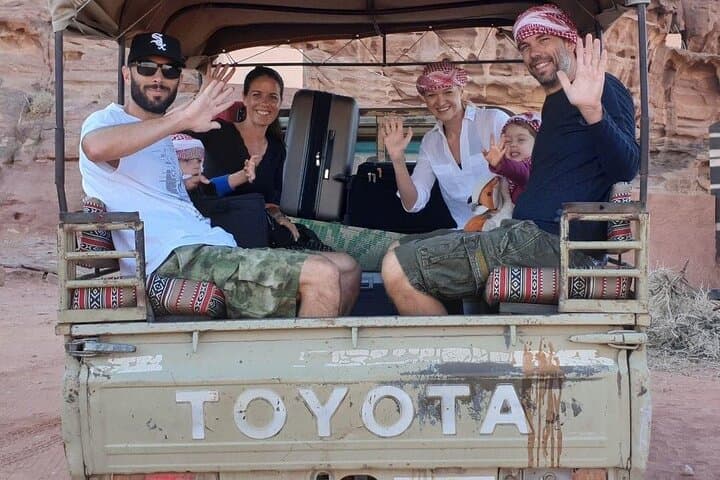
Dust rises like a slow pulse as the jeep peels off the asphalt and into Wadi Rum’s red expanse. On the first day the desert opens in cartographic folds—rock fins, mushroom stones, and the clean horizon where the sky seems to press close enough to breathe. Your guide, a Bedouin with a practiced eye for tracks and shade, navigates between sandstone cliffs toward Lawrence’s house, film locations, and a sand dune that begs a quick sprint and a reckless slide.
Verified experiences and guided adventures in the surrounding area.
Operated by Magic Bedouin Star Tours · Wadi Rum Village, Ma'an Governorate
Dust rises like a slow pulse as the jeep peels off the asphalt and into Wadi Rum’s red expanse. On the first day the desert opens in cartographic folds—rock fins, mushroom stones, and the clean horizon where the sky seems to press close enough to breathe. Your guide, a Bedouin with a practiced eye for tracks and shade, navigates between sandstone cliffs toward Lawrence’s house, film locations, and a sand dune that begs a quick sprint and a reckless slide.
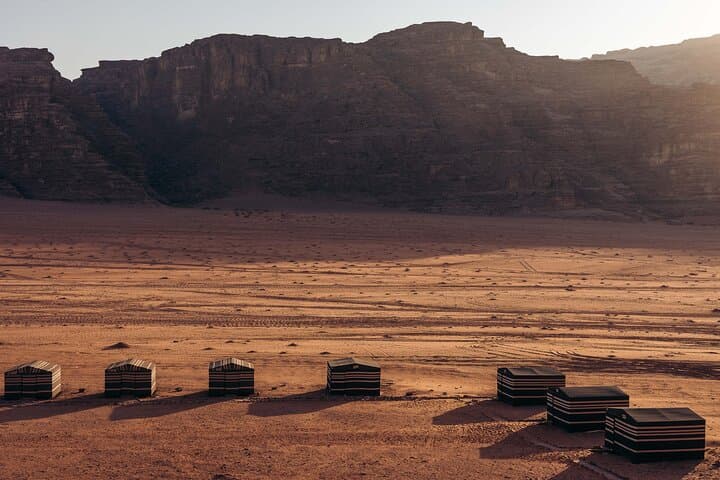
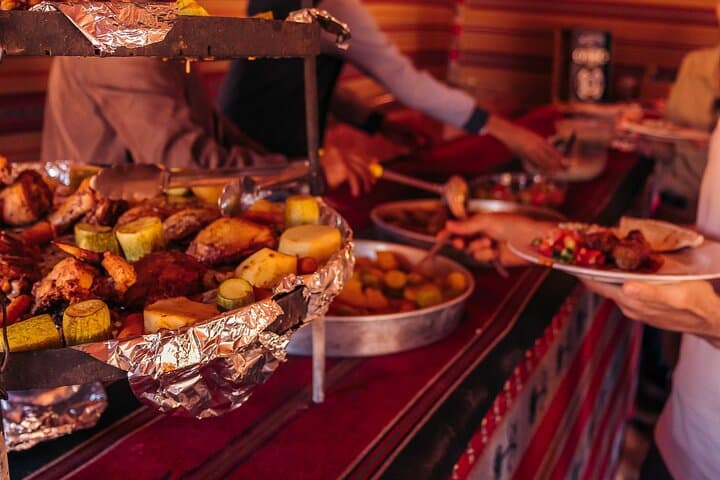
The story here is written in stone. Wadi Rum is part of the Arabian Shield; wind and time have sculpted its sandstone and granite into arches, bridges and smooth-faced towers. Bedouin presence in the valley dates back millennia; the same trails you follow were caravan routes and now serve as conduits for storytelling—tales of lawmen, filmmakers, and the desert’s stubborn residents. At night the Magic Bedouin Camp anchors you: a low-lit tent, the smell of mashawi over coals, and the kind of sky that makes every constellation look deliberate.
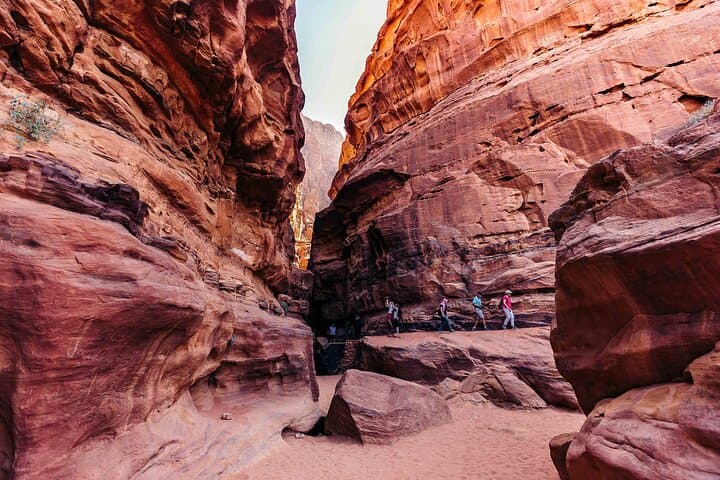
Day two is for Burdah Rock—the prize. Expect four hours of scrambling and hiking: steep sections that require hands, short rock-step climbs and ledges that test balance. From the top, a 360-degree sweep shows dunes folding into stone and, in the far distance, the rim of the white desert. Between these visceral moments are micro-encounters: a natural spring shadowed by fig trees, old inscriptions in narrow canyons, and the occasional ibex silhouette on a far crag.
Practical edge: the tour meets at Wadi Rum Rest House; show a Jordan Pass or be ready with 5 JOD for the protected-area fee. Wear sturdy hiking shoes—the Burdah sections are loose and exposed—and bring 2–3 liters of water, sunscreen, and a headlamp if you plan a post-dinner walk. The jeep sections minimize walking but don’t expect flat trails; be ready to climb, sit on rock, and trust your guide through narrow canyons and steep descents.
Timing matters: schedule the Burdah scramble for early morning or late afternoon to avoid the worst heat. Sandboard rentals are available near the dune (about 5 JOD). The trip is private and family-friendly but not recommended for those with serious spinal or heart issues, and it requires basic scrambling confidence. Leave no trace: the desert preserves its silence only if visitors do the same. For travelers craving dramatic geology, local culture, and the particular hush of desert nights, this two-day loop delivers an adrenal pulse and a long, slow exhale under the stars.
moderate.
2 days (approx. 48 hours).
Moderate fitness; comfortable with steep hikes, short technical scrambles and uneven terrain
Meet at the Wadi Rum Rest House (Wadi Rum Visitor Centre area); look for your host (often named Raad) who will pick you up in a jeep—arrival details are confirmed on booking.
No; the 5 JOD protected-area fee is not included unless you have a Jordan Pass, which waives the fee.
It’s a moderate to strenuous 3–4 hour scramble with exposed sections—expect about 3–4 km round-trip and roughly 200–300 m of elevation gain on steep, rocky terrain.
Families are welcome, but the tour is not suitable for infants who must sit on laps and for children who cannot manage scrambling or steep descents.
Pack layers for cool nights, a small overnight bag, toiletries, and any prescription medications—the camp provides basic bedding and dinner/tea.
Yes—this tour includes an English-speaking Bedouin guide who can share cultural context and lead hikes.
Wadi Rum has been inhabited for millennia and served as a corridor for trade; the valley gained international fame from T.E. Lawrence and multiple film productions that used its dramatic landscapes.
Wadi Rum is a protected area—stay on established paths where possible, pack out waste, and avoid touching ancient inscriptions to preserve them for future visitors.
Magic Bedouin Star Tours operates guided outdoor trips and adventures with an emphasis on safety, stewardship, and memorable experiences.
Dust rises like a slow pulse as the jeep peels off the asphalt and into Wadi Rum’s red expanse. On the first day the desert opens in cartographic folds—rock fins, mushroom stones, and the clean horizon where the sky seems to press close enough to breathe. Your guide, a Bedouin with a practiced eye for tracks and shade, navigates between sandstone cliffs toward Lawrence’s house, film locations, and a sand dune that begs a quick sprint and a reckless slide.
Dust rises like a slow pulse as the jeep peels off the asphalt and into Wadi Rum’s red expanse. On the first day the desert opens in cartographic folds—rock fins, mushroom stones, and the clean horizon where the sky seems to press close enough to breathe. Your guide, a Bedouin with a practiced eye for tracks and shade, navigates between sandstone cliffs toward Lawrence’s house, film locations, and a sand dune that begs a quick sprint and a reckless slide.
The story here is written in stone. Wadi Rum is part of the Arabian Shield; wind and time have sculpted its sandstone and granite into arches, bridges and smooth-faced towers. Bedouin presence in the valley dates back millennia; the same trails you follow were caravan routes and now serve as conduits for storytelling—tales of lawmen, filmmakers, and the desert’s stubborn residents. At night the Magic Bedouin Camp anchors you: a low-lit tent, the smell of mashawi over coals, and the kind of sky that makes every constellation look deliberate.
Day two is for Burdah Rock—the prize. Expect four hours of scrambling and hiking: steep sections that require hands, short rock-step climbs and ledges that test balance. From the top, a 360-degree sweep shows dunes folding into stone and, in the far distance, the rim of the white desert. Between these visceral moments are micro-encounters: a natural spring shadowed by fig trees, old inscriptions in narrow canyons, and the occasional ibex silhouette on a far crag.
Practical edge: the tour meets at Wadi Rum Rest House; show a Jordan Pass or be ready with 5 JOD for the protected-area fee. Wear sturdy hiking shoes—the Burdah sections are loose and exposed—and bring 2–3 liters of water, sunscreen, and a headlamp if you plan a post-dinner walk. The jeep sections minimize walking but don’t expect flat trails; be ready to climb, sit on rock, and trust your guide through narrow canyons and steep descents.
Timing matters: schedule the Burdah scramble for early morning or late afternoon to avoid the worst heat. Sandboard rentals are available near the dune (about 5 JOD). The trip is private and family-friendly but not recommended for those with serious spinal or heart issues, and it requires basic scrambling confidence. Leave no trace: the desert preserves its silence only if visitors do the same. For travelers craving dramatic geology, local culture, and the particular hush of desert nights, this two-day loop delivers an adrenal pulse and a long, slow exhale under the stars.