THE ADVENTURE COLLECTIVE® · Independent discovery and booking for outdoor travel

Drop into Oman’s Wadi Mibam for a full-day canyoning adventure—abseils, swims, and slickrock scrambles framed by palm terraces and bright limestone pools. Guided by local pros with safety gear and an Omani lunch, this route blends geology, culture, and pure movement through water-carved stone.
Drop into Oman’s Wadi Mibam for a full-day canyoning adventure—abseils, swims, and slickrock scrambles framed by palm terraces and bright limestone pools. Guided by local pros with safety gear and an Omani lunch, this route blends geology, culture, and pure movement through water-carved stone.
Dawn creeps over the Gulf of Oman as the road leaves the coast and tilts toward the high, pale ramparts of the Hajar. The vehicle climbs a rocky track to Mibam, a cliff-perched village where date palms cling to terraces and goats patrol the ledges like sentries. Below, a ribbon of jade water threads through limestone—Wadi Mibam—its pools cool and unhurried until the canyon narrows and the current starts to push, daring you to follow. Helmets click, ropes hum, and the first abseil drops you into a chamber of echoed water and sun-skimmed walls.
Verified experiences and guided adventures in the surrounding area.
Operated by Omanosaura · Tiwi, Ash Sharqiyah South
Dawn creeps over the Gulf of Oman as the road leaves the coast and tilts toward the high, pale ramparts of the Hajar. The vehicle climbs a rocky track to Mibam, a cliff-perched village where date palms cling to terraces and goats patrol the ledges like sentries. Below, a ribbon of jade water threads through limestone—Wadi Mibam—its pools cool and unhurried until the canyon narrows and the current starts to push, daring you to follow. Helmets click, ropes hum, and the first abseil drops you into a chamber of echoed water and sun-skimmed walls.
This route is classic Oman: a blend of canyoning, swimming, and short scrambles through a wadi carved by flash floods over millions of years. The Hajar Mountains are uplifted limestone and ophiolite—rock lifted from the ancient Tethys seafloor—etched by rain into stair-steps, pour-overs, and slot corridors. Along the rim, aflaj irrigation channels still guide water to terraces as they have for centuries, a Unesco-recognized system that keeps villages like Mibam green against the stone. Tiwi and nearby Sur once traded across the Indian Ocean; today the draw is inland, where the wadi invites you into its shade and sound.
With a professional Omani guide team, expect a full-day outing: roughly 8–10 hours including transport, a traditional lunch, and several rappels (often 8–15 m), short swims between turquoise pools, and boulder-hopping on sun-warmed rock. The canyon asks for confidence rather than speed. You’ll thread narrow passages where water pulses at your calves, then float under hanging ferns while swallows stitch the sky. The guides carry internationally licensed gear and keep things light with team-building challenges—simple, fun tasks that turn a group of strangers into a rope team.
Practicalities matter here. Footing is slick; shoes with sticky rubber cut the drama. In the shoulder seasons (October–April), conditions are prime: warm water, bearable heat, and clear skies. Summer raises the temperature and the stakes—start early and plan for aggressive hydration. As with any wadi, rain upstream can switch moods fast; trips are adjusted or postponed if storms threaten. Bring quick-dry layers, a compact dry bag for essentials, and a bias for modest dress through the village.
The day ends with the coast reappearing like a promise, the canyon’s cool still clinging to your skin. Tea and dates reset the senses. The Hajar relaxes its grip, and the track unwinds to the sea, where the memory of clean rock and running water keeps tugging, asking when you’ll come back.
challenging.
8–10 hours.
Comfortable hiking over uneven terrain with sustained heat exposure; confident swimmer with good general fitness.
No, beginners are welcome. Guides handle rigging and coaching, but you should be comfortable in water and on uneven terrain.
Expect several short swims between pools, often 10–40 meters each. Flotation aids can be provided on request.
Wear quick-dry layers and grippy closed-toe shoes; avoid cotton. Bring a change of clothes for after the canyon.
The track is rough and steep, but guided tours include transport in an appropriate vehicle.
October through April offers manageable heat and clear conditions. Summer outings start early to avoid peak temperatures.
Guides check forecasts and water levels; trips are rescheduled or rerouted if storms threaten upstream catchments.
The Tiwi–Sur coast linked Oman to Indian Ocean trade routes, while upland villages like Mibam relied on aflaj irrigation to farm dates and limes on narrow terraces.
Wadis are sensitive—pack out all waste, avoid sunscreen that damages freshwater ecosystems, and keep to established approaches to limit erosion.
Omanosaura operates guided outdoor trips and adventures with an emphasis on safety, stewardship, and memorable experiences.
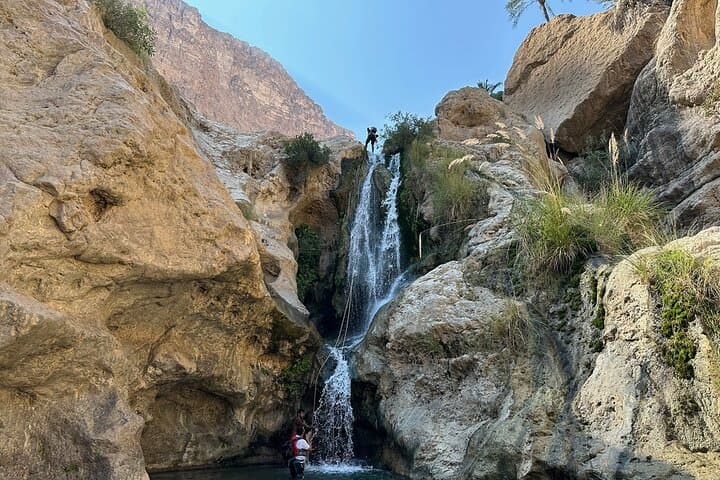
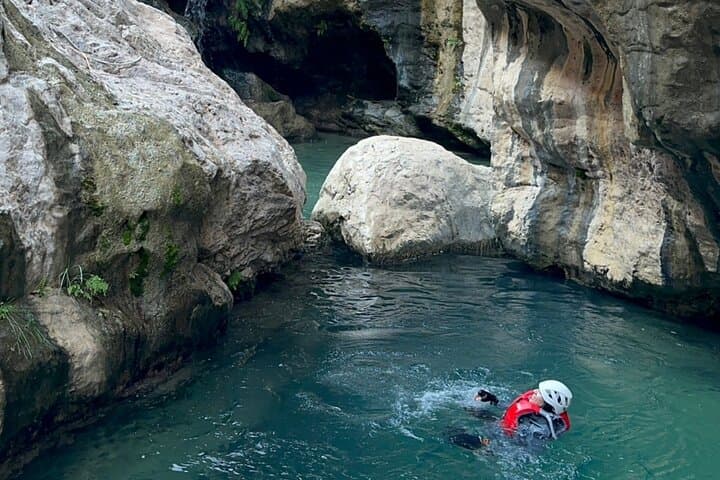
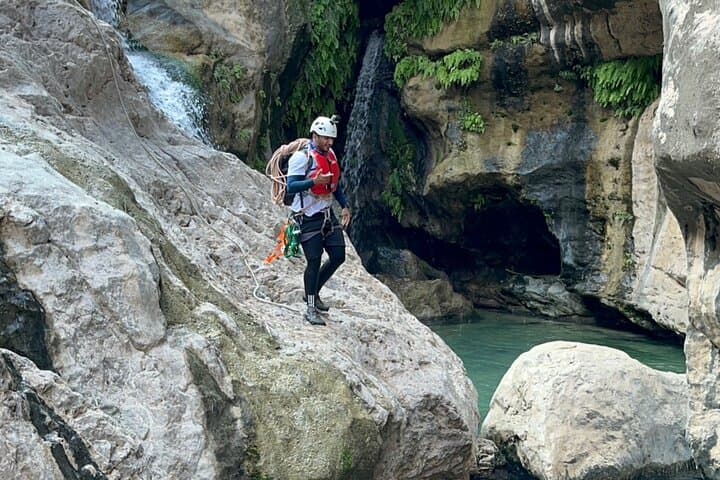
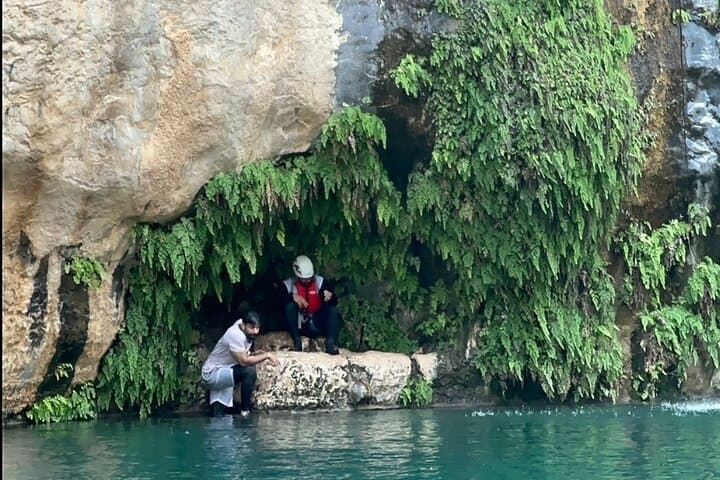
Dawn creeps over the Gulf of Oman as the road leaves the coast and tilts toward the high, pale ramparts of the Hajar. The vehicle climbs a rocky track to Mibam, a cliff-perched village where date palms cling to terraces and goats patrol the ledges like sentries. Below, a ribbon of jade water threads through limestone—Wadi Mibam—its pools cool and unhurried until the canyon narrows and the current starts to push, daring you to follow. Helmets click, ropes hum, and the first abseil drops you into a chamber of echoed water and sun-skimmed walls.
Dawn creeps over the Gulf of Oman as the road leaves the coast and tilts toward the high, pale ramparts of the Hajar. The vehicle climbs a rocky track to Mibam, a cliff-perched village where date palms cling to terraces and goats patrol the ledges like sentries. Below, a ribbon of jade water threads through limestone—Wadi Mibam—its pools cool and unhurried until the canyon narrows and the current starts to push, daring you to follow. Helmets click, ropes hum, and the first abseil drops you into a chamber of echoed water and sun-skimmed walls.
This route is classic Oman: a blend of canyoning, swimming, and short scrambles through a wadi carved by flash floods over millions of years. The Hajar Mountains are uplifted limestone and ophiolite—rock lifted from the ancient Tethys seafloor—etched by rain into stair-steps, pour-overs, and slot corridors. Along the rim, aflaj irrigation channels still guide water to terraces as they have for centuries, a Unesco-recognized system that keeps villages like Mibam green against the stone. Tiwi and nearby Sur once traded across the Indian Ocean; today the draw is inland, where the wadi invites you into its shade and sound.
With a professional Omani guide team, expect a full-day outing: roughly 8–10 hours including transport, a traditional lunch, and several rappels (often 8–15 m), short swims between turquoise pools, and boulder-hopping on sun-warmed rock. The canyon asks for confidence rather than speed. You’ll thread narrow passages where water pulses at your calves, then float under hanging ferns while swallows stitch the sky. The guides carry internationally licensed gear and keep things light with team-building challenges—simple, fun tasks that turn a group of strangers into a rope team.
Practicalities matter here. Footing is slick; shoes with sticky rubber cut the drama. In the shoulder seasons (October–April), conditions are prime: warm water, bearable heat, and clear skies. Summer raises the temperature and the stakes—start early and plan for aggressive hydration. As with any wadi, rain upstream can switch moods fast; trips are adjusted or postponed if storms threaten. Bring quick-dry layers, a compact dry bag for essentials, and a bias for modest dress through the village.
The day ends with the coast reappearing like a promise, the canyon’s cool still clinging to your skin. Tea and dates reset the senses. The Hajar relaxes its grip, and the track unwinds to the sea, where the memory of clean rock and running water keeps tugging, asking when you’ll come back.