THE ADVENTURE COLLECTIVE® · Independent discovery and booking for outdoor travel

Paddle a traditional Hawaiian wa'a from Kamakahonu Beach, where King Kamehameha once watched his kingdom. This accessible, one-hour canoe tour blends hands-on instruction with cultural narratives and coastal views of Kailua Bay.
Paddle a traditional Hawaiian wa'a from Kamakahonu Beach, where King Kamehameha once watched his kingdom. This accessible, one-hour canoe tour blends hands-on instruction with cultural narratives and coastal views of Kailua Bay.
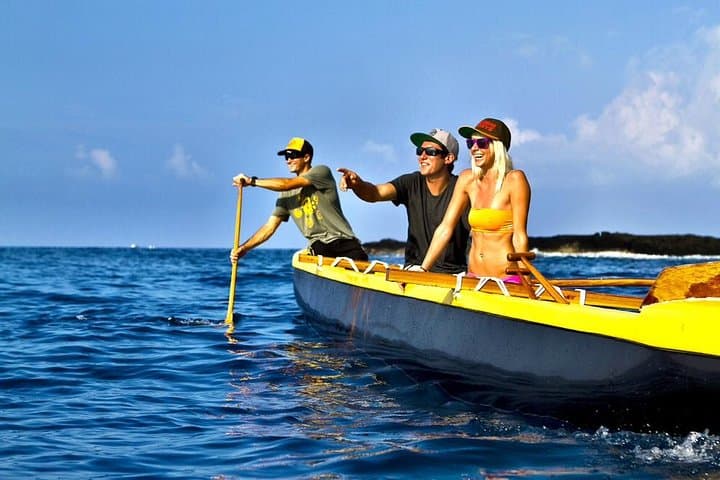
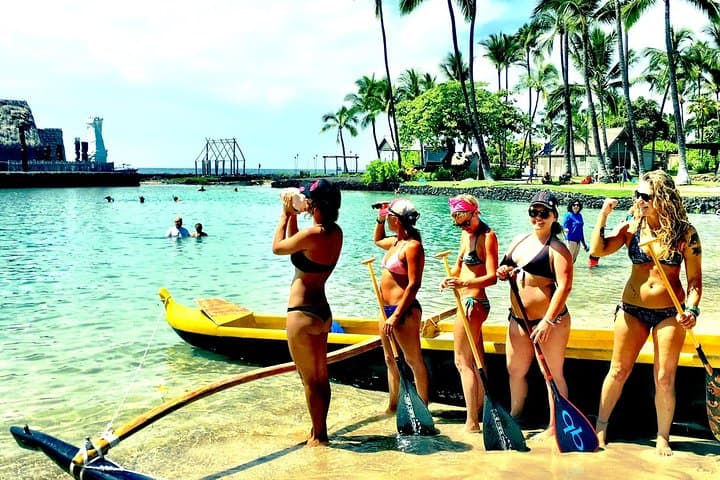
Early morning in Kailua-Kona feels like the island taking a breath: the ocean smooth as glass, the pali cliffs bathed in soft light, and a line of traditional Hawaiian outrigger canoes rocking gently beyond the surf. Standing on Kamakahonu Beach behind the King Kamehameha Kona Beach Hotel, paddlers step into a craft whose shape and rhythm carry centuries of Hawaiian navigation and ceremony. The steersman calls cadence, the blade slips silver into the water, and the bay answers with a steady push that makes even first-timers feel part of something older than tourism.
Verified experiences and guided adventures in the surrounding area.
Operated by Kona Boys · Kailua-Kona, Hawaii
Early morning in Kailua-Kona feels like the island taking a breath: the ocean smooth as glass, the pali cliffs bathed in soft light, and a line of traditional Hawaiian outrigger canoes rocking gently beyond the surf. Standing on Kamakahonu Beach behind the King Kamehameha Kona Beach Hotel, paddlers step into a craft whose shape and rhythm carry centuries of Hawaiian navigation and ceremony. The steersman calls cadence, the blade slips silver into the water, and the bay answers with a steady push that makes even first-timers feel part of something older than tourism.
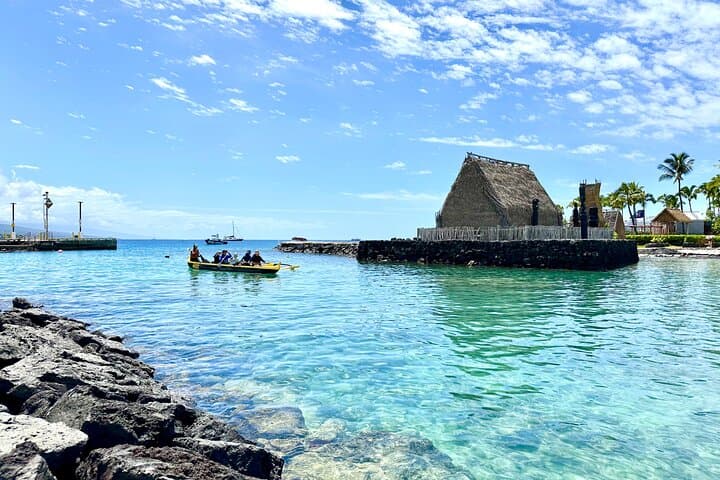
The route hugs Kailua Bay and passes sites that read like a condensed history of Hawaii’s western contact and royal life: Ahuʻena Heiau, where King Kamehameha held court; the early missionary-era structures that mark the town’s turn toward the modern era; and the cluster of piers that have long been the island’s ocean stage. Wa’a—outrigger canoes—are not props. They are living instruments of culture and community. Guides mix practical paddling instruction with short stories about ali‘i (chiefs), navigational lore, and the ocean’s role in daily Hawaiian life.
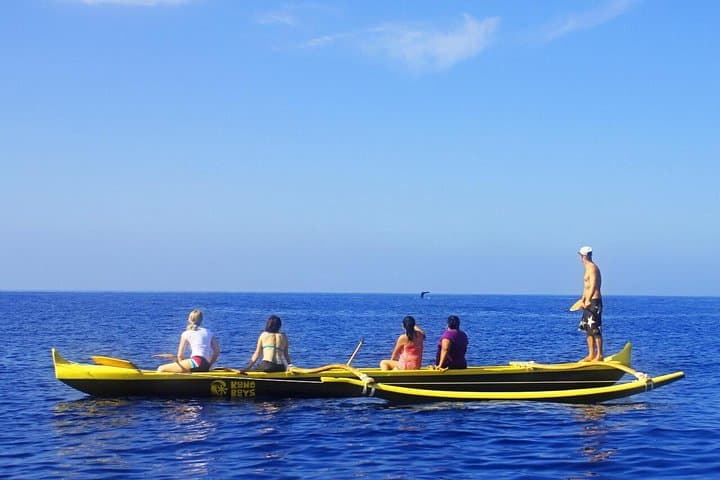
Geologically, Kona’s shore is younger lava fields meeting persistent surf, which produces clear water and abundant marine life. That juxtaposition—black rock and tropical sea—creates the reef systems that turtles, reef fish, and spinner dolphins use as highways and hangouts. In winter months, humpback whales migrate nearshore, filling the ocean with a presence larger than any paddler can control.
Practical guidance is straightforward: this is an accessible one-hour experience suited to nearly every fitness level. Paddling technique is taught on the beach, lifejackets are provided, and the steersman steers; participants supply the motion. The water can be glassy or slightly choppy depending on tradewinds, so expect a workout for your core and shoulders. Wear reef-safe sunscreen, bring a dry bag for your phone, and plan for sun more than rain—the Kona sun is fierce.
Timing matters: mornings bring calmer seas and softer light for photos; late afternoon can gift a radiant sunset behind Hualālai. Local conservation etiquette is part of the experience—don’t touch coral or marine life, keep distance from resting turtles, and use reef-safe products. Bookings are small-group and often sell out around holidays and cruise-ship arrivals, so reserve ahead.
On water, the canoe makes history immediate: each stroke links paddle to past, island to ocean, and visitor to place. It’s equal parts physical rhythm and cultural briefing, a way to leave Kailua Bay with both a tired upper body and a fuller understanding of what the sea has always meant to Hawai‘i.
easy.
1 hour.
Suitable for most fitness levels; expect a light-to-moderate upper-body workout from paddling.
Yes—families are welcome and the operator notes infants and small children can ride; the canoe team manages stability and lifejackets are provided.
No—guides teach basic stroke technique and the steersman handles navigation, so beginners are fine.
Tours are canceled for unsafe conditions; cancelations at least 24 hours prior are fully refundable per the operator’s policy.
Yes—lifejackets are supplied for all participants as part of the excursion.
You can bring them but use a waterproof bag; the operator recommends securing electronics to avoid water damage.
Yes—guides share history about King Kamehameha, local sites like Ahuʻena Heiau, and traditional canoe practices during the tour.
Tours pass Ahuʻena Heiau and sites where King Kamehameha ruled; the area was a political and religious center in pre-contact Hawai‘i.
Guests are asked to use reef-safe sunscreen, avoid touching coral or turtles, and follow guide instructions to minimize disturbance to marine life.
Kona Boys operates guided outdoor trips and adventures with an emphasis on safety, stewardship, and memorable experiences.
Early morning in Kailua-Kona feels like the island taking a breath: the ocean smooth as glass, the pali cliffs bathed in soft light, and a line of traditional Hawaiian outrigger canoes rocking gently beyond the surf. Standing on Kamakahonu Beach behind the King Kamehameha Kona Beach Hotel, paddlers step into a craft whose shape and rhythm carry centuries of Hawaiian navigation and ceremony. The steersman calls cadence, the blade slips silver into the water, and the bay answers with a steady push that makes even first-timers feel part of something older than tourism.
Early morning in Kailua-Kona feels like the island taking a breath: the ocean smooth as glass, the pali cliffs bathed in soft light, and a line of traditional Hawaiian outrigger canoes rocking gently beyond the surf. Standing on Kamakahonu Beach behind the King Kamehameha Kona Beach Hotel, paddlers step into a craft whose shape and rhythm carry centuries of Hawaiian navigation and ceremony. The steersman calls cadence, the blade slips silver into the water, and the bay answers with a steady push that makes even first-timers feel part of something older than tourism.
The route hugs Kailua Bay and passes sites that read like a condensed history of Hawaii’s western contact and royal life: Ahuʻena Heiau, where King Kamehameha held court; the early missionary-era structures that mark the town’s turn toward the modern era; and the cluster of piers that have long been the island’s ocean stage. Wa’a—outrigger canoes—are not props. They are living instruments of culture and community. Guides mix practical paddling instruction with short stories about ali‘i (chiefs), navigational lore, and the ocean’s role in daily Hawaiian life.
Geologically, Kona’s shore is younger lava fields meeting persistent surf, which produces clear water and abundant marine life. That juxtaposition—black rock and tropical sea—creates the reef systems that turtles, reef fish, and spinner dolphins use as highways and hangouts. In winter months, humpback whales migrate nearshore, filling the ocean with a presence larger than any paddler can control.
Practical guidance is straightforward: this is an accessible one-hour experience suited to nearly every fitness level. Paddling technique is taught on the beach, lifejackets are provided, and the steersman steers; participants supply the motion. The water can be glassy or slightly choppy depending on tradewinds, so expect a workout for your core and shoulders. Wear reef-safe sunscreen, bring a dry bag for your phone, and plan for sun more than rain—the Kona sun is fierce.
Timing matters: mornings bring calmer seas and softer light for photos; late afternoon can gift a radiant sunset behind Hualālai. Local conservation etiquette is part of the experience—don’t touch coral or marine life, keep distance from resting turtles, and use reef-safe products. Bookings are small-group and often sell out around holidays and cruise-ship arrivals, so reserve ahead.
On water, the canoe makes history immediate: each stroke links paddle to past, island to ocean, and visitor to place. It’s equal parts physical rhythm and cultural briefing, a way to leave Kailua Bay with both a tired upper body and a fuller understanding of what the sea has always meant to Hawai‘i.