THE ADVENTURE COLLECTIVE® · Independent discovery and booking for outdoor travel

Walk the French Quarter with a licensed guide and learn the real history behind Marie Laveau, Congo Square and New Orleans’ voodoo traditions. This 90-minute tour mixes folklore, documented history and a few photo stops in one of America’s most storied neighborhoods.
Walk the French Quarter with a licensed guide and learn the real history behind Marie Laveau, Congo Square and New Orleans’ voodoo traditions. This 90-minute tour mixes folklore, documented history and a few photo stops in one of America’s most storied neighborhoods.
You start inside Bon’s Street Food as the Quarter wakes: the scent of fried dough and coffee hangs in the air, street performers tune up, and a guide lifts an umbrella like a flag to gather the group. For the next 90 minutes the city rearranges itself — the Mississippi leans in, the streets remember old languages, and buildings seem to lean closer to tell you their stories. The tour threads through wrought-iron balconies and uneven stone, stopping where history and belief meet: a voodoo shop with talismans in the window, a temple whose painted doors have seen decades of petitions, and the place associated with Marie Laveau, whose name still draws both reverence and curiosity.
Verified experiences and guided adventures in the surrounding area.
Operated by New Orleans Ghost Adventures · New Orleans, Louisiana
You start inside Bon’s Street Food as the Quarter wakes: the scent of fried dough and coffee hangs in the air, street performers tune up, and a guide lifts an umbrella like a flag to gather the group. For the next 90 minutes the city rearranges itself — the Mississippi leans in, the streets remember old languages, and buildings seem to lean closer to tell you their stories. The tour threads through wrought-iron balconies and uneven stone, stopping where history and belief meet: a voodoo shop with talismans in the window, a temple whose painted doors have seen decades of petitions, and the place associated with Marie Laveau, whose name still draws both reverence and curiosity.
New Orleans is a city shaped by trade winds, colonial claims and an influx of West African traditions. Voodoo here is not a cartoonish oddity but a set of social and spiritual practices forged under slavery and adapted alongside Catholic ritual. Congo Square — once a legal open space where enslaved people gathered to sing, dance and preserve memory — is part public park and part cultural landmark; it’s where rhythms were kept and later helped birth jazz. The built environment is geology of human hands: clay-fed streets, river levees, and buildings raised to cope with water and time.
Culturally, the tour balances folklore with documented history. Guides explain how Marie Laveau’s reputation merged real civic influence with myth, how funeral rites and herbal knowledge circulated through neighborhoods, and how jazz and spiritual tradition intersected through markets and courtyards. As the guide walks, the French Quarter’s architecture becomes a running glossary — ironwork, courtyards, and alleys that once served as exchange routes for stories and goods.
Practicalities are straightforward. The tour is 90 minutes, mostly flat but on uneven brick and cobblestone; expect walking at a steady, conversational pace. Meet inside Bon’s Street Food (next to Landry’s Seafood); tours operate in most weather so bring a light rain jacket in summer storms. Accessibility is noted as possible, but street conditions and crowds can challenge mobility — ask the operator if you need accommodations. Wear supportive shoes, carry a refillable water bottle, and plan for sun or sudden showers depending on season. Photography is welcome, but be respectful at cemeteries and private spaces and follow your guide’s directions. Tickets are mobile-friendly and refundable with 24-hour notice; groups are limited for an intimate feel. For travelers keen on history, religion, or music, this is a compact, concentrated primer on the cultural currents that gave New Orleans its voice.
moderate.
90 minutes.
Light to moderate fitness for walking and standing; able to navigate uneven sidewalks.
Meet just inside Bon’s Street Food (next to Landry’s Seafood); walk through the patio and enter the large double doors for check-in.
The operator notes wheelchair accessibility, but cobblestones, narrow sidewalks and crowds may make parts difficult — contact the provider to discuss accommodations.
Tours typically discuss Marie Laveau and stop for photo ops nearby; access inside the cemetery is restricted and may require special permits or licensed guides.
Tours operate in most weather but can be canceled for severe conditions; the cancellation policy offers a full refund if canceled at least 24 hours prior.
Infants and small children can join in strollers; content covers historical and cultural topics that may not be suitable for very young children.
Yes — photography is allowed on public streets; be respectful at sensitive sites and follow your guide’s directions about where photos are appropriate.
Marie Laveau, a free woman of color in 19th-century New Orleans, combined African spiritual practices and Catholic ritual, influencing city customs; Congo Square served as a legal gathering place for enslaved Africans to preserve music and dance traditions.
Respect for graves and cultural artifacts is required; support local, licensed shops and guides to help preserve heritage and avoid contributing to exploitative souvenir trade.
New Orleans Ghost Adventures operates guided outdoor trips and adventures with an emphasis on safety, stewardship, and memorable experiences.
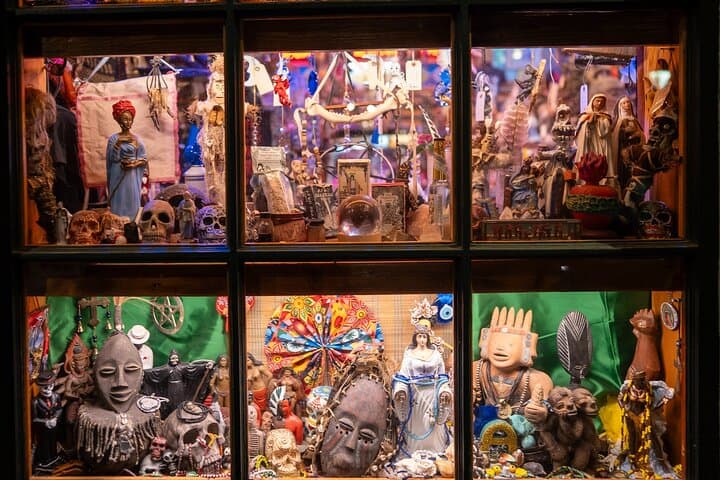
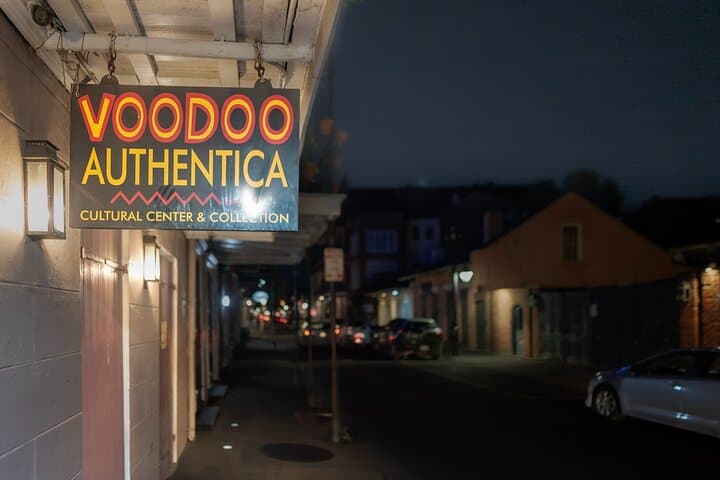
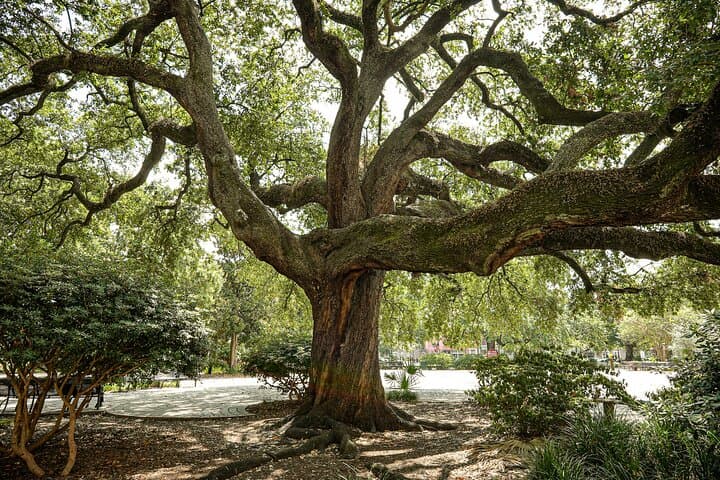
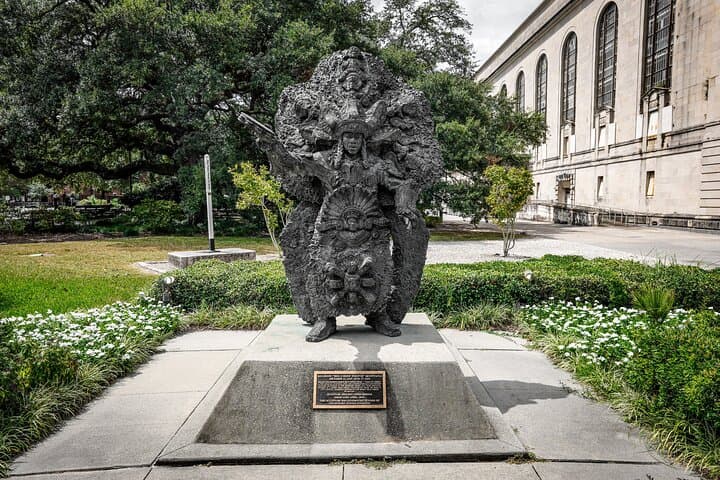
You start inside Bon’s Street Food as the Quarter wakes: the scent of fried dough and coffee hangs in the air, street performers tune up, and a guide lifts an umbrella like a flag to gather the group. For the next 90 minutes the city rearranges itself — the Mississippi leans in, the streets remember old languages, and buildings seem to lean closer to tell you their stories. The tour threads through wrought-iron balconies and uneven stone, stopping where history and belief meet: a voodoo shop with talismans in the window, a temple whose painted doors have seen decades of petitions, and the place associated with Marie Laveau, whose name still draws both reverence and curiosity.
You start inside Bon’s Street Food as the Quarter wakes: the scent of fried dough and coffee hangs in the air, street performers tune up, and a guide lifts an umbrella like a flag to gather the group. For the next 90 minutes the city rearranges itself — the Mississippi leans in, the streets remember old languages, and buildings seem to lean closer to tell you their stories. The tour threads through wrought-iron balconies and uneven stone, stopping where history and belief meet: a voodoo shop with talismans in the window, a temple whose painted doors have seen decades of petitions, and the place associated with Marie Laveau, whose name still draws both reverence and curiosity.
New Orleans is a city shaped by trade winds, colonial claims and an influx of West African traditions. Voodoo here is not a cartoonish oddity but a set of social and spiritual practices forged under slavery and adapted alongside Catholic ritual. Congo Square — once a legal open space where enslaved people gathered to sing, dance and preserve memory — is part public park and part cultural landmark; it’s where rhythms were kept and later helped birth jazz. The built environment is geology of human hands: clay-fed streets, river levees, and buildings raised to cope with water and time.
Culturally, the tour balances folklore with documented history. Guides explain how Marie Laveau’s reputation merged real civic influence with myth, how funeral rites and herbal knowledge circulated through neighborhoods, and how jazz and spiritual tradition intersected through markets and courtyards. As the guide walks, the French Quarter’s architecture becomes a running glossary — ironwork, courtyards, and alleys that once served as exchange routes for stories and goods.
Practicalities are straightforward. The tour is 90 minutes, mostly flat but on uneven brick and cobblestone; expect walking at a steady, conversational pace. Meet inside Bon’s Street Food (next to Landry’s Seafood); tours operate in most weather so bring a light rain jacket in summer storms. Accessibility is noted as possible, but street conditions and crowds can challenge mobility — ask the operator if you need accommodations. Wear supportive shoes, carry a refillable water bottle, and plan for sun or sudden showers depending on season. Photography is welcome, but be respectful at cemeteries and private spaces and follow your guide’s directions. Tickets are mobile-friendly and refundable with 24-hour notice; groups are limited for an intimate feel. For travelers keen on history, religion, or music, this is a compact, concentrated primer on the cultural currents that gave New Orleans its voice.