THE ADVENTURE COLLECTIVE® · Independent discovery and booking for outdoor travel

Meet Rothschild’s giraffes at the Giraffe Centre in Lang'ata, Nairobi. This short, accessible visit pairs up-close feeding with practical conservation education and local context.
Meet Rothschild’s giraffes at the Giraffe Centre in Lang'ata, Nairobi. This short, accessible visit pairs up-close feeding with practical conservation education and local context.
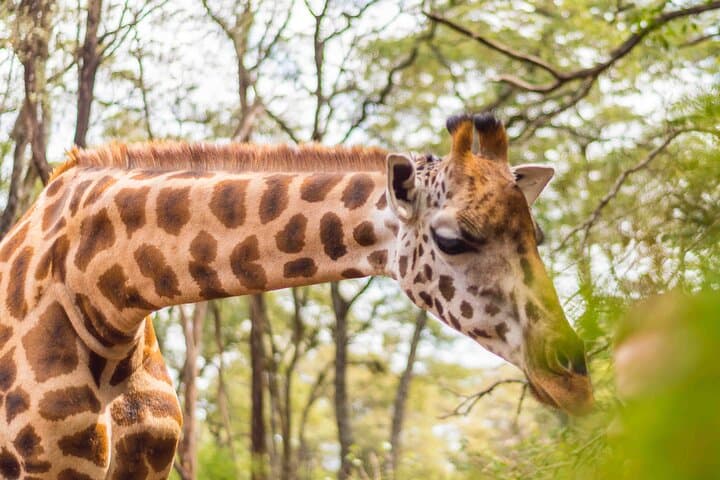
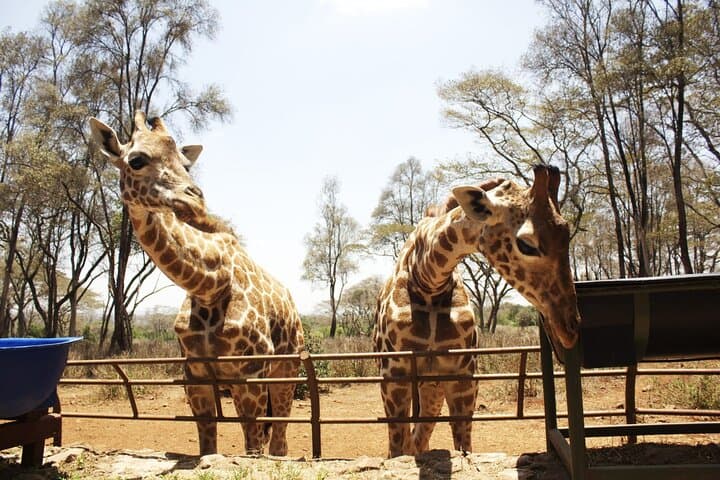
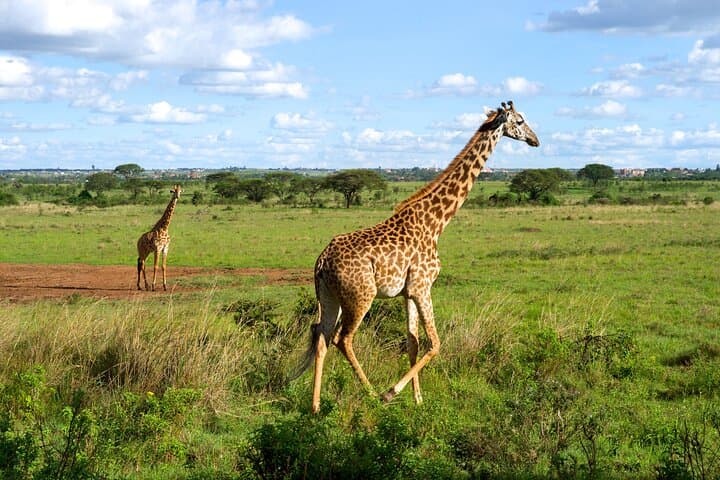
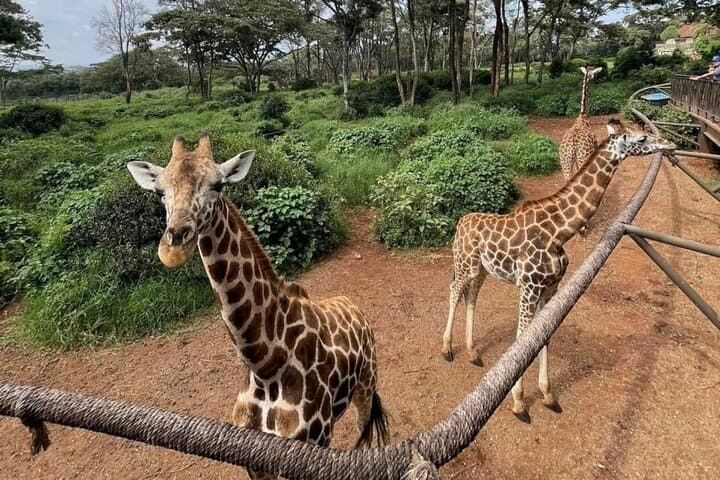
You arrive into a small compound of eucalyptus and acacia, the city’s hum folding behind you as a group of lanky necks tilts toward the feeding platform. Giraffes peer down with slow curiosity; their large, dark eyes and prehensile tongues make the encounter immediate and tactile. The Giraffe Centre in Lang'ata places you at eye level with the endangered Rothschild’s giraffe, where staff explain captive-breeding efforts and invite visitors to hand-feed pellets from an elevated boardwalk.
Verified experiences and guided adventures in the surrounding area.
Operated by Destiny Dot Safaris · Nairobi, Nairobi County
You arrive into a small compound of eucalyptus and acacia, the city’s hum folding behind you as a group of lanky necks tilts toward the feeding platform. Giraffes peer down with slow curiosity; their large, dark eyes and prehensile tongues make the encounter immediate and tactile. The Giraffe Centre in Lang'ata places you at eye level with the endangered Rothschild’s giraffe, where staff explain captive-breeding efforts and invite visitors to hand-feed pellets from an elevated boardwalk.
Opened in 1979 by conservationists tied to the African Fund for Endangered Wildlife, the Centre grew from a rescue and breeding focus into a public education hub. The site's soil is Nairobi’s ridgeland savanna—red loam with scattered outcrops—supporting native acacia and woodland birds. Nearby, Karen Blixen’s colonial-era landscape and Karura Forest offer cultural and ecological context for the area’s human and natural histories.
The visit is compact and practical: expect a guided talk, a feeding session, and time on short interpretive paths. Accessibility is good—ramps and platforms put most attractions within reach. Conservation fees collected by the Centre fund monitoring and relocation programs for Rothschild’s giraffes across Kenya.
Plan for 2–3 hours, comfortable shoes for uneven paths, and a camera with a zoom. Mornings are cooler and busier; late afternoons offer softer light and calmer animals. Follow site rules—no unsanctioned feeding or standing too close to gates—and you’ll leave having touched one of Africa’s most charismatic conservation successes.
easy.
2–3 hours.
Minimal walking on short, slightly uneven paths; suitable for most fitness levels
Typical visits run about 2–3 hours including feeding demonstrations and a short interpretive walk.
Yes — the facility is stroller- and wheelchair-accessible, and children are welcome but must be supervised.
Visitors can hand-feed approved pellets under staff supervision but should not attempt to pet or chase animals outside designated interactions.
Some bookings include round-trip transport; check your voucher—conservation fees may be listed separately.
Founded in 1979 as a breeding and education project tied to the African Fund for Endangered Wildlife, the Centre helped rescue the local Rothschild’s giraffe population.
Entry and program fees support captive-breeding, monitoring and translocation projects; visitors are asked to follow site rules to minimize disturbance.
Destiny Dot Safaris operates guided outdoor trips and adventures with an emphasis on safety, stewardship, and memorable experiences.
You arrive into a small compound of eucalyptus and acacia, the city’s hum folding behind you as a group of lanky necks tilts toward the feeding platform. Giraffes peer down with slow curiosity; their large, dark eyes and prehensile tongues make the encounter immediate and tactile. The Giraffe Centre in Lang'ata places you at eye level with the endangered Rothschild’s giraffe, where staff explain captive-breeding efforts and invite visitors to hand-feed pellets from an elevated boardwalk.
You arrive into a small compound of eucalyptus and acacia, the city’s hum folding behind you as a group of lanky necks tilts toward the feeding platform. Giraffes peer down with slow curiosity; their large, dark eyes and prehensile tongues make the encounter immediate and tactile. The Giraffe Centre in Lang'ata places you at eye level with the endangered Rothschild’s giraffe, where staff explain captive-breeding efforts and invite visitors to hand-feed pellets from an elevated boardwalk.
Opened in 1979 by conservationists tied to the African Fund for Endangered Wildlife, the Centre grew from a rescue and breeding focus into a public education hub. The site's soil is Nairobi’s ridgeland savanna—red loam with scattered outcrops—supporting native acacia and woodland birds. Nearby, Karen Blixen’s colonial-era landscape and Karura Forest offer cultural and ecological context for the area’s human and natural histories.
The visit is compact and practical: expect a guided talk, a feeding session, and time on short interpretive paths. Accessibility is good—ramps and platforms put most attractions within reach. Conservation fees collected by the Centre fund monitoring and relocation programs for Rothschild’s giraffes across Kenya.
Plan for 2–3 hours, comfortable shoes for uneven paths, and a camera with a zoom. Mornings are cooler and busier; late afternoons offer softer light and calmer animals. Follow site rules—no unsanctioned feeding or standing too close to gates—and you’ll leave having touched one of Africa’s most charismatic conservation successes.